


There is a kind of love that never announces itself. It does not arrive with flowers or speeches. It quietly gives up something precious so another person can feel cared for, even if they never fully understand what it cost. That is the true meaning of love. Not the version we see on television or social media, but the real kind. The kind that breathes in ordinary homes, in difficult seasons, in moments when no one else is watching. This story about a comb and a watch strap has been quietly breaking hearts for a reason. It tells us something we already feel but rarely say out loud.
The Story of the Comb and the Watch Strap
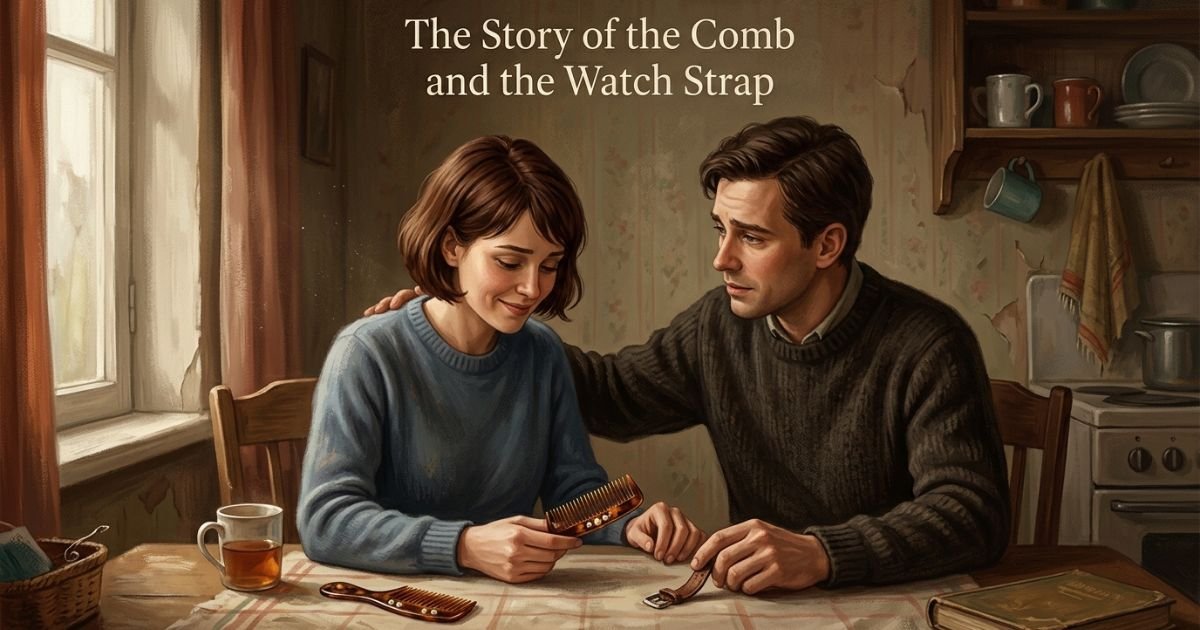
Some stories do not need to be long to leave a mark. This one is short enough to read in a few minutes and deep enough to stay with you for years.
A wife with long hair asks her husband for a simple thing. She wants a new comb so she can brush her hair properly. Her request is quiet and reasonable. She is not asking for anything extravagant.
Her husband listens. He loves her. But he has to admit something painful: he does not even have enough money to repair his broken wristwatch. He apologizes. She says nothing more.
She does not push. She does not shame him. She lets the moment pass.
The next morning, the husband leaves for work. But before he reaches his destination, he stops at a watch shop. He hands over his old watch and sells it for a low price. Then he walks into a small shop and buys her the comb.
That evening, he came home full of quiet happiness. He holds the comb in his hand, imagining how she will smile.
Then she walks through the door.
Her long hair is gone.
He is speechless. Then she tells him the truth. She had sold her hair to buy him a new watch strap.
They look at each other. The comb is now useless. The watch strap has no watch to hold. But neither of them can speak through the tears.
This is what love looks like when it forgets to protect itself.
Also READ: A Short Story That Teaches Us the Value of Sharing
Why This Story Still Touches People Deeply
You might wonder why a story this simple stays with us. It is not dramatic in the way movies are dramatic. No one is saved from disaster. No one overcomes a great enemy. Two ordinary people in an ordinary home make ordinary purchases that go wrong in the most extraordinary way.
But that is exactly why it lands so hard.
Most of us do not live in movies. We live in small apartments, on tight budgets, in quiet evenings where love is expressed not through grand gestures but through attention to small things. The husband remembered the comb. The wife remembered the watch. Each of them was quietly paying attention to what the other person needed.
That kind of attention is rare. And when two people offer it to each other at the same time, something almost sacred happens.
The story reminds us that the true meaning of love is not about getting everything right. It is about meaning it completely.
Sacrifice Is the Language Love Speaks When Words Are Not Enough
Every relationship reaches a moment when words stop being enough. When the only way to say “I love you” is to do something that costs you something.
Sacrifice is that language.
In the story, neither the husband nor the wife says much at all. The husband does not make a speech about how much he loves her. The wife does not sit him down and explain her devotion. They both simply act. And both of them act at a cost to themselves.
That is what real sacrifice looks like. It is not dramatic or announced. It is quiet and sometimes invisible until it becomes impossible to ignore.
Sacrifice also reveals a kind of trust. When you give up something for someone, you are trusting that their happiness is worth the cost. You are saying, even without words, that their needs matter as much as your own.
In the story, that trust runs in both directions. And that mutuality is what makes it so moving.
People often ask: does love require sacrifice? The honest answer is yes. Not every day, and not in every situation. But love that has never cost us anything has never really been tested. When comfort is easy and life is smooth, love is simple. When life gets tight, when resources are scarce, when something has to give, that is when love reveals its real depth.
The husband could have walked past that watch shop. The wife could have kept her hair. Neither of them was forced to give. They chose to. That choice is the whole story.
The Emotional Irony That Makes the Story Unforgettable
There is a word for what happens at the end of this story: irony. But it is not the kind that makes you laugh. It is the kind that makes your chest ache.
The husband sells his watch so he can buy a comb for her hair. She sells her hair so she can buy a strap for his watch. By the time they return to each other, neither gift has a use. The comb cannot serve her. The strap cannot serve him.
And yet.
The moment they understand what the other has done, something happens that no useful object could have created. They see each other clearly. Fully. Without filters.
Most of us go through daily life unseen by the people we share it with. We carry quiet worries, hidden longings, small griefs. And sometimes all we want is for one person to truly notice us. To say, without speaking: I see what matters to you. I care enough to do something about it.
That is what happens between this husband and wife. The gifts may have lost their function. But the love behind them becomes impossible to deny or dismiss.
The tears they cry are not about regret. They are not grieving useless objects. They are overwhelmed by the realization that they are deeply, sincerely loved by someone who was thinking of them even when they thought no one was watching.
That kind of love does not come along every day. And when it does, it does not announce itself with fanfare. It shows up at the door with short hair and a watch strap, and it changes everything.
What True Devotion Looks Like in Real Life
Devotion sounds like a large word. It sounds like something reserved for saints or soldiers or people in epic stories. But devotion in real life is mostly quiet.
It is the father who sets his alarm an hour early because his daughter has an important test and he wants to make her breakfast. It is the wife who does not mention her own exhaustion because she can see that her husband is already at his limit. It is the friend who shows up without being called, because they know you sometimes will not ask for help even when you desperately need it.
Devotion is repetition with a soft heart. It is choosing someone again and again, not because they have earned it perfectly, but because you have decided they matter.
In the story, the couple does not appear wealthy or comfortable. Their love is not decorated with luxuries. But they show up for each other in the only way they can. And they do it without hesitation.
That is devotion. Not the version that costs nothing. The version that requires something from you, and you give it anyway.
One thing the story quietly teaches is that devotion does not need an audience. The husband does not stop to wonder whether his wife will notice or appreciate his sacrifice. He just does it. The wife does not calculate whether her gesture will impress him. She simply acts from love.
When love stops needing to be witnessed to feel real, it becomes something steady and strong. It becomes something that holds up even when life gets hard.
The Connection Between Love and Attention
One of the less-discussed lessons in this story is the role of attention. Both the husband and the wife make their sacrifices because they have been paying attention.
The husband remembers the comb because he listened when she asked. He held onto her small wish even when he had to tell her no. He did not let it slip away. He kept it in his heart until he could do something about it.
The wife remembers the broken watch. She noticed it. She thought about it. She found a way to help.
Neither of these people is reading minds. They are doing something simpler and more reliable: they are paying attention to the person they love.
This is one of the most underrated forms of love. We often think love is about grand expressions. But the people who feel most loved are usually not the ones receiving the most expensive gifts. They are the ones who feel truly seen.
When someone remembers your small wish from last month, you feel seen. When someone notices that you have been quiet lately and asks about it gently, you feel seen. When someone does something small specifically for you, not for everyone, but for you, because they know you, you feel seen.
That feeling is worth more than any object. And it starts with attention.
Also READ: Focus on What Matters Most: The Timeless Message of the Jar and Stones
When Love Communicates and When It Goes Silent
The story is beautiful. But it also carries a gentle warning.
These two people love each other deeply. They are both thinking of the other. They are both planning something meaningful. And yet they never talk about it.
If they had spoken, perhaps neither sacrifice would have been necessary in quite that form. Or perhaps the story would have been different, but no less tender.
In real relationships, silence can be a form of love. Protecting someone from worry. Choosing patience over complaint. Letting small things pass.
But silence can also create painful distance. When we suffer quietly and never say anything, we deprive the people who love us of the chance to help. We carry weight alone that could have been shared. We make decisions without the information that our partner might have offered.
The couple in the story has their hearts completely aligned. Their love is real and mutual. But the ending shows that love without communication can sometimes lead to outcomes that are painful in ways that could have been avoided.
This is not a criticism of their love. It is an honest reflection on human relationships. Even the most devoted people can miss each other when they are both moving in silence.
Healthy love makes space for honesty. It allows people to say what they need, what they fear, and what they are planning, without worrying that vulnerability will be used against them. A loving relationship should feel safe enough for both people to speak.
Good intentions matter. But good intentions paired with honest conversation create something stronger than either one alone.
Why Love Is Not Measured in Dollars
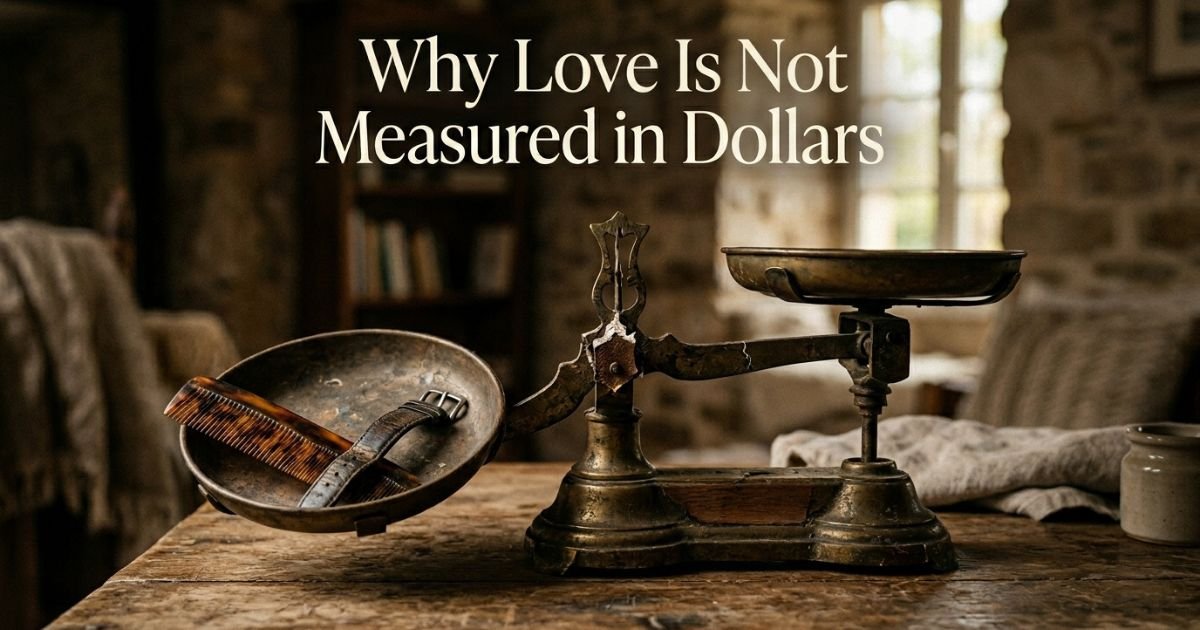
The objects in this story are humble. A comb. A watch strap. Neither is expensive. Neither is luxurious. In a world that constantly equates love with spending, this story quietly pushes back.
We live in a time when love is frequently performed publicly, decorated with expensive dinners and brand-name gifts, and posted for approval. There is nothing wrong with beautiful gifts. A thoughtful present genuinely can make someone feel special.
But when spending becomes the primary way love is proven, something gets lost. When someone feels unloved because the gift was not costly enough, we have confused the symbol for the substance.
In the story, the comb and the watch strap gain their meaning not from their price but from their origin. They come from sacrifice. They come from someone who had very little, giving up a part of what little they had.
That transforms them. An ordinary comb purchased without a second thought is just a comb. A comb bought with the proceeds of a sold watch becomes a symbol of devotion.
This is why the story resonates across cultures and generations. Most people in the world do not live with excess. They live within limits. And within those limits, they find ways to love deeply.
You do not need wealth to love well. You need attention, sincerity, and a willingness to put someone else first sometimes. Those things are available to everyone.
The Role of Empathy in Deep Love
Something easy to miss in the story is how much empathy is present on both sides.
When the husband says he cannot buy the comb, the wife does not shame him. She does not compare him to other husbands. She does not make him feel like a failure. She simply accepts his answer and goes quiet.
That silence is an act of empathy. She understands his pain. She protects his dignity instead of adding to his burden.
When the husband sells his watch, he is also practicing empathy. He holds her small wish with care. He understands that even simple things matter to the people we love. He does not dismiss her request as unimportant just because it could not be fulfilled immediately.
Empathy in love is the ability to feel what the other person feels and let that feeling matter to you. It is what keeps love gentle under pressure.
Without empathy, love becomes demanding. It focuses on what it is not receiving rather than what it can give. It uses vulnerability as a weakness to exploit rather than a trust to honor.
With empathy, love becomes something that heals. It sees the other person’s limits without losing respect for them. It meets needs with kindness rather than impatience.
This is one of the most practical lessons the story offers. If you want to love well, start by trying to understand what the other person is carrying. Before reacting, feel first.
What This Story Teaches About Marriage
Marriage is one of the great tests of human love. It takes two people and asks them to remain devoted to each other across decades, through seasons of abundance and seasons of hardship, through the romantic early days and the ordinary middle years and the deeply familiar later chapters.
The couple in this story does not have much. They are financially poor. And yet their marriage contains something many wealthy relationships lack: genuine mutual care.
They are not competing. They are not keeping score. They are not cataloguing grievances or comparing sacrifices. They are simply paying attention to each other and responding from a place of love.
Marriage needs exactly that. Not perfection. Not constant romance. Not an absence of struggle. It needs two people who keep choosing each other even when it is inconvenient. Two people who remember each other’s small wishes and take them seriously. Two people who protect each other’s dignity, especially when one of them is struggling.
The story also shows something real about love in financial hardship. When resources are limited, it is easy for stress to become contempt. For couples to turn against each other rather than toward each other. But this husband and wife turn toward each other. Poverty does not make them cruel. It reveals the depth of their tenderness.
That is a marriage worth admiring. Not because everything went perfectly, but because both people kept their hearts soft toward each other.
Also READ: Think Before You Judge: The Beautiful Truth Hidden Behind a Child’s Simple Act
Small Acts of Love That Build Something Lasting
Big dramatic gestures make good movies. But lasting relationships are not built on grand moments. They are built on small ones, repeated over time.
The husband remembers a small wish. The wife noticed a broken detail. A listening ear. A patient pauses before reacting. Waking up early to make someone comfortable. Staying quiet so someone else can rest. Choosing kindness after a long and tiring day.
These are not headline moments. But they are the material of love.
Some small acts worth practicing:
Listening without preparing your next response. Letting someone finish without finishing their sentence for them.
Remembering what someone told you weeks ago and bringing it up naturally. It shows you were truly listening, not just waiting for your turn.
Doing something helpful without being asked, because you noticed it needed to be done.
Saying thank you for the ordinary things someone does without announcement. The meals. The effort. The showing up.
Being gentle when someone is struggling, even if their struggle is inconvenient for you.
These are the habits that make love feel real on a Tuesday morning, not just on anniversaries or in crises. These are the habits that turn two people into something strong.
Why Selfless Love Is Becoming Harder to Find
There is a cultural current running against the kind of love this story describes. We live in an era that glorifies self-interest. Build your brand. Protect your energy. Prioritize your own needs. These things have real value. They are not entirely wrong.
But taken too far, they create a generation that finds selfless love almost incomprehensible. Love that costs something begins to feel unreasonable. Sacrifice begins to feel like a character flaw rather than a virtue.
The story pushes back against that quietly. It does not lecture. It does not preach. It simply shows what happens when two people love each other more than they protect themselves. And it invites us to feel something about that.
Real love is not the absence of self-respect. Healthy love does not ask you to disappear. But it does ask you sometimes to put another person’s need above your own comfort. It asks you to give when giving is inconvenient. To stay when leaving would be easier.
That kind of love cannot be manufactured by self-interest. It grows from something deeper. From the choice to care about another person, not because of what they give you, but because of who they are to you.
This story reminds us that such love is possible. It always has been. It just requires us to want it badly enough to practice it.
Love That Endures Through Hardship
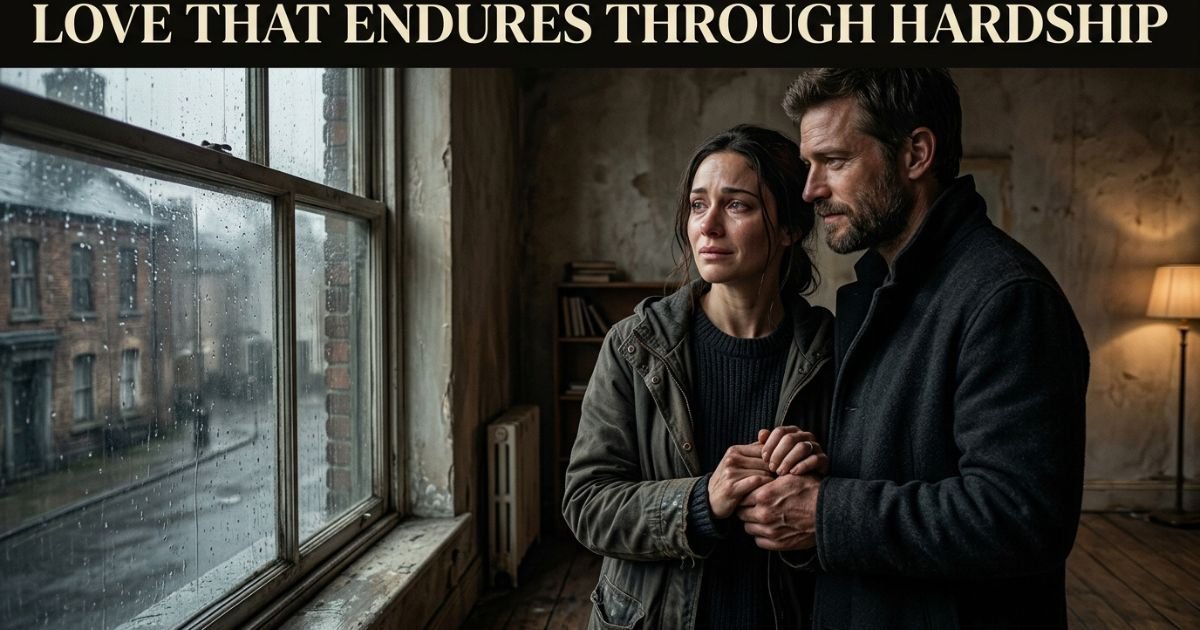
Hardship tests everything. It tests patience, character, faith, and love. And sometimes it reveals that what looked like love was actually comfort. When the comfort disappeared, so did the feeling.
But some love grows stronger under pressure. It does not break when things get tight. It does not cool when life gets hard. It becomes more deliberate, more intentional, more careful.
The couple in the story is living under real financial pressure. They cannot afford basic personal items. And yet the story never shows them turning their frustration toward each other. Instead, they each quietly try to solve the other person’s problem.
That is a picture of love that endures.
Enduring love is not dramatic. It is not always warm and easy and fun. Sometimes it is simply two people deciding to keep caring for each other, even on hard days. To keep being patient even when patience has run out. To keep choosing kindness even when kindness requires effort.
This kind of love is not glamorous. But it is the kind that lasts. It is the kind that builds something real. It is the kind that a person can still feel grateful for decades later.
What We Often Miss About the People Who Love Us
One of the most sobering things about this story is that love sometimes goes unrecognized until a moment of revelation.
Before the wife comes home with short hair, the husband does not fully know what she has done for him. Before he tells her about the watch, she does not know what it cost him. They are both loving each other without the other one fully knowing.
How often does that happen in real life?
A parent wakes up before anyone else and takes care of things quietly so the family can start the day peacefully. No one applauds. No one fully registers it.
A spouse goes to work tired and says nothing about the headache, because the family needs what they bring home. No one sees the effort.
A friend answers the phone at an inconvenient hour because they know you sometimes need to talk. They never mention the inconvenience.
Love like this is often invisible until it is gone. And by the time we understand what someone was quietly giving us, we sometimes no longer have the chance to tell them what it meant.
The story invites us not to wait for that. Notice the love that is present now. Name it. Thank it. Let the people around you know that you see what they do for you, even the small things. Especially the small things.
Frequently Asked Questions
What is love ❤ in a relationship?
Love in a relationship is caring deeply for someone’s happiness, even when it costs you something. It is built on sacrifice, trust, and emotional understanding. True love shows itself through actions, not just words.
What are the 3 C’s of love?
The 3 C’s are Communication, Commitment, and Compassion. They help partners understand each other and stay emotionally connected. Without these, even strong love can break over time.
What is real love in marriage?
Real love in marriage is choosing each other every day through care, sacrifice, and respect. It is not about perfection but about staying emotionally connected in both good and hard times. Small actions of understanding make it strong.
Why is communication important in love?
Communication prevents misunderstandings and hidden sacrifices that can hurt both partners. It helps couples understand each other’s needs clearly instead of guessing. Without it, even true love can lead to emotional distance.
What makes love last long?
Love lasts when both partners practice empathy, patience, and consistency in small daily actions. Trust and emotional attention keep the bond strong over time. It grows deeper when both people feel seen and valued.
Conclusion
At the heart of this story is a single truth. Love, at its most real, is a free choice.
No one forced the husband to stop at that watch shop. No one forced the wife to cut her hair. They could each have done nothing. Life would have continued. The relationship would have continued.
But they chose to give. Not because they had to. Not because they were competing. Not because they expected anything back. They chose because the other person’s happiness mattered more to them in that moment than holding onto what they had.
That is the true meaning of love.
It is not a feeling that comes and goes with the weather of our emotions. It is a choice we make, again and again, for the people who matter to us. It is the decision to put someone else in the center, not always, but when it truly counts.
We live in a world full of noise about love. Songs, films, social media posts, and endless advice columns all offer their definitions. But this small, quiet story about a comb and a watch strap says something most of that noise never reaches: that love at its finest is simple, costly, and freely given. It does not need an audience. It does not need to be perfect. It just needs to be real.
May we all be brave enough to love that way. And may we be present enough to recognize it when someone is quietly loving us in return.

Welcome to Blessing Bloom. I’m Ahsan Ali, founder of BlessingBloom.com a faith-based website dedicated to sharing prayers, blessings, and heartfelt wishes. Based in Islamabad, Pakistan, I created Blessing Bloom to help people find the right words during life’s most meaningful moments. With a background in Information Technology, I combine a passion for digital content with a genuine love for faith-inspired writing.