


There is a quiet moment after Communion that most of us rush right through. The music shifts, the line moves on, and our minds jump to what comes next. But that moment, the one right after you receive Christ, is one of the most intimate spaces you will ever stand in with God. A prayer after Communion does not need to be polished or perfect. It simply needs to be honest. If you have ever knelt back in your pew unsure of what to say, this guide will help you find the words, and more importantly, help you find your way back to that closeness with God.
What Does It Mean to Pray After Communion
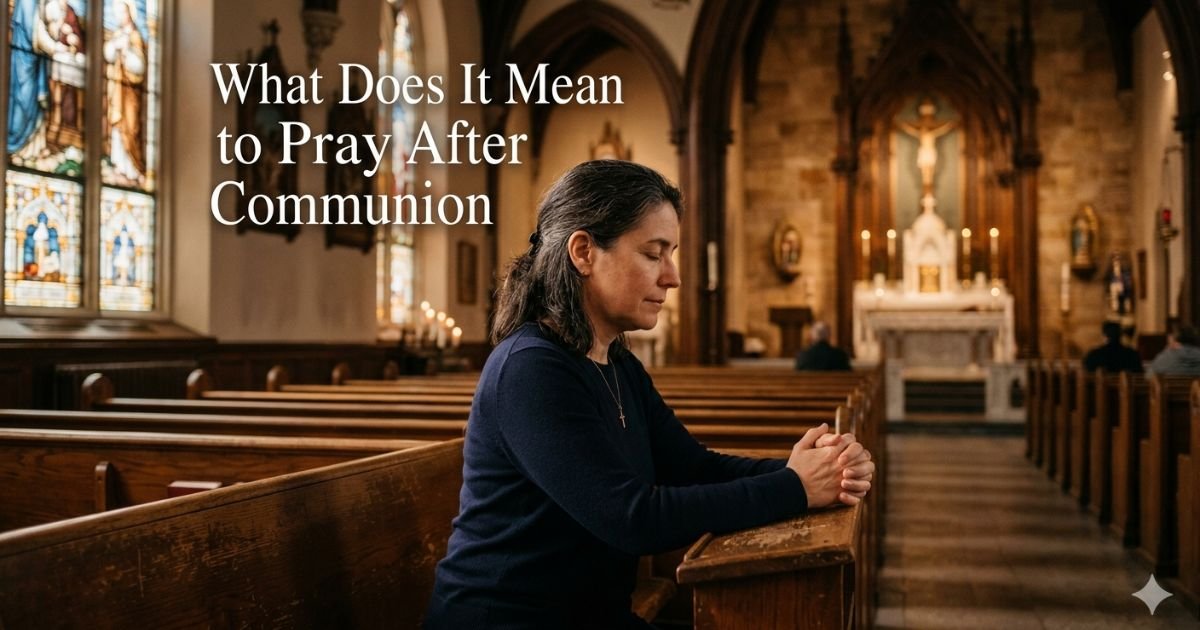
Something shifts in that moment after Communion. You are not just remembering Christ, you are carrying Him within you, and your heart knows it even when your mind is distracted.
A prayer after Communion is the conversation that naturally follows that reality. It is not a script you recite because tradition expects it. It is what happens when a person realizes, even briefly, that they are not alone anymore. You have just received the body and blood of Christ, and for a few sacred seconds, your soul is given space to respond.
This is different from the prayers spoken earlier in the service. Those prayers prepare you. This prayer responds. It comes after the gift has already been given, which changes its entire tone. There is less asking and more receiving. Less performance and more presence.
Some people picture this prayer as something formal, something with the right words in the right order. In truth, it can look like almost anything. It might be a single sentence repeated in your mind. It might be silence, the kind that says more than words ever could. It might be tears you were not expecting. What matters is not the shape of the prayer but the sincerity behind it.
If you have struggled to know what to pray in this moment, you are not alone. Many faithful people feel unsure here, not because they lack faith, but because this kind of intimacy is unfamiliar. We are taught how to ask God for things. We are taught less often how to simply sit with Him.
Also Read: Sacred Heart of Jesus Prayer Explained
Why This Moment After Communion Matters So Much
You will not get this exact moment back. Once it passes, the rest of the service moves forward, and so do you. That is part of why pausing here matters more than people realize.
When you receive Communion, you are entering into something theologians have spent centuries trying to describe and never quite finishing. Christ becomes present within you, not as a memory or a symbol, but as Himself. That kind of nearness deserves a response. Letting it slip by unnoticed is a little like receiving a letter from someone you love and setting it aside unread.
There is also a practical reason this moment matters for your spiritual growth. Faith rarely grows from one dramatic experience. It grows from small, repeated moments of attention. Every time you choose to pause after Communion instead of rushing ahead, you are training your heart to recognize God’s presence. Over weeks and months, this becomes a kind of spiritual muscle memory. You start noticing Him more easily outside of church too, in traffic, in your kitchen, in the middle of a hard conversation.
This moment also tends to be one where people feel safest being honest with God. Maybe it is because you have just received Him, so there is less reason to hide. Whatever the cause, many people find that their most truthful prayers happen right here, in the quiet after Communion, rather than anywhere else during the week.
How to Pray After Communion When You Don’t Know Where to Start
Most people who feel stuck here are not lacking faith. They are lacking a starting point. A simple structure can help, not because prayer needs rules, but because a gentle framework can free you to focus on God instead of worrying about what to say.
Start With Thank You
Gratitude is usually the most natural place to begin, because something has genuinely just happened to you. You have received Christ. That alone is worth acknowledging before anything else.
You might say something as simple as, “Thank You for coming to me today.” There is nothing complicated about it, and that is exactly the point. When your prayer begins with thanks rather than requests, it shifts your whole posture. You stop approaching God like someone with a list of needs and start approaching Him like someone who has already been given something precious.
Sit With His Presence
After you have given thanks, give yourself permission to simply stay there for a moment. Not asking, not analyzing, just present.
This is the part many people skip because it feels uncomfortable at first. Silence with God can feel awkward if you are not used to it. But this brief stillness is often where the deepest spiritual moments happen. You might quietly say, “I know You are here,” and then let that truth settle instead of moving immediately to the next thought.
Bring Him What You Are Carrying
Once your heart has settled, this is a good time to bring God whatever you are actually dealing with. Not the version of your life you wish you had, the real one.
Maybe you are anxious about a decision. Maybe you are exhausted from caregiving, or grieving someone, or struggling with a habit you cannot seem to break. This moment after Communion is an honest place to bring all of it. A simple prayer like, “Help me carry this. I cannot do it alone,” says more than a paragraph of polished language ever could.
Offer Your Day Back to Him
Communion is not only about receiving. At some point, it becomes natural to offer something back, even if all you have to offer is your ordinary day.
You might say, “Take my day. Use it however You want.” This is a small act of surrender, but it carries real weight. It reminds you that the rest of your hours, the meetings, the errands, the conversations, are not separate from your faith. They are part of it.
Close With Trust, Not a Performance
There is no need for a dramatic ending. Many people find it helpful to close with something steady and simple, like, “I trust You. Stay with me today.”
This is not about wrapping things up neatly. It is about leaving the moment in a posture of trust rather than anxiety, so that whatever comes next in your day, you carry a little of this peace with you.
A Full Prayer After Communion You Can Use Today
If you would rather have something written out, here is a complete prayer you can pray as is, or adjust in your own words.
“Lord Jesus, Thank You for coming to me in this Communion. I do not always feel worthy of this gift, but I receive it with a grateful heart. Help me to carry Your peace into the rest of my day. Where I am anxious, calm me. Where I am tired, strengthen me. Where I have hurt someone, soften my heart toward them. Stay close to me, even when I forget to notice You. I trust You with what comes next. Amen.”
You do not need to memorize this. Read it slowly the first few times, and let it become something more personal each time you return to it.
A Short Prayer After Communion for Busy Moments
Some days you will not have much time, or your mind will be too scattered for a long prayer. That is alright. A short prayer can carry just as much weight as a longer one.
“Jesus, thank You for being with me. Help me trust You today. Amen.”
There is no rule that says a prayer needs to be long to be meaningful. God is not measuring word count. He is listening to the heart behind the words, even if those words are only a sentence long.
Also Read: 35 Powerful Prayers for Workplace Motivation, Focus and God’s Favor
Traditional Prayers After Communion Many Believers Turn To
Sometimes it helps to pray words that countless people before you have prayed, words shaped by generations of believers who needed the same comfort you are looking for now.
Anima Christi
This prayer has been part of Christian devotion for centuries, and many people return to it specifically in the moments after Communion.
“Soul of Christ, sanctify me. Body of Christ, save me. Blood of Christ, inebriate me. Water from the side of Christ, wash me. Passion of Christ, strengthen me. O good Jesus, hear me. Within Thy wounds hide me. Suffer me not to be separated from Thee. From the malicious enemy, defend me. At the hour of death, call me, and bid me come unto Thee, That with Thy saints I may praise Thee forever and ever. Amen.”
There is something steadying about praying words that have outlasted generations. You are not alone in this prayer. You are joining a long line of people who needed the same thing you do right now.
Padre Pio’s Stay With Me Lord
Padre Pio’s prayer is another that many people turn to in this sacred moment, particularly when they are feeling weak, distracted, or far from God.
“Stay with me, Lord, for it is necessary to have You present so that I do not forget You. Stay with me, Lord, because I am weak, and I need Your strength. Stay with me, Lord, for You are my life, and without You I am without fervor. Stay with me, Lord, for You are my light, and without You I am in darkness. Stay with me, Lord, to show me Your will. Stay with me, Lord, so that I may hear Your voice and follow You. Stay with me, Lord, for I desire to love You and always be in Your company. Stay with me, Lord, if You wish me to be faithful to You. Stay with me, Jesus, for as poor as my soul is, I want it to be a place of consolation for You, a nest of love. Amen.”
What makes this prayer so beloved is its honesty. It does not pretend to be strong. It admits weakness openly, which is often exactly where real prayer begins.
What to Do When Your Mind Wanders During This Prayer
If your thoughts drift during this moment, you have not failed at prayer. You have simply discovered that you are human.
Distraction during prayer is one of the most common struggles people quietly carry, often assuming everyone else has it figured out except them. They do not. Even people who have practiced faith for decades describe their minds wandering to grocery lists, work stress, or what they are doing later that day.
The goal is not to eliminate every distraction. That is not realistic, and chasing it will only frustrate you. Instead, when you notice your mind has wandered, gently bring it back. No guilt, no self criticism, just a quiet return. “Lord, I am back. Thank You for being patient with me.” That single sentence can turn a distracted moment into a humble one, which is often more valuable anyway.
How This Prayer Can Change the Rest of Your Day
The effects of a sincere prayer after Communion rarely stay locked inside the church walls. They tend to follow you out the door, often without you noticing at first.
People who make this prayer a regular habit often describe a kind of steadiness that shows up later in the day, during a hard conversation, a stressful commute, or a quiet evening alone. It is not that life suddenly becomes easier. It is that you carry something with you that helps you face it differently.
This is also where gratitude tends to deepen. Once you have practiced thanking God right after receiving Him, that habit has a way of spilling into ordinary moments, a meal, a phone call from a friend, an unexpected kindness from a stranger. You start recognizing grace in places you used to walk past without noticing.
Over time, this prayer can shape how you make decisions too. Not in a dramatic, instant way, but slowly, the way water reshapes stone. You find yourself pausing before reacting in anger. You find yourself a little more patient with people who frustrate you. None of this happens because the prayer is magic. It happens because consistent honesty with God tends to soften a person from the inside out.
Also Read: 50 Prayers for Graduation Ceremony
Bringing This Prayer Into the Rest of Your Week
You do not have to wait until your next Communion to return to this posture of prayer. The same quiet honesty you bring to that moment can show up in your kitchen, your car, or the few minutes before you fall asleep.
Some people set aside a short pause each evening, even just two or three minutes, to reconnect with the peace they felt after Communion. Others keep a written prayer, like the ones above, somewhere they will see it during the week, a nightstand, a wallet, a notes app on their phone.
What matters most is not the method. It is the willingness to keep returning to that same honest place with God, again and again, even on days when you do not feel particularly spiritual. Especially on those days, actually. Faith is built far more in ordinary, repeated moments than in dramatic ones.
Frequently Asked Questions
What is the powerful prayer after communion?
A powerful prayer after Communion is a simple and honest one, such as thanking Jesus, asking for strength, and surrendering your day to Him. Its power comes from sincerity, not length.
What is the final prayer after communion?
The final prayer is usually a short closing of trust, like asking God to stay with you and guide your day. It ends the Communion moment with peace and surrender.
What is the prayer after communion in a Catholic mass?
In Catholic Mass, the prayer after Communion is a moment of silent or spoken thanksgiving to God for receiving Christ. It focuses on gratitude, reflection, and spiritual unity.
What prayers do you say before and after communion?
Before Communion, prayers focus on preparation and repentance. After Communion, prayers focus on thanksgiving, silence, and asking for God’s guidance in daily life.
What should I say after receiving communion?
You can simply say “Thank You, Jesus” or speak from your heart. The key is gratitude, presence, and inviting God into your life after receiving Him.
What are some examples of communion prayers?
Examples include short prayers like thanking Jesus, asking for peace, or traditional ones like Anima Christi. Even silent prayer is considered meaningful.
What to pray when you receive communion?
Pray with gratitude, ask Jesus to stay close to you, and offer your struggles and your day to Him. Keep it simple, honest, and personal.
Carrying This Moment With You
The prayer you offer after Communion is small in size but rarely small in meaning. It is one of the few moments each week where you are invited to simply be with God, without performance, without rushing, without needing the right words. Whether you whisper a single sentence or pray something passed down for centuries, what matters most is that you showed up honestly.
You will not always feel something dramatic in this moment, and that is alright. Faith is built less on big feelings and more on small, faithful returns to God’s presence. Each time you pause here, even briefly, you are choosing connection over distraction. That choice, repeated over time, has a quiet way of changing a person from the inside. May this moment continue to draw you closer to Him, today and every time you return to His table.

Welcome to Blessing Bloom. I’m Ahsan Ali, founder of BlessingBloom.com a faith-based website dedicated to sharing prayers, blessings, and heartfelt wishes. Based in Islamabad, Pakistan, I created Blessing Bloom to help people find the right words during life’s most meaningful moments. With a background in Information Technology, I combine a passion for digital content with a genuine love for faith-inspired writing.