


There are moments in life when words simply are not enough, when grief wraps around your chest like a weight you cannot lift. When fear sits quietly in the back of your throat, in those moments, something small and human becomes everything. A shoulder. Not because of what it can hold physically, but because of what it offers emotionally. The power of a shoulder is one of the most profound truths ever told through a simple story, and once you understand it, you will never see human connection the same way again.
The Question That Started Everything
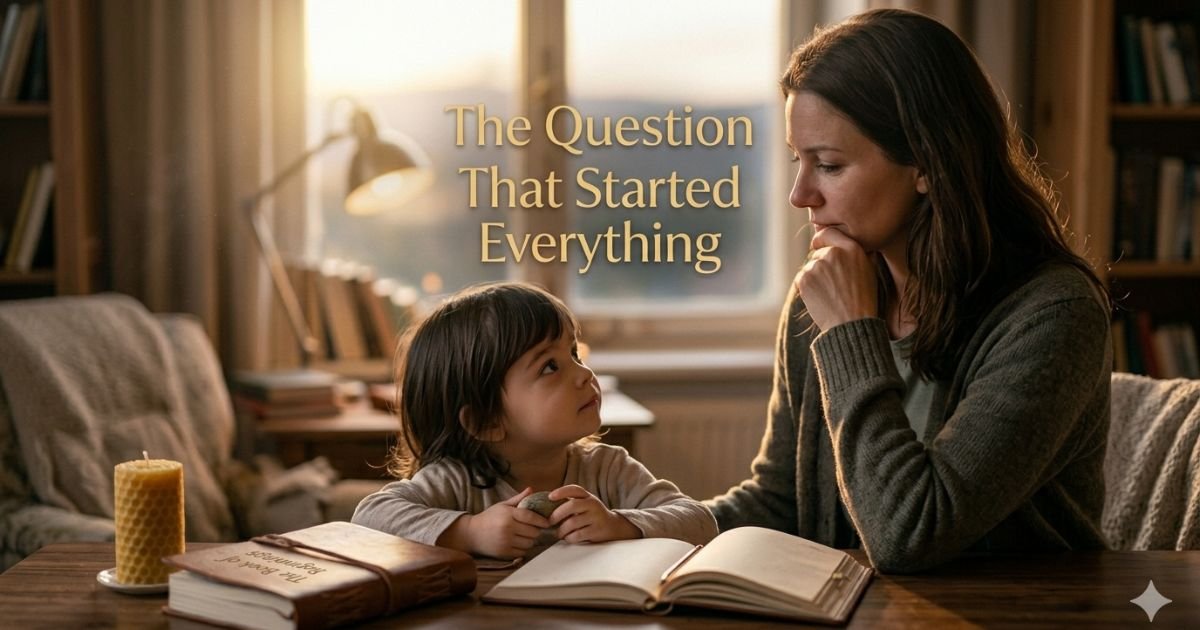
Some of the most life-changing lessons begin in the most ordinary conversations. A mother and her child. A question that sounds simple on the surface. A lifetime of meaning hiding just beneath it.
The question was this: which part of the human body is the most important?
At first, it sounds like a school quiz. Something with a textbook answer. But as the child would eventually learn, the real answer had nothing to do with biology at all.
When the child was young, the answer seemed obvious. Ears. Hearing allows us to experience music, laughter, conversation, and the voices of people we love. Without it, so much of life feels distant. It felt like a thoughtful, reasonable response.
But the mother shook her head gently. She did not scold or dismiss the answer. She simply offered another perspective. There are many people in this world who cannot hear, she said, and yet they live deeply meaningful lives. They love. They grieve. They connect. Their lives are not less.
So the ears were not the answer.
Years passed. The child grew. Experience added layers to thinking. When the question came back, the new answer felt more sophisticated. Eyes. Vision gives us the ability to read faces, witness beauty, and navigate the world around us. Surely sight must be the most essential thing.
Again, the mother smiled warmly and gently disagreed. There are people who cannot see, she explained, and still they love, still they feel, still they hold others close when the world feels hard.
So the eyes were not the answer either.
The question faded. Life moved forward, as it always does. But the seed of that question stayed quietly planted, waiting for the right moment to bloom.
Also Read: The Power of Perseverance
A Funeral, a Father’s Tears, and One Quiet Truth
Some lessons can only be learned through loss.
When the grandmother passed away, the whole atmosphere of the home changed. Grief filled the rooms. The people who had always seemed unshakable now stood still with red eyes and quiet voices. It was the kind of sorrow that settles into your bones and reminds you how much you love someone only when they are no longer there.
And then, something unexpected happened.
The child saw the father cry.
Not just a tear or two. Real, deep, heavy crying. The kind that comes from a place most of us spend our whole lives protecting. The kind that does not ask permission.
And in that moment, the father leaned his head on the mother’s shoulder.
That image said everything without saying a word.
After the funeral, the mother came close and asked the question one final time. The child, still carrying the weight of grief, looked up with confusion. Why now? Why here?
The mother answered softly.
‘The most important part of the body is the shoulder.’
Not because of what it holds up physically. But it is the place where the people you love can rest their heads when the pain becomes too much to carry alone. Everyone needs a shoulder to lean on. That is not a weakness. That is one of the most human things in the world.
And in that moment, the child understood something that no classroom, no textbook, and no lecture could ever fully teach.
What the Power of a Shoulder Really Means
It is easy to think of emotional support as something extra. Something nice to have, but not essential. The story of the shoulder quietly dismantles that idea.
The power of a shoulder is not about grand gestures or perfectly chosen words. It is about presence. It is about choosing to stay close when everything in you might want to look away from someone else’s pain.
When we offer someone a shoulder to lean on, we are communicating something deeper than anything spoken language can express. We are saying: your pain is real, and I am not afraid of it. You do not have to carry this alone. I am here, and I am staying.
That kind of presence is rare. And because it is rare, it is extraordinarily valuable.
In a world that often rewards people for appearing strong, composed, and self-sufficient, the shoulder represents something counter-cultural. It says that vulnerability is not a flaw. That needing someone does not make you weak. Asking for support is one of the most honest things a human being can do.
Why Human Connection Goes Deeper Than We Often Admit
Researchers at Harvard have spent decades studying what makes people thrive over a lifetime. The answer, drawn from one of the longest studies of human adult development ever conducted, is consistently the same. It is not wealth, status, or physical health that determines our well-being most powerfully. It is the quality of our relationships.
The people who feel genuinely connected to others live longer, recover from illness more quickly, and report deeper satisfaction with their lives. Connection is not a luxury. It is a biological and emotional need.
The story of the shoulder captures this truth in the most human way imaginable. Not through statistics or research papers, but through a child watching a father cry, and a mother who had been waiting years to share a lesson that could only be understood in that exact moment.
The Silent Language of Empathy
There is a kind of communication that has no words. No grammar. No structure. It lives in the space between people when one of them is hurting, and the other simply chooses to stay.
Empathy at its deepest level does not require a speech or a solution. It requires presence. It requires the willingness to sit with someone inside their pain without rushing them out of it, without offering silver linings too quickly, without making their grief about you.
A shoulder does all of that silently.
When someone leans on you, they are not asking you to fix what is broken. They are asking you to witness it with them. To acknowledge that what they are carrying is heavy and real. That acknowledgment, that quiet validation, can shift something deep inside a person.
It tells them they are not alone. And being not alone is one of the most powerful feelings a human being can experience.
What Empathy Looks Like in Practice
Empathy is not always dramatic or visible. In everyday life, it often looks like very small things.
It looks like staying on the phone a little longer when someone sounds distant. It looks like showing up with food when a friend is going through something hard. It looks like not rushing to fill the silence. It looks like asking how someone is doing and actually waiting to hear the real answer, not just the automatic ‘fine.’
It looks like offering your shoulder, literally or figuratively, and meaning it.
These small gestures accumulate over time. They become the foundation of trust. And trust, once built, becomes the kind of support structure that holds people together through the hardest seasons of their lives.
The Power of a Shoulder in Family Relationships
Family is the first place most of us learn what emotional support feels like. Long before we understand the word empathy or can articulate what we need, we feel it in the way a parent holds us, in the way a sibling sits beside us during a hard moment, in the way someone who loves us shows up without being asked.
The story of the shoulder is ultimately a family story. A mother teaching a child. A father revealing his grief. A grandmother whose passing became the doorway to one of the most important lessons ever passed down between generations.
What the child saw at that funeral was not weakness. What the child saw was love in its most unguarded form. A man who was strong in every visible way, finally allowed himself to feel. And a woman who made herself available, without fanfare, without commentary, simply by being there.
That is a model worth carrying forward.
Teaching the Next Generation What Strength Really Looks Like
One of the most meaningful things parents can do is show their children that emotional vulnerability is not something to be ashamed of. That crying is not a failure. That needing comfort does not diminish you.
When children see the adults in their lives lean on each other, they learn something invaluable. They learn that connection is not a sign of weakness. They learn that the strongest people they know are also people who accept support when they need it.
That lesson becomes a blueprint. They grow up knowing that when life gets hard, reaching out is not giving up. It is how people survive and heal and eventually find their way through.
The Power of a Shoulder in Friendship
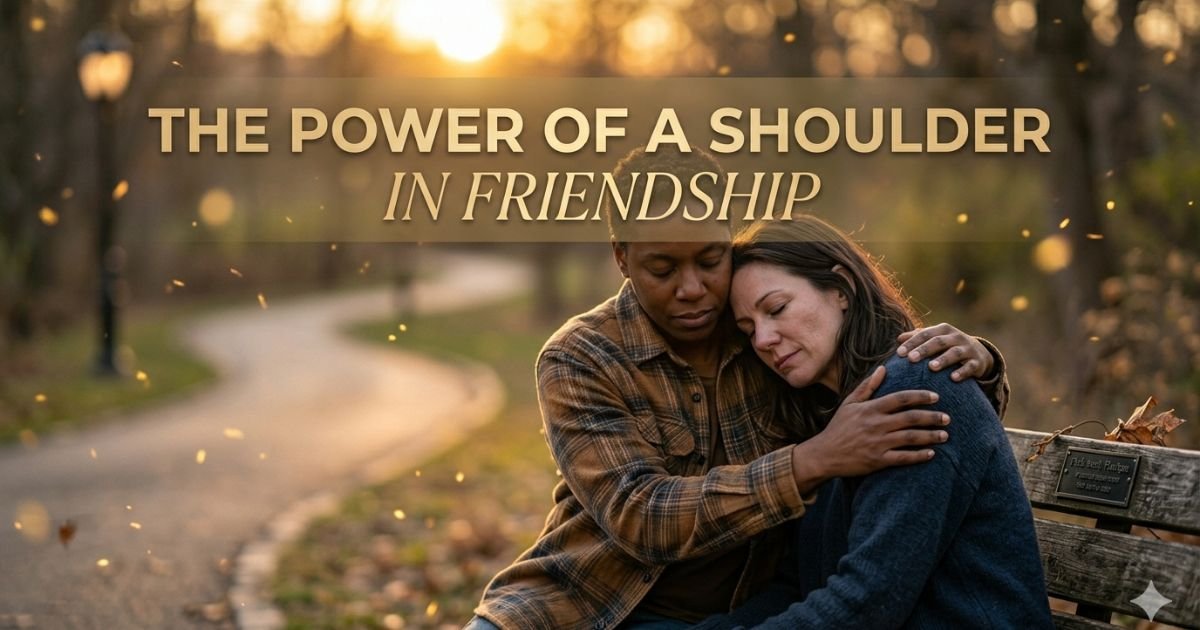
True friendship is not measured in the good times. Anyone can show up for a celebration. The real test of a friendship is what happens when the lights go down, when the news is bad, when the person you love is falling apart.
A real friend does not always know the right thing to say. That is okay. The truth is, there often is no right thing to say. But a real friend shows up anyway. They sit with you in the discomfort. They do not rush you toward feeling better before you are ready.
That kind of friendship is the living definition of the power of a shoulder.
When You Do Not Know What to Say
Many people pull back from a grieving friend not because they do not care, but because they are afraid of saying the wrong thing. They worry about making it worse. So they go quiet, or they offer platitudes that do not land, or they disappear until things seem easier.
But here is something worth remembering. Most people who are hurting do not need perfect words. They need your presence. They need to know that you are not afraid of their pain. They need someone to sit beside them without flinching.
You do not have to have an answer. You just have to show up.
That is the shoulder. That is the whole lesson.
Also Read: The True Value of Hard Work
The Power of a Shoulder During Illness and Hardship
Life does not always give us a warning before it gets hard. Illness arrives. Loss comes. Circumstances shift in ways that leave people feeling untethered and afraid. In those seasons, the people who show up become everything.
When someone is walking through a health crisis, a job loss, a broken relationship, or any kind of life upheaval, the experience of feeling truly supported can change the entire shape of that journey. Not because support removes the difficulty, but because it makes the difficulty bearable.
Research in the field of health psychology consistently shows that people with strong social support systems cope better with chronic illness, recover more effectively from medical procedures, and maintain stronger mental health even during prolonged hardship. The shoulder, it turns out, is not just poetic. It is practical.
How to Be Someone’s Shoulder When Life Gets Heavy
Being a source of support for someone you care about does not require any special training or expertise. It requires a few simple commitments.
Show up consistently, not just once. Let the person set the pace of their healing. Ask what they need instead of assuming. Offer specific help rather than vague gestures. And most importantly, stay. Do not disappear when the situation gets complicated or uncomfortable.
The people who stay are the ones who are remembered. They are the ones whose presence becomes a kind of anchor during the storm.
Why We All Need to Lean On
The mother in this story did not just teach her child about anatomy. She taught her child about life. About what it means to be human. About the kind of person worth becoming.
Her final wish was not for wealth or achievement. She said she hoped her child would have many friends and receive much love, so that whenever they cried, there would always be a shoulder to lean on.
That wish is a deeply tender one. It reflects something most of us feel but rarely say out loud. We want to know that if we fall apart, someone will be there. If the weight gets too heavy, we do not have to carry it alone.
That is a universal longing. It crosses culture, age, background, and belief.
And it points to something true about what it means to live well. A full life is not one lived in isolation, no matter how successful or independent a person appears. A full life includes connection. It includes being known by someone who chooses to stay close even when things get hard.
Building a Life Rich in Genuine Connection
In a time when so much of our communication happens through screens, the depth of real human connection can be harder to maintain. Messages are quick. Reactions are instant. But presence is something else entirely.
Building genuine connection takes intentionality. It means choosing to go deeper than surface-level conversations. It means being willing to be honest about your own struggles, not just your wins. It means showing up for others in ways that cost you something, time, energy, and emotional availability.
The people who do this consistently are the ones with a shoulder to offer. And in turn, they tend to be the ones with shoulders to lean on when they need it most.
The Spiritual Dimension of Human Connection
There is something sacred about being truly present for another person. Across faith traditions and spiritual perspectives, the act of bearing witness to someone else’s pain is considered one of the highest expressions of love.
In Scripture, this idea appears again and again. We are called to weep with those who weep. To carry one another’s burdens. To love not in word alone, but in action and in truth. These are not abstract commands. They are invitations to the kind of embodied, present, compassionate connection that the story of the shoulder so beautifully illustrates.
When you offer your shoulder to someone who is hurting, you are doing something that many spiritual teachers throughout history have described as holy. You are making yourself a vessel of comfort. You are allowing love to move through you toward someone who needs it.
That is not small. That is one of the most significant things a human being can do.
Leaning on God and Leaning on Each Other
Many people of faith find that during their hardest seasons, their relationship with God and their relationships with others work together rather than separately. They pray, and they also reach out. They trust, and they also ask for help.
This is not a contradiction. It is wholeness.
God often works through people. The friend who calls at exactly the right moment. The family member who shows up without being asked. The stranger who offers unexpected kindness in a season of grief. These are moments many believers describe as feeling like answered prayer.
The shoulder, in this sense, can be a channel for something much larger than human comfort alone.
Recognizing When Someone Needs Your Shoulder
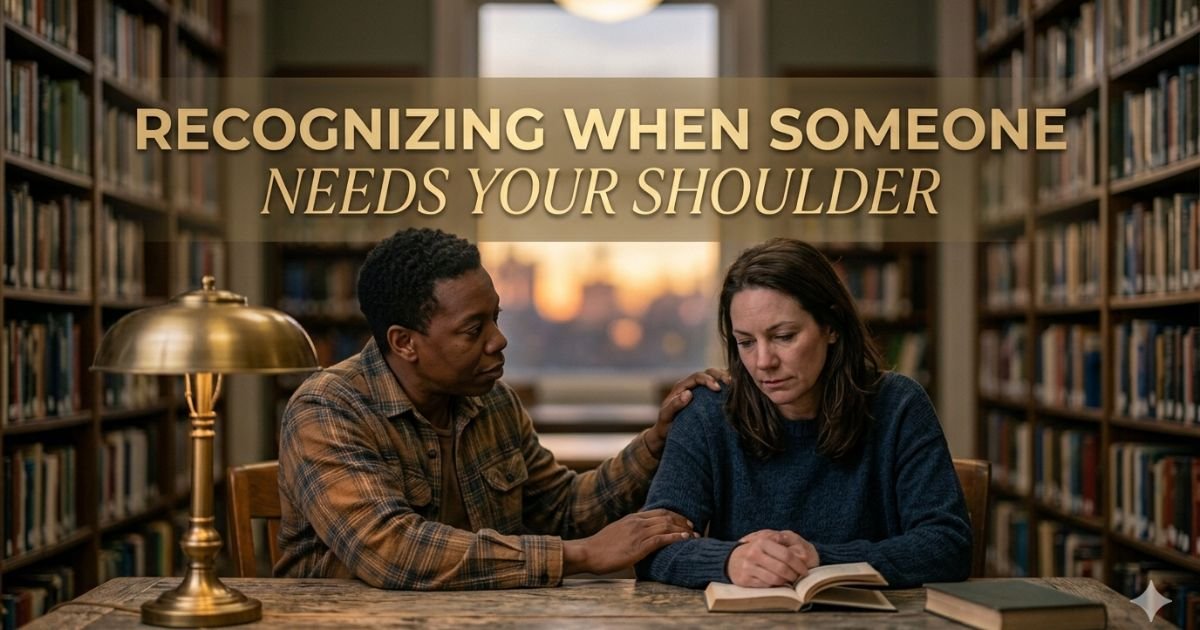
Sometimes people do not ask for help. They carry their pain quietly, not because they want to, but because they do not want to be a burden. They have learned that showing need makes others uncomfortable. So they smile through it, or they disappear into busyness, or they simply say they are fine.
Learning to recognize when someone needs support without being asked is one of the most valuable relational skills a person can develop.
It shows up in subtle ways. A shift in energy. Fewer messages than usual. A kind of flatness in conversation that was not there before. Eyes that look tired not just from sleep, but from carrying something heavy.
When you notice those signs, the most powerful thing you can do is not wait for an invitation. Simply reach out. Check in. Let the person know you see them.
Sometimes that is enough. Sometimes knowing someone noticed is the beginning of being able to let the weight down.
What to Say When You Do Not Know What to Say
You do not need a script. You do not need a perfectly worded message. A few simple, honest words are often more meaningful than something that took an hour to craft.
‘I have been thinking about you.’
‘I am here if you want to talk, or even if you just do not want to be alone.’
‘You do not have to carry this by yourself.’
These kinds of words open a door. They communicate care without pressure. And sometimes, that door is exactly what someone needed someone else to open.
Also Read: Think Beyond Limits
The Lasting Legacy of a Shoulder Offered
Years from now, most of us will not remember the specific words people said to us during our hardest moments. Memory does not hold language the way it holds feeling.
What we remember is who showed up. We remember who stayed. We remember the person who sat beside us without needing us to be okay. We remember the shoulder.
That is the legacy of this kind of love. It does not announce itself. It does not require recognition. It simply gives, quietly and consistently, and it leaves a mark that outlasts almost anything else.
The mother in this story understood that. She spent years waiting for the right moment to share a lesson that could only be understood through experience. And when that moment came, she offered it gently, without lecture, without pride. Just truth, spoken softly in the middle of grief.
That is what a shoulder looks like. That is the kind of person most of us secretly hope to become, and the kind of person we all deeply hope to have nearby.
Conclusion
The power of a shoulder is not something you can see on an anatomy chart. It cannot be measured in pounds or inches. But it may be the most important thing one human being can offer another.
The story passed down from a mother to her child is really a story about all of us. About what we need, and what we are capable of giving. About the kind of connection that sustains people through the heaviest seasons of their lives. About the truth that being human means needing each other, and that there is nothing shameful or small about that need.
If you take only one thing from this story, let it be this: someone in your life may need your shoulder today. Not tomorrow. Not when things slow down. Today.
Be the kind of person who shows up. Be the kind of person who stays. Offer what you have, even when it feels inadequate. Because to someone who is hurting, your presence is everything. And the shoulder you offer may become one of the most important gifts you ever give.

Welcome to Blessing Bloom. I’m Ahsan Ali, founder of BlessingBloom.com a faith-based website dedicated to sharing prayers, blessings, and heartfelt wishes. Based in Islamabad, Pakistan, I created Blessing Bloom to help people find the right words during life’s most meaningful moments. With a background in Information Technology, I combine a passion for digital content with a genuine love for faith-inspired writing.