


There are moments in life that stop you cold. Not because they are loud or dramatic, but because they quietly say everything words have been failing to say for years. A powerful lesson in respect rarely arrives through lectures or textbooks. It arrives through a single act of love so pure and so selfless that it changes the way you see everything, including yourself, your parents, and the time you still have left together.
The Story That Changed How the World Sees Respect
Some stories travel far because they carry truth inside them.
This is one of those stories.
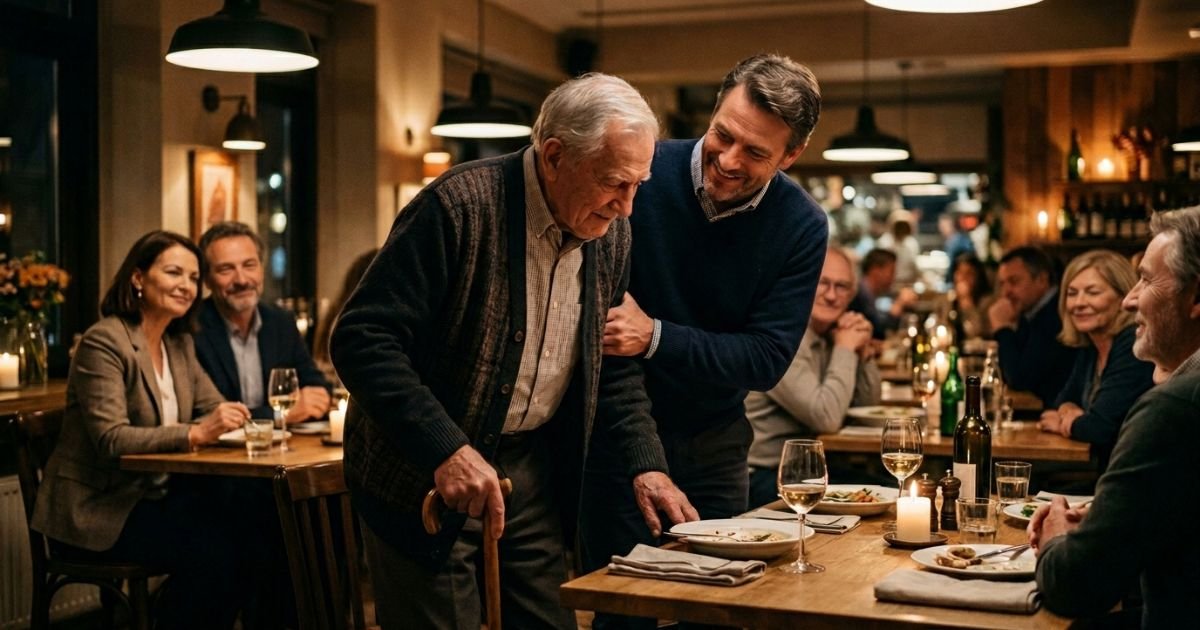
A son took his elderly father out to dinner at a restaurant. The father was frail. His hands trembled. At some point during the meal, food slipped from his fork and stained his shirt. Then his pants. People nearby noticed. Some looked away. Others stared with visible discomfort.
The son did not flinch.
When his father finished eating, the son quietly guided him to the restroom. He cleaned the stains from his shirt. He wiped his pants. He combed his father’s hair, straightened his glasses, and walked back out with him as though nothing unusual had happened at all.
The restaurant fell completely silent.
As the son paid the bill and began to leave, an older gentleman across the room called out to him.
“Young man, I think you left something behind.”
The son turned and said, “No, sir, I did not forget anything.”
The old man smiled and said, “Yes, you did. You left behind a lesson for every son in this world, and hope for every father growing old in it.”
That story has stayed with millions of people for a reason. It does not just describe a kind act. It describes something most of us know we should be doing but quietly admit we fall short of. It holds a mirror up to how we treat the people who gave us everything.
Also Read: The Beauty of Humility: A Lesson from the Clever Woodcutter
Why Real Respect Has Nothing to Do With Words
We grow up thinking respect means saying the right things.
Yes sir. No ma’am. Please and thank you. Those things matter. But they only scratch the surface of what genuine respect actually looks like.
The son in that story never said a word to defend himself. He did not explain his actions to the strangers around him. He did not look for approval. He simply acted, with calm, with gentleness, and with total attention on his father.
That is what makes a powerful lesson in respect so different from a polite one.
Polite respect disappears the moment things get hard. Real respect shows up precisely when things become uncomfortable. It shows up in how we respond when our parents are slow, when they repeat themselves, when they need more help than we expected to give at this stage of our lives.
Think about the last time you felt genuinely impatient with a parent. Maybe they asked the same question twice. Maybe they moved more slowly than you wanted. Maybe the conversation felt one-sided or exhausting.
Those moments are not inconveniences. Those moments are the test.
And the truth is, respect is only proven in the test. Not in the easy, comfortable, everything-is-going-fine moments. In the hard ones.
What the Son Understood That Most of Us Forget
There is something quietly profound about the way the son behaved in that restaurant.
He understood something that gets lost in the noise of everyday life. His father, the man sitting across from him with food on his shirt and unsteady hands, was once strong. Once capable. Once the person who cleaned up after him, who carried him, who stayed up through the night when he was sick, who sacrificed things he never even knew about.
Age does not erase any of that. It just changes the direction of the need.
When children are small, parents pour themselves out completely. Their time, their sleep, their money, their emotional energy, all of it flows toward the child without hesitation. No one asks if it is convenient. No one waits until the mood is right. They simply do it because love does not calculate the cost.
A powerful lesson in respect asks us to recognize that the flow of care eventually reverses. And when it does, the way we respond reveals the depth of our character more than almost anything else in life.
The son understood that his father’s dignity was more important than his own momentary discomfort. He chose his father over the crowd. Over appearances. Over what anyone else in that room might think.
That quiet choice is the lesson.
The Weight of Other People’s Eyes and Why It Matters
Let us be honest about something most articles on this topic will not say directly.
The reason the story is powerful is not just what the son did. It is where he did it.
In private, most people would do the right thing. When no one is watching, when there is no pressure, when the stakes feel low, most of us find it easier to be patient and kind.
But that restaurant was full of people. And some of them were staring. Some looked disgusted. The air in the room was heavy with unspoken judgment.
That is the environment where respect gets tested in its truest form.
Public judgment is a powerful force. It can make even the most loving person self-conscious. It can shift your behavior without you even realizing it. Suddenly, instead of thinking about your parent, you start thinking about how you look to strangers. You speed up. You tense up. You stop being fully present with the person right in front of you.
The son broke that pattern completely.
He stayed grounded. He stayed focused. The crowd became background noise instead of the main event.
That is something worth practicing, not just in public moments with parents, but in every situation where the fear of judgment tries to pull us away from doing what we know is right.
Dignity is not something we only protect when it is convenient. It is something we protect especially when it costs us something.
What Every Child Truly Owes Their Parents
This is where the conversation gets personal.
Not theoretical. Not abstract. Personal.
Gratitude that is shown, not just felt
Most of us feel grateful. We feel it quietly, somewhere inside, especially in moments when we really stop and think about what our parents did for us. But gratitude that lives only in feelings eventually fades without expression.
Real gratitude is visible. It shows up in the phone call you make just to check in, not because you need something. It shows up in the visit you plan even when your schedule is full. It shows up in the way you talk to them, the way you respond when they need you, the way you make them feel like they still matter deeply.
Gratitude is not a one-time expression. It is a daily orientation.
Patience in the season of slowing down
There was a time when your parents had endless patience for you.
They answered the same questions hundreds of times. They tied your shoes again and again. They sat through your struggles with calm, you probably did not even notice as a child because you simply expected it.
Now the roles are shifting. And a powerful lesson in respect says that patience is not optional in that shift. It is the minimum we owe.
When your parent forgets something for the third time in an hour, when they tell a story you have already heard before, when they move at a pace that feels slow to you, that is not the moment for sighing or rushing. That is the moment for the same quiet patience they once gave you without even thinking twice.
Protection of their dignity at every stage
Dignity does not disappear with age or illness or weakness. It simply becomes more fragile.
And protecting it becomes one of the most important things a child can do for a parent.
This means not speaking to them sharply in front of others. It means not making them feel like a burden. It means helping them in ways that feel supportive rather than controlling. It means letting them keep their independence as long as safely possible, and stepping in with gentleness when it is time to help more.
Every person, no matter how old or fragile, deserves to feel seen and valued. That is not a favor we do for our parents. It is something they have already more than earned.
Time that is real and fully present
There is a kind of time we give people when we are physically there but mentally somewhere else. Phone in hand. Mind on work. Half-listening while scrolling.
That is not presence. And parents know the difference.
What every child owes their parents is real time. The time when the phone goes away. Time where the conversation gets your full attention. A time when you are genuinely interested in how they are doing, what they are remembering, and what they are feeling.
Those moments of true presence cannot be replaced by gifts or money or grand gestures. They are irreplaceable because what aging parents often want most is simply to feel that they still matter to the people they love.
The Common Ways We Fall Short Without Realizing It
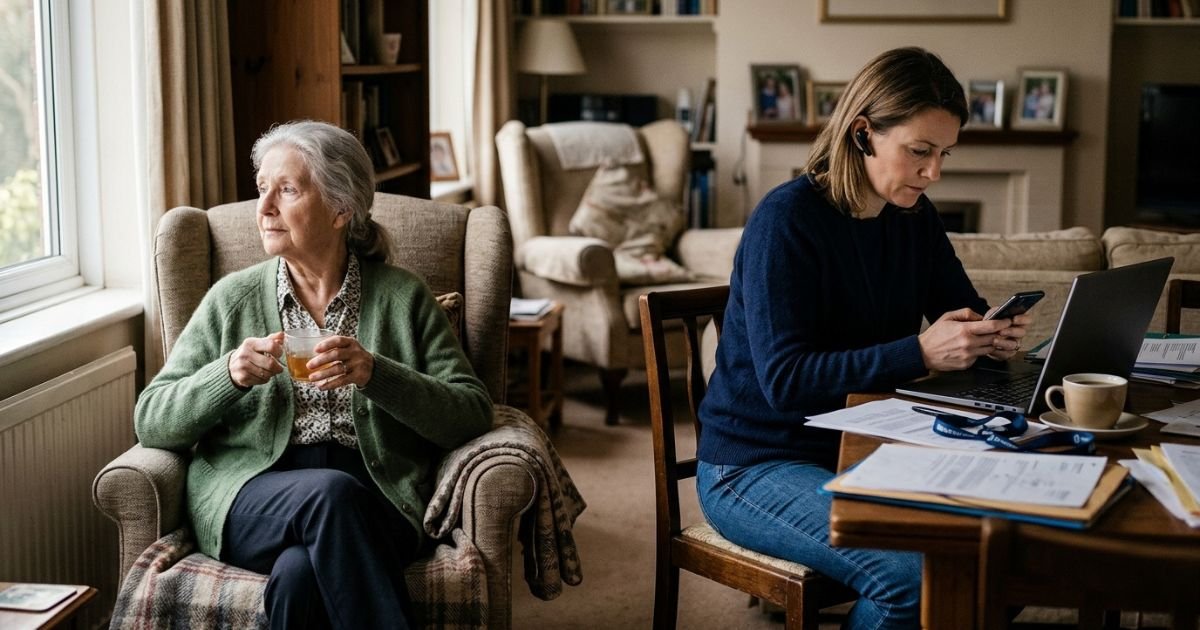
This is not about guilt. It is about awareness.
Most people who fail their parents do not do so intentionally. They do not wake up and decide to be neglectful, impatient, or dismissive. It happens gradually, quietly, through habits that form without much thought.
Taking their presence for granted
When someone has always been there, the mind begins to assume they always will be.
Calls get delayed because you plan to call later. Visits get postponed because you plan to go next weekend. Conversations get cut short because you are sure there will be more time soon.
And then one day, there is not.
The space that person occupied suddenly feels impossibly large, and the things you meant to say sit heavy because they were never said.
A powerful lesson in respect means refusing to let habit become neglect. It means treating every interaction as meaningful because it genuinely is.
Confusing responsibility with obligation
There is a significant difference between caring for someone because you feel obligated and caring for someone because you love them.
When care becomes an obligation, the warmth drains out of it. The actions may look the same from the outside, but the energy behind them is completely different. Parents feel that difference. They feel that they are being tolerated rather than loved.
Care that comes from love is patient and generous by nature. It does not keep score. It does not feel like a weight. It feels like an extension of the relationship that was built across decades.
Letting ego win in disagreements
Generations think differently. That is natural. Parents and adult children will not always agree, and that is fine.
The problem comes when disagreements become about winning rather than understanding.
A powerful lesson in respect includes the ability to listen without immediately defending. To disagree without dismissing. To let someone finish their thought before you respond with yours. To remember that protecting the relationship will always matter more than being right in a single argument.
Humility in conflict is one of the most underrated forms of respect.
How to Practice This Kind of Respect Every Single Day
Respect is not a grand gesture saved for special occasions. It is built in the small, ordinary moments that fill up everyday life.
Listen with your whole self
Put the phone down. Make eye contact. Let the silence be okay. Ask questions that show you actually want to know the answer, not just questions that fulfill the social obligation of seeming interested.
When your parent is talking, resist the urge to mentally prepare your next response. Just listen. It sounds simple. It is actually one of the rarest gifts you can give another person.
Respond with kindness even when you are tired
Kindness does not require ideal conditions. You do not have to be rested, stress-free, and in a great mood to speak gently.
You just have to make the choice. Again and again, even when it is hard, especially when it is hard.
That consistent choice over time is what builds the kind of relationship you will look back on with peace rather than regret.
Stay when it feels inconvenient
Sometimes the most meaningful thing you can do is not leave when you want to.
Stay for one more cup of coffee. Listen to one more story. Sit with them a little longer, even when your to-do list is pulling at you.
Those extra minutes cost very little. To the person who receives them, they can mean everything.
Offer help in a way that preserves dignity
There is a way to help someone who feels supportive, and there is a way to help someone who makes them feel incapable.
The difference is usually in the approach. Ask before assuming. Offer instead of taking over. Frame help as something you want to do, not something they need because they can no longer manage.
The goal is to make them feel supported without making them feel diminished.
The Quiet Long-Term Power of Choosing Respect

Choices compound over time. Small ones especially.
Every time you choose patience over frustration, presence over distraction, gentleness over sharpness, you are building something. A kind of relationship that grows stronger with each deliberate decision. A pattern of love that becomes part of who you are, not just what you do.
And here is something worth sitting with.
Children are always watching. If you have kids of your own, or if there are younger people in your life who look to you, they are taking notes on everything. Not the notes you plan to give them. The ones they absorb just by watching how you treat the people you love.
The way you honor your parents will one day shape the way your children honor theirs. Respect does not just stay in one generation. It moves forward.
There is also this. Regret is one of the heaviest things a person can carry. And the regrets that tend to stay the longest are not about things we did. They are about things we did not do. The visits we kept putting off. The patience we withheld. The calls were delayed until there were no more calls to make.
Choosing respect now is the surest way to protect your future self from that kind of grief.
Frequently Asked Questions
What is a powerful message about respect?
A powerful message about respect is that true respect is shown through actions, not just words. It means treating others with kindness, patience, and dignity, especially during difficult moments.
What are the 7 rules of respect?
The seven common rules of respect include listening carefully, speaking kindly, being patient, valuing others’ feelings, showing gratitude, respecting boundaries, and treating everyone with dignity. These habits help build strong and healthy relationships.
What are the 4 types of respect?
The four main types of respect are self-respect, respect for others, respect for authority, and respect for property or belongings. Each type plays an important role in developing good character and social harmony.
What are the three rules of respect?
The three basic rules of respect are listening without interrupting, treating others as you want to be treated, and valuing people’s feelings and opinions. These principles create trust and understanding.
What is respect in 10 lines?
Respect means valuing the worth and dignity of others. It is shown through kindness, patience, honesty, and consideration. Respect helps build stronger relationships and creates a positive environment. It is earned through actions and reflected in everyday behavior.
What is the old saying about respect?
A well-known saying about respect is, “Treat others the way you want to be treated.” It reminds us that respect begins with our own actions toward others.
What are some verses about respect?
Many religious teachings encourage respect, kindness, and honoring parents. These verses emphasize humility, compassion, gratitude, and treating others with dignity and love.
A Final Word About What That Son Left Behind
The old man in the restaurant said it perfectly.
The son left behind a lesson for every child and hope for every parent.
That hope matters enormously. Aging can be isolating in ways younger people rarely fully understand. The world moves faster than aging bodies can keep up with. Independence fades. Relevance can feel like it fades, too. And in that vulnerability, what parents need more than anything is to know that their children still see them. Still value them. Still choose them.
A powerful lesson in respect is ultimately a lesson in love.
Not the easy kind of love that asks for nothing. The deeper kind that shows up when things are hard, when the restaurant goes quiet, when it would be so much easier to look away.
That is the love that leaves something behind worth keeping.
And it starts with a choice. Yours. Today.

Welcome to Blessing Bloom. I’m Ahsan Ali, founder of BlessingBloom.com a faith-based website dedicated to sharing prayers, blessings, and heartfelt wishes. Based in Islamabad, Pakistan, I created Blessing Bloom to help people find the right words during life’s most meaningful moments. With a background in Information Technology, I combine a passion for digital content with a genuine love for faith-inspired writing.