


There is something quietly powerful about stopping in the middle of your busy life and simply saying, “Thank You, God.” If you are searching for three-point sermons on Thanksgiving, you have come to the right place. Whether you are a pastor preparing to preach, a small group leader planning a devotional, or a believer who simply wants to go deeper in gratitude, these sermons were written with your heart in mind. Each one is grounded in Scripture, shaped by real-life faith, and designed to move people from obligation to overflow.
Why Three-Point Sermons on Thanksgiving Still Matter Today
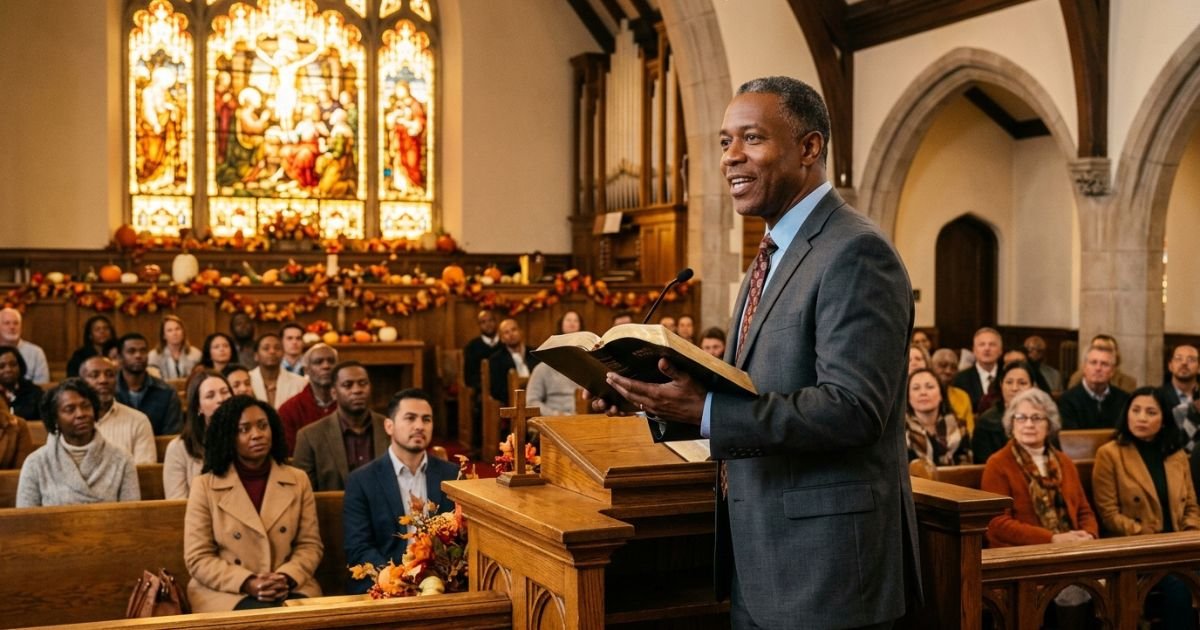
People are hungry for more than a holiday message. They want something that stays with them long after the last “Amen.” A well-structured three-point sermon on Thanksgiving gives listeners a clear framework they can carry into Monday morning, into their struggles, into their prayers. It is not just about saying thanks. It is about being transformed by it.
These sermons dig into what gratitude actually does to a soul, how it reshapes our thinking, restores broken places, and reconnects us to the heart of God. That is the kind of Thanksgiving message that leaves a room changed.
Sermon 1: The Thankful Heart God Is Looking For
Some of us were taught to say “thank you” as children, but genuine biblical thankfulness goes far deeper than manners. It is a posture of the soul. God is not looking for polished religious performances. He is looking for hearts that actually see Him, trust Him, and respond to His goodness with sincere, living gratitude.
Point 1: A Thankful Heart Remembers What God Has Done
Memory is a spiritual discipline. Throughout the Old Testament, God called His people to remember. Remember the wilderness. Remember the Red Sea. Remember Jericho. Remember the provision of manna. These were not history lessons. They were acts of worship.
Deuteronomy 8:2 says, “Remember how the Lord your God led you all the way in the wilderness these forty years, to humble and test you in order to know what was in your heart.” God wanted His people to remember not because He needed their praise, but because they needed the anchor of remembrance. When we recall what God has already done, we are building a foundation under our faith that no storm can easily shake.
Practically, this might look like keeping a gratitude journal, revisiting answered prayers, or sharing your testimony with someone who needs to hear it. The thankful heart does not let God’s faithfulness slip quietly into the past. It holds onto it, speaks it aloud, and lets it fuel present trust.
Point 2: A Thankful Heart Recognizes What God Is Doing Now
It is one thing to be grateful for the past. It is another to be aware enough to notice God moving in real time. Lamentations 3:22-23 reminds us that His mercies are new every morning. Every single morning. That means today is full of mercy you have not yet unwrapped.
The problem is that we often move through our days like we are running late, and we miss what is right in front of us. The sunrise. The unexpected kindness of a stranger. The moment a difficult conversation turned toward healing. The breath in your lungs. These are not coincidences. They are God, showing up on a Tuesday.
Training your heart to recognize God’s present work requires slowing down. It requires the kind of attentiveness the psalmist demonstrated when he wrote, “This is the day the Lord has made; we will rejoice and be glad in it” (Psalm 118:24). Not yesterday. Not tomorrow. This day. A thankful heart lives here, in this moment, with eyes open to grace.
Also READ: 10 Powerful Sermons on Thanksgiving for Gratitude
Point 3: A Thankful Heart Trusts What God Has Promised
Biblical thanksgiving is not limited to what we have already seen. It reaches into the future with holy confidence. This is perhaps the most challenging kind of gratitude, but also the most powerful.
Philippians 1:6 says, “Being confident of this, that he who began a good work in you will carry it on to completion until the day of Christ Jesus.” That verse is not just encouragement. It is permission to give thanks before the breakthrough comes. It is faith in action, gratitude offered ahead of the answer, because we trust the character of the One who promised.
When a congregation learns to thank God for what He is yet to do, something shifts in the spiritual atmosphere. Anxiety loosens its grip. Fear loses some of its voice. And hope, real and alive hope, begins to rise. The thankful heart that looks forward with faith is a heart that has come to know God not just as a historical figure but as a living, promise-keeping Father.
In Closing: The thankful heart God is looking for is one that remembers His faithfulness, recognizes His present grace, and trusts His future promises. When all three of these are working together, gratitude stops being a Sunday morning habit and becomes a way of life.
Sermon 2: Thanksgiving as a Weapon of Spiritual Warfare
This one might surprise your congregation. Gratitude is not just a pleasant devotional topic. In the hands of a Spirit-filled believer, it is a weapon. When you choose thanksgiving in the middle of a battle, something happens in the unseen realm that goes far beyond what you can see with your natural eyes.
Point 1: Gratitude Silences the Voice of the Enemy
The enemy of your soul is a strategist. He studies your fears, your insecurities, and your disappointments. And then he whispers. He whispers that God has forgotten you. That your situation is hopeless. That you are not enough, and never will be. Complaining feeds those whispers. Gratitude starves them.
Revelation 12:10 describes Satan as the accuser, the one who stands before God day and night, pointing out every flaw and failure. But when a believer lifts a voice of thanksgiving, they are countering that accusation with truth. They are saying, out loud, with their whole heart: “God is good. He has been faithful. I trust Him.”
That declaration does not just encourage the people around you. It breaks something in the atmosphere. It establishes truth over lies. And it protects your mind from the spiral of negativity that discouragement always tries to pull you into. Gratitude does not ignore your pain. But it refuses to let your pain have the last word.
Point 2: Praise Releases the Power of God Into Your Situation
The story in 2 Chronicles 20 is one of the most dramatic accounts of praise in all of Scripture. King Jehoshaphat was surrounded by enemies. His army was outnumbered. So what did he do? He put the worshipers at the front of the army. The singers went out first, praising God for His holiness and His enduring love.
And as they sang, the Lord set ambushes against the enemy armies. The enemies turned on each other. By the time Jehoshaphat’s army arrived at the battlefield, all they had to do was collect the plunder. There was nothing left to fight.
Now, God does not always work in exactly that way. But the principle is real and consistent across Scripture. When God’s people offer genuine praise and thanksgiving, they are surrendering the battle to Him. They are saying, “This is Yours. We trust You.” And God, who inhabits the praises of His people (Psalm 22:3), shows up powerfully when His people choose worship over worry.
Point 3: Thanksgiving Breaks the Chains of Fear and Anxiety
Paul was in a prison cell when he wrote, “Do not be anxious about anything, but in every situation, by prayer and petition, with thanksgiving, present your requests to God. And the peace of God, which transcends all understanding, will guard your hearts and your minds in Christ Jesus” (Philippians 4:6-7).
He was not writing from a comfortable study with a warm cup of coffee. He was chained to a guard, uncertain about his future. And still he commanded thanksgiving. Not as denial. Not as toxic positivity. But as a spiritual act of trust that invites God’s peace into places where human logic cannot go.
When you approach God with a grateful heart, even while presenting your deepest needs, something shifts. The peace He gives is not the absence of hard circumstances. It is the presence of God in the middle of them. Thanksgiving does not make the problem disappear. It makes the Presence undeniable.
In Closing: Thanksgiving is warfare. It silences the accuser, releases God’s power, and breaks the chain of anxiety. If your congregation is walking through battles right now, give them this weapon and teach them how to use it.
Sermon 3: From Obligation to Overflow: What Real Gratitude Looks Like
There is a kind of thanksgiving that is performed and a kind that is poured out. God is not looking for performance. He knows the difference between a thank-you said out of duty and one that wells up from a heart that has truly been touched by His grace. This sermon is about moving from one to the other.
Point 1: Genuine Gratitude Is Born from Real Relationship
You cannot manufacture authentic thankfulness. It has to come from somewhere real. And that somewhere is intimacy with God.
Psalm 34:8 says, “Taste and see that the Lord is good.” The emphasis is on taste. Personal experience. Not secondhand knowledge, not inherited religion, but a firsthand encounter with the goodness of God. When someone has genuinely tasted His grace, thanksgiving is not something they have to manufacture. It rises naturally, the way gratitude rises in you when someone does something unexpected and profoundly kind.
People who struggle to feel thankful are often, at their core, struggling to feel close to God. The remedy is not trying harder to be grateful. The remedy is drawing nearer. Spend time in His presence. Sit with Scripture. Pray honestly. Share your doubts and your fears. When closeness grows, gratitude follows. Always.
Point 2: Real Gratitude Is Willing to Cost Something
King David said something remarkable in 2 Samuel 24:24. When offered a threshing floor for free so he could build an altar to God, he refused. He said, “I will not sacrifice to the Lord my God burnt offerings that cost me nothing.” Let that settle in for a moment.
David understood that gratitude without sacrifice is not really gratitude. It is convenient. Real thanksgiving sometimes means giving thanks when it is hard. It means praising God in the middle of grief, not just after it. It means surrendering something you would rather hold onto, whether that is control, or your plan, or even your timeline, and saying, “I trust You anyway.”
This kind of costly gratitude is rare. But it is the kind that moves heaven. It is the kind that proves our faith is not just fair-weather faith. And when people in your congregation see someone offering that kind of thanks in genuinely hard circumstances, it does something profound to their own faith. It shows them it is possible.
Point 3: Authentic Gratitude Always Overflows Toward Others
Real thanksgiving cannot stay contained. Psalm 107:2 urges, “Let the redeemed of the Lord tell their story.” The natural result of genuine gratitude is testimony. It spills over. It looks for people to encourage. It becomes contagious.
When you have truly encountered God’s goodness, you want others to know. You share what He has done. You look for ways to pass on the blessing. Your gratitude becomes generosity, your testimony becomes someone else’s turning point, and your joy becomes a light in someone else’s darkness.
Churches that cultivate this kind of overflowing gratitude become communities of extraordinary encouragement. People come in carrying heavy loads and leave feeling seen, lifted, and reminded that God is still at work. That is what authentic gratitude does when it is set free.
In Closing: The journey from obligation to overflow begins with relationship, deepens through sacrifice, and always ends in generosity. Help your congregation not just say thank you, but mean it with their whole lives.
Sermon 4: The Healing Power of a Thankful Heart
Some wounds do not respond to time alone. Some broken places inside of us need something more intentional, something more spiritually active, to begin to heal. Gratitude, practiced with sincerity and rooted in faith, carries genuine healing properties. It does not deny the pain. It lifts the gaze above it.
Point 1: Thanksgiving Heals Emotional Wounds
Emotional wounds are some of the heaviest things human beings carry. Betrayal. Grief. Disappointment. The kind of hurt that does not just go away with willpower. These wounds can fester for years if left unaddressed. They can turn into bitterness, then into resentment, then into a kind of hardness that slowly pushes God and people away.
Psalm 147:3 promises, “He heals the brokenhearted and binds up their wounds.” This is not a metaphor. This is God’s active, personal involvement in our pain. But healing often begins with an invitation, and gratitude is one of the most powerful invitations we can offer.
When we choose to thank God even in the middle of our hurt, not for the wound itself, but for His presence in it, we are saying: “You are still here. You are still good. I am still holding on.” That posture opens us to receive what God so deeply wants to give, restoration, peace, and freedom from the bitterness that would otherwise hold us captive.
Point 2: Gratitude Restores Broken Relationships
The same grace that softens our hearts toward God also softens them toward people. Ephesians 4:32 says, “Be kind and compassionate to one another, forgiving each other, just as in Christ God forgave you.” The connection between gratitude and forgiveness is direct. When we are genuinely grateful for what God has forgiven in us, it becomes harder to withhold forgiveness from others.
Thanksgiving recalibrates how we see people. Instead of cataloging what someone did wrong, a grateful heart begins to ask: “What did God give me in this person, even if things are complicated right now?” That shift in perspective is not a weakness. It is the beginning of reconciliation. It is the crack in the wall where healing can start to come through.
Some relationships will not be fully restored this side of eternity. But gratitude can still bring healing to your own heart, even when the other person is not part of the process. You can release bitterness not because they deserve it, but because you deserve to be free.
Point 3: A Grateful Heart Supports Whole-Person Wellness
Proverbs 17:22 says, “A cheerful heart is good medicine.” This is not just spiritual poetry. Modern research consistently confirms that gratitude is connected to lower stress, better sleep, improved mental health, and even stronger immune function. God designed us to thrive in an atmosphere of thankfulness. That is not an accident. It is architecture.
A chronically critical, complaining, ungrateful inner life does real damage over time. It keeps the stress response elevated. It trains the brain to look for threats and miss blessings. It can contribute to depression, burnout, and physical illness in ways that are well documented.
But the opposite is also true. A heart that is being trained toward gratitude, one that actively looks for evidence of God’s goodness even on hard days, becomes more resilient, more joyful, and more whole. This is not about ignoring real problems. It is about not letting real problems have all the airtime. Give some of that space to God’s goodness, and watch what happens over time.
In Closing: Thanksgiving is medicine for the soul. It heals emotional wounds, opens the door to restored relationships, and contributes to the kind of wholeness God designed us to walk in. Preach this with compassion. Your congregation is carrying more than you know.
Sermon 5: Giving Thanks in the Wilderness Seasons
If thanksgiving were only appropriate for the mountaintop moments, it would not be very useful. Most of life is lived somewhere in between. And some seasons feel like flat-out wilderness, dry and disorienting and seemingly far from where God promised you would be. This sermon is for those seasons.
Point 1: God Is Actively Present in the Wilderness
One of the enemy’s most effective lies in the wilderness is this: God has left. He is not here. He forgot about you. It feels true. The silence feels like an absence. The unanswered prayers feel like rejection. But Scripture tells a different story.
Isaiah 43:19 says, “See, I am doing a new thing! Now it springs up; do you not perceive it? I am making a way in the wilderness and streams in the wasteland.” The wilderness is not a sign of God’s absence. It is often a sign of God’s most intentional, concentrated work. He is making a way. Right there. In the dry place. The fact that you cannot see it yet does not mean it is not happening.
Thanksgiving in the wilderness is an act of seeing by faith rather than by sight. It says, “I cannot see what You are doing, but I trust that You are doing something.” That kind of trust is precious to God. And it is the seed of the testimony you will one day share about how He brought you through.
Also READ: 20 Heartfelt Funeral Sermon Topics with Samples
Point 2: Wilderness Seasons Reveal What Is Really in Our Hearts
This point may be the most uncomfortable, but it is also the most transformative. Deuteronomy 8:2 says God led His people through the wilderness “to humble and test you in order to know what was in your heart.” The wilderness is a revealer. When everything is stripped away, including comfort, clarity, and convenience, what is left is what we are really made of.
Some people emerge from wilderness seasons bitter, hardened, and further from God than when they entered. Others emerge refined, grateful in ways they never could have been before, and possessed of a depth of faith that was simply not possible on the mountaintop. The difference, more often than not, is the choice to practice thanksgiving even when it is hard.
James 1:2-4 says, “Consider it pure joy, my brothers and sisters, whenever you face trials of many kinds, because you know that the testing of your faith produces perseverance. Let perseverance finish its work so that you may be mature and complete, not lacking anything.” The wilderness is not wasted time. It is formation time. It is the place where character is being built that could not have been built anywhere else.
Point 3: The Wilderness Prepares You for the Promise
Moses spent forty years in the wilderness before God called him to lead a nation. David was anointed king as a teenager and spent years running for his life before he ever sat on a throne. Joseph was thrown into a pit, sold into slavery, and falsely imprisoned before he was raised to a position of extraordinary influence. Jesus Himself spent forty days in the wilderness before beginning His public ministry.
Not one of these wilderness seasons was wasted. Each one was prepared. Not punishment. Romans 5:3-5 says, “We also glory in our sufferings, because we know that suffering produces perseverance; perseverance, character; and character, hope.” The wilderness was making space for what came next. It was doing something in them that the comfortable seasons never could.
If someone in your congregation is in a wilderness right now, help them see it through this lens. Not with the kind of shallow comfort that minimizes their pain, but with the kind of deep encouragement that honors their struggle and reminds them that God has not lost the script. The wilderness is part of the story. And the promise is still coming.
In Closing: Thanksgiving in the wilderness is not pretending everything is fine. It is declaring that God is still good, still present, and still working, even when the evidence is hard to see. That kind of gratitude is the most powerful kind of all.
Sermon 6: Cultivating a Culture of Thanksgiving in Your Home and Church

Thanksgiving is personal, but it was never meant to stay private. When individuals who practice gratitude come together, something begins to happen in the atmosphere around them. Gratitude becomes contagious. It builds culture. And culture shapes the next generation.
Point 1: Gratitude Starts at Home
Deuteronomy 6:6-7 tells parents to impress God’s commands on their children, talking about them at home and along the road, at bedtime and at breakfast. The same principle applies to gratitude. A home where thanksgiving is modeled consistently is a home where children learn to see the world through the lens of God’s goodness.
This does not require grand gestures. It looks like pausing before meals to genuinely thank God instead of rushing through a rote prayer. It looks like saying, out loud, what you are grateful for at the end of the day. It looks like celebrating answered prayers when they come, no matter how small. It looks like a parent choosing to say “God is good” in the middle of something hard, so that a child can hear it and begin to believe it.
The culture of a home is built one moment at a time. When gratitude is one of those moments, day after day, it becomes the air that everyone in that home breathes. And the children raised in it will carry it with them long after they leave.
Point 2: Corporate Thanksgiving Multiplies Faith in the Church
Hebrews 10:24-25 calls believers not to give up meeting together, but to spur one another on toward love and good deeds. One of the most powerful ways a congregation can do this is through shared expressions of thanksgiving, testimonies, sung worship, prayer that overflows with praise, and moments where the body of Christ gathers specifically to declare what God has done.
There is something that happens when people hear each other’s testimonies. Faith rises in the room. The person who is struggling with doubt hears the testimony of someone who was in the same darkness six months ago and is now standing in light. The person carrying a private grief hears that God showed up for someone else in their season of loss. Hope spreads. Trust deepens.
A church that makes space for corporate thanksgiving, not just on Thanksgiving Sunday but as a regular part of its rhythm, becomes a church where people want to be. Not because it is always comfortable, but because it is alive. And that aliveness draws people who are desperately searching for exactly that.
Point 3: Gratitude Carries Into Your Community
Colossians 4:5-6 says, “Be wise in the way you act toward outsiders; make the most of every opportunity. Let your conversation be always full of grace, seasoned with salt.” A grateful person is a grace-filled person. And grace-filled people are extraordinarily attractive to a world that is drowning in cynicism, complaint, and hopelessness.
When your congregation goes out into their workplaces, neighborhoods, and communities with a spirit of genuine gratitude, they become a counter-cultural presence that people notice. The coworker who always finds something to be grateful for in a difficult season stands out. The neighbor who responds to hardship with quiet faith draws questions. The family whose joy is obviously rooted in something deeper than their circumstances becomes a testimony without saying a word.
Gratitude is evangelistic. Not in a pushy, religious way. But in the deeply human way that causes people to ask, “What do you have that I do not have?” And that question is an open door.
In Closing: A culture of thanksgiving begins in one heart, spreads to one home, fills one church, and eventually touches an entire community. Start small. Be consistent. Watch it grow.
Sermon 7: The Unbreakable Bond Between Thanksgiving and Trust
You cannot truly be grateful to someone you do not trust. And you cannot truly trust someone without your trust eventually producing gratitude. Thanksgiving and trust are deeply bound together in the life of faith, and understanding their relationship transforms both our prayer life and our daily walk with God.
Point 1: Thanksgiving Declares What We Believe About God
Every time we give thanks, we are making a theological statement. We are saying: God is real. He is involved. He is good. He is trustworthy. This is not just an emotional expression. It is an act of faith that announces something true about the nature of God, even when circumstances might suggest otherwise.
Nahum 1:7 says, “The Lord is good, a refuge in times of trouble. He cares for those who trust in him.” Gratitude is one of the most powerful ways we declare this truth. When we thank God in the middle of a crisis, we are not pretending the crisis is not real. We are saying that God is more real than the crisis. We are choosing to anchor our declaration in His character rather than in our circumstances.
This kind of thanksgiving builds faith not just in the one offering it, but in everyone who witnesses it. There is something deeply compelling about a person who can say “thank you” to God when their world is falling apart. It is not a weakness. It is the strongest possible declaration of trust.
Point 2: Genuine Trust Allows Us to Thank God Before the Answer Comes
Jesus stood at the tomb of Lazarus. His friend was dead. The family was grieving. The crowd was watching. And before He called Lazarus out of the tomb, He looked up and said, “Father, I thank you that you have heard me” (John 11:41). He gave thanks before the miracle was visible.
This is the kind of faith that Hebrews 11:1 describes: “Confidence in what we hope for and assurance about what we do not see.” Thanking God before the answer arrives is not wishful thinking. It is a deep, mature, biblically rooted trust. It says: I know who You are. I know you hear me. I know your timing is perfect. And I trust You enough to be grateful before I see how this ends.
Teaching your congregation to practice this kind of anticipatory gratitude will revolutionize their prayer lives. It shifts the posture from anxious pleading to confident surrender. And it creates a spiritual environment where miracles are not just hoped for, but expected.
Point 3: Thanksgiving and Trust Together Release God’s Supernatural Peace
Paul’s famous words in Philippians 4:6-7 deserve to be read slowly and taken seriously. “Do not be anxious about anything, but in every situation, by prayer and petition, with thanksgiving, present your requests to God. And the peace of God, which transcends all understanding, will guard your hearts and your minds in Christ Jesus.”
The peace Paul describes is not something we manufacture through positive thinking. It is not the result of resolving every open question in our lives. It is the direct result of trusting God enough to bring our requests to Him with thanksgiving rather than panic. It is peace that arrives when we decide, actively and intentionally, to let God carry what we were never designed to carry alone.
Anxiety says: I am not sure God will come through. Thanksgiving says: Whatever happens, He is God, and I trust Him. The peace that follows that choice is real. It is biblical. And it is available to everyone in your congregation who is willing to practice it.
In Closing: Thanksgiving and trust are not separate disciplines. They are two expressions of the same faith. Grow one, and the other will follow. Help your congregation understand that their gratitude is not just an emotional response. It is a declaration of trust that changes everything.
Sermon 8: Thanksgiving as a Lifestyle of Continuous Worship
The goal of all these sermons, ultimately, is not just a better attitude during November. The goal is a life so saturated in gratitude that it becomes a form of continuous, living worship. Not manufactured. Not mechanical. But as natural as breathing, because it grows from a heart that has come to know and love and trust the God who is always, always good.
Point 1: Every Moment Becomes an Opportunity to Worship
First Thessalonians 5:16-18 says, “Rejoice always, pray continually, give thanks in all circumstances; for this is God’s will for you in Christ Jesus.” This is one of the most condensed, comprehensive instructions in all of Scripture. Three short commands that describe a complete way of life.
Rejoice always. Not just at church. Not just on good days. Always. Pray continually. Not just in scheduled quiet times. Continually. Give thanks in all circumstances. Not just when it makes sense to be grateful. In all circumstances.
This is not an impossible standard. It is an invitation to a different kind of life, one where every moment carries the potential for worship. The morning commute. The difficult phone call. The mundane afternoon. The sleepless night. In every one of these, there is an invitation to notice God, thank Him, and offer the moment back to Him as an act of praise.
Point 2: Ordinary Work Becomes Sacred When Done with Gratitude

Colossians 3:23-24 says, “Whatever you do, work at it with all your heart, as working for the Lord, not for human masters.” This is one of the most practically transformative passages in the New Testament. It means that no honest work is secular when it is done with a heart oriented toward God.
The teacher who begins the day thanking God for her students, even the difficult ones, is worshiping through education. The plumber who goes about his work with integrity because he is ultimately working for the Lord is offering worship through his craft. The parent who gets up for the third time in a night with a sick child and whispers a quiet prayer of thanks for this life in their care is worshiping through exhaustion and love.
Gratitude is the thing that transforms ordinary into sacred. When we thank God for the work He has given us, for the people we serve through it, for the resources and abilities He provides, our work becomes an offering. And an offering laid before God, no matter how ordinary it looks, is never without meaning.
Also READ: 20 Funeral Sermon Outlines to Provide Comfort Grieving Hearts
Point 3: Our Relationships Become Acts of Worship When We Value People with Gratitude
Ephesians 5:20 instructs us to always give thanks to God the Father for everything, in the name of our Lord Jesus Christ. This “everything” includes the people God has placed in our lives. Every person we are in a relationship with is a gift, even when the relationship is complicated.
When we approach our relationships with a heart of genuine gratitude, something changes in the way we treat people. We begin to see them not as problems to be managed or needs to be met, but as gifts to be cherished. We thank God for what we have learned from a difficult person. We thank Him for the unexpected ways a friendship has shaped us. We thank Him for the privilege of being part of someone else’s story.
This gratitude-shaped way of relating to others becomes its own form of worship. It honors God by treating His image-bearers with the dignity and love He intended. And it often communicates to the people around us, without a single sermon, that they are seen, valued, and worth something.
In Closing: A lifestyle of thanksgiving is not a destination you arrive at all at once. It is a daily practice, built one moment, one choice, one quiet prayer of gratitude at a time. But over the years of that practice, something remarkable happens. Life begins to look like worship. Not just on Sundays. Every day.
How to Use These Three-Point Sermons on Thanksgiving
These sermons are designed to be adaptable. You can preach each one as a standalone message, use them as a full Thanksgiving sermon series over multiple weeks, or draw individual points from them for devotionals, Bible studies, or small group discussions.
A few suggestions for using them well:
Begin with your own personal thanksgiving. The most effective preachers of gratitude are those who have genuinely practiced it. Before you stand to preach any of these sermons, spend time with God yourself, thanking Him, remembering His faithfulness, and letting the message sink into your own heart first.
Connect to real life. Abstract theology lands better when it is grounded in real stories. Share your own experiences of what Thanksgiving has done in your life. Invite testimonies from your congregation. Let the sermon become a conversation with lived experience.
Leave space for response. After delivering a message on Thanksgiving, give people a moment to respond. Whether that is a time of silent gratitude, a spoken declaration, a song of praise, or simply an invitation to write down one thing they are thankful for, the response deepens the impact of any sermon.
Frequently Asked Questions
What are the three points for Thanksgiving?
A strong three-point sermon on thanksgiving typically covers remembering God’s past faithfulness, recognizing His present blessings, and trusting His future promises. These three movements take gratitude out of the emotional and root it in real, lived faith. Together, they create a complete picture of what biblical thankfulness actually looks like in daily life.
What is a good sermon to preach for Thanksgiving?
One of the most powerful sermons you can preach for Thanksgiving is on gratitude as a weapon of spiritual warfare, drawn from Philippians 4:6-7 and 2 Chronicles 20. It surprises congregations who expect a warm, feel-good message and instead gives them something they can actually use in their real battles. Other strong options include sermons on the healing power of thanksgiving or on moving from obligation to overflow, both of which meet people exactly where they are emotionally.
What is Psalm 34 for thanksgiving?
Psalm 34:8 says, “Taste and see that the Lord is good.” This verse sits at the heart of what authentic thanksgiving is really about. It is not about knowing facts about God from a distance. It is about personal, firsthand experience of His goodness. When someone has truly tasted His grace, genuine gratitude rises naturally. Psalm 34 also opens with one of the most powerful commitments in all of Scripture: “I will bless the Lord at all times; his praise will always be on my lips.” That is not seasonal gratitude. That is a lifestyle of worship.
What are common Thanksgiving sermon themes?
The most common and effective Thanksgiving sermon themes include gratitude as worship, trusting God in difficult seasons, thanksgiving as a spiritual discipline, the healing power of a grateful heart, and moving from a spirit of complaint to a spirit of praise. Stronger sermons go beyond the obvious and explore gratitude as spiritual warfare, the connection between thanksgiving and trust, and what it means to cultivate a culture of gratitude in your home, church, and community.
What are the three things to be thankful for?
Biblically speaking, the three foundational things every believer can always be thankful for are God’s mercy and forgiveness, His faithful presence in every season, and the hope of His promises still to come. These three do not depend on your circumstances being good. They are true whether you are on the mountaintop or walking through the wilderness. That is what makes them a reliable foundation for gratitude in every season of life.
Conclusion
Thanksgiving is one of those topics that can feel routine if we are not careful. We preach it every year. People nod. They go home. They eat dinner. And Monday feels exactly the same.
But it does not have to be that way. When three-point sermons on Thanksgiving are preached with real emotional depth, genuine scriptural grounding, and authentic pastoral heart, they have the power to change people. Not just their mood for a day. But their whole orientation toward life.
The goal is not a room full of people who feel warm and fuzzy about November. The goal is a congregation that has been truly moved by the goodness of God, that walks out of the service a little less afraid, a little more trusting, a little more open-handed with their lives.
That is the kind of Thanksgiving message that lasts beyond the holiday. That is the kind of sermon worth preaching. And that is the kind of faith worth living.
May your congregation leave every one of these messages more rooted in gratitude, more anchored in trust, and more fully alive to the God who is, in every season and every circumstance, so deeply, abundantly good.

Welcome to Blessing Bloom. I’m Ahsan Ali, founder of BlessingBloom.com a faith-based website dedicated to sharing prayers, blessings, and heartfelt wishes. Based in Islamabad, Pakistan, I created Blessing Bloom to help people find the right words during life’s most meaningful moments. With a background in Information Technology, I combine a passion for digital content with a genuine love for faith-inspired writing.