

There is something quietly powerful about a dictionary. It sits on a shelf or opens on a screen, patient and unassuming, holding every word humanity has ever agreed to share. If you have ever looked up a word just to feel the satisfaction of understanding it more deeply, you already know the joy that comes with language. These 60 quotes about dictionaries celebrate that joy. They come from poets, novelists, comedians, philosophers, and people of faith, all of whom recognized that words are not just tools. They are the architecture of thought itself.
Why Dictionaries Are More Than Just Reference Books
Most people reach for a dictionary only when they are unsure about spelling or meaning. But writers, scholars, and lovers of language have always known something richer lives inside those pages. A dictionary is a living record of how people have experienced the world across centuries. It captures shifts in culture, reflects social change, and preserves the voices of generations who shaped how we speak today.
The Bible itself opens with a word. ‘In the beginning was the Word,’ John 1:1 reminds us, and for many believers, language carries a sacred weight. Every word we choose either builds up or tears down, heals or wounds. Dictionaries help us choose wisely.
Proverbs 25:11 says, ‘A word fitly spoken is like apples of gold in a setting of silver.’ That image is stunning. It tells us the right word, placed with care, carries beauty and value beyond measure. A dictionary helps us find the right word.
Here are 60 quotes about dictionaries that will deepen your appreciation for language, words, and the extraordinary power they hold.
Also Read: 60 Powerful Quotes About Honesty to Inspire Truth and Integrity
Famous Quotes About Dictionaries From Literary Giants
Great writers have always had a complicated, adoring relationship with dictionaries. For them, the dictionary is not a last resort. It is a daily companion.
Words That Writers Have Lived By
‘Words — so innocent and powerless as they are, as standing in a dictionary, how potent for good and evil they become in the hands of one who knows how to combine them.’ — Nathaniel Hawthorne
That quote stops you in your tracks. Hawthorne understood that the dictionary is neutral ground. It is what we do with words that determines their impact on the world.
‘I was reading the dictionary. I thought it was a poem about everything.’ — Steven Wright
This one brings a smile, but the humor carries real truth. A dictionary, read with imagination, is exactly that: a poem about everything that exists and everything we feel.
‘Poetry is a deal of joy and pain and wonder, with a dash of the dictionary.’ — Khalil Gibran
‘I have always been in love with language. My favorite book is a dictionary. I have always loved words.’ — Denis Villeneuve
‘Always remember that striving and struggling precede success, even in the dictionary.’ — Sarah Ban Breathnach
‘Every time I have to look up a word in the dictionary, I am delighted.’ — Vivienne Westwood
‘Love is the most important thing in the world. Hate, we should remove from the dictionary.’ — John Wooden
‘The difference between the right word and the almost right word is the difference between lightning and a lightning bug.’ — Mark Twain
‘Words are, of course, the most powerful drug used by mankind.’ — Rudyard Kipling
‘A dictionary is the universe in alphabetical order.’ — Anatole France
Samuel Johnson and the Birth of the English Dictionary
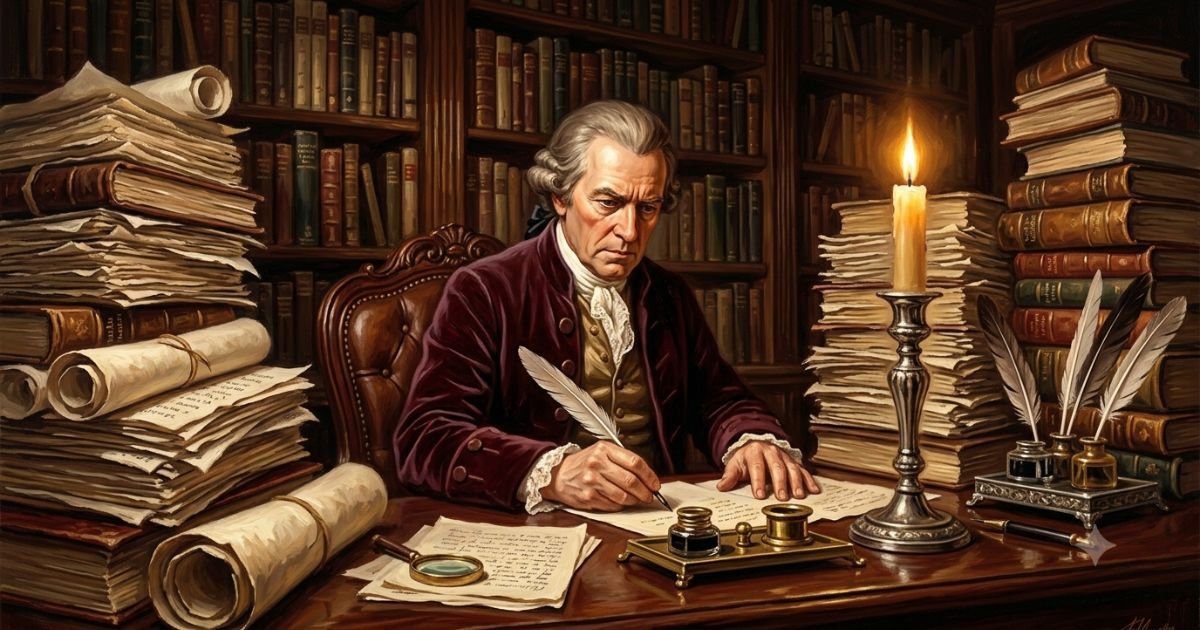
If there is one name every lover of language should know, it is Samuel Johnson. In 1755, he published ‘A Dictionary of the English Language,’ a monumental work that took nine years to complete and redefined what a reference book could be. He wrote the definitions himself, often with wit and personal opinion woven in.
Samuel Johnson Quotes About Dictionaries and Language
Johnson was not just a lexicographer. He was a philosopher of language, and his words still carry weight today.
‘A dictionary is a malevolent literary device for cramping the growth of a language and making it hard and inelastic.’ — Ambrose Bierce (written in the spirit of playful opposition to Johnson’s tradition)
‘Every quotation contributes something to the stability or enlargement of the language.’ — Samuel Johnson
‘Language is the dress of thought.’ — Samuel Johnson
‘The chief glory of every people arises from its authors.’ — Samuel Johnson
‘Words are the daughters of earth, and things are the sons of heaven.’ — Samuel Johnson
‘Dictionaries are like watches; the worst is better than none, and the best cannot be expected to go quite true.’ — Samuel Johnson
Johnson’s final quote is one of the most quoted lines about dictionaries ever written. It reminds us that no reference book is perfect, but every one of them matters. Johnson himself worked with imperfection and produced something extraordinary anyway. There is a lesson there for all of us.
Also Read: 130 Best Quotes About the Air for Nature Lovers
Quotes About Dictionaries and the Power of Vocabulary
Your vocabulary is not just a collection of words you know. It is the lens through which you see and communicate your world. Research has consistently shown that people with richer vocabularies think more precisely, communicate more clearly, and read with deeper comprehension. These quotes celebrate the act of building that inner library.
Growing Your Word Power, One Definition at a Time
‘The limits of my language mean the limits of my world.’ — Ludwig Wittgenstein
This philosophical quote hits differently when you sit with it. Wittgenstein is saying that if you cannot name something, you may struggle to fully understand or express it. Every new word you learn literally expands your world.
‘A man who does not read has no advantage over the man who cannot read.’ — Mark Twain
‘To read without reflecting is like eating without digesting.’ — Edmund Burke
‘Vocabulary is the clothing of ideas. The richer it is, the better-dressed your thoughts become.’
‘A strong vocabulary is the clearest sign of a well-exercised mind.’
‘Words are seeds. Plant them carefully, and watch what grows from what you say.’
‘Knowing the right word at the right moment is a form of grace.’
‘Every new word you learn is a key that opens a door you did not even know was there.’
‘Reading grows vocabulary. Vocabulary grows clarity. Clarity grows confidence.’
‘The richer your vocabulary, the more precisely you can love, argue, comfort, and create.’
‘Words empower. Silence surrenders. Choose your vocabulary like your life depends on it.’
Quotes About Dictionaries, Language, and Faith
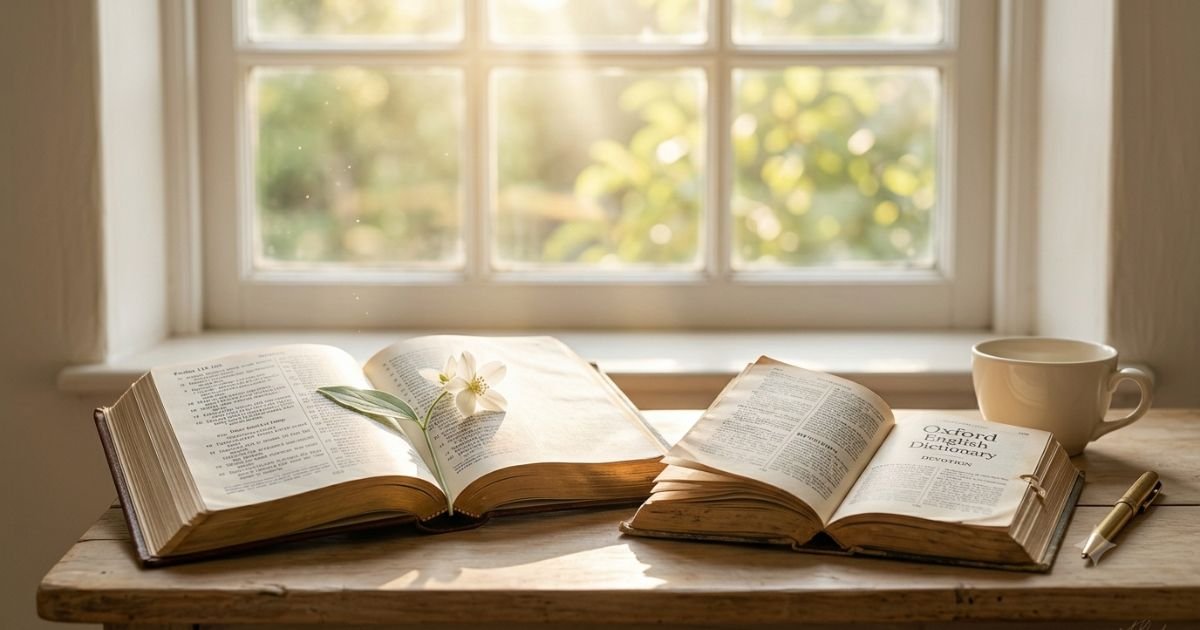
Language is spiritual. Many people of faith have reflected on the sacred nature of words and how carefully we should treat them. The Bible itself is a book of words, and the Christian tradition has always held that our speech reflects our hearts.
When Words Carry the Weight of the Soul
‘In the beginning was the Word, and the Word was with God, and the Word was God.’ — John 1:1
‘Let your speech always be gracious, seasoned with salt, so that you may know how you ought to answer each person.’ — Colossians 4:6
‘Death and life are in the power of the tongue.’ — Proverbs 18:21
‘The tongue has the power of life and death, and those who love it will eat its fruit.’ — Proverbs 18:21 (ESV)
These verses remind believers that a dictionary is not just an academic tool. It is a resource for speaking life into others. Knowing a word’s true meaning helps us use it with intention and love.
‘Language was given to man to express his thoughts, to communicate truth, and to glorify God.’ — Matthew Henry
‘A gentle answer turns away wrath, but a harsh word stirs up anger.’ — Proverbs 15:1
‘Words can minister grace to those who hear.’ — Ephesians 4:29 (paraphrase)
‘The best use of a dictionary is not to win arguments but to serve others more clearly.’
‘When we choose words with care, we honor the One who created language itself.’
‘God spoke the world into existence. We participate in that miracle every time we choose our words wisely.’
Also Read: 120 Best Manifestation Quotes for Success, Love, and Abundance
Funny and Lighthearted Quotes About Dictionaries
Not every thought about dictionaries needs to be serious. Some of the funniest minds who ever lived had something delightful to say about language and the books that try to contain it.
When Word People Get Witty
‘The dictionary is the only place where success comes before work.’ — Vidal Sassoon
That one never gets old. It is the kind of clever observation that makes you look at a bookshelf differently.
‘Who is to say who is the villain and who is the hero? Probably the dictionary.’ — Joss Whedon
‘If you look up the definition of greatness in the dictionary, it will say Michael Jordan.’ — Elgin Baylor
‘I checked the dictionary. My idea was right. The dictionary was wrong.’ — Anonymous
‘I opened a dictionary, and it was just full of words.’ — Anonymous
‘Synonyms are just words you use when you cannot spell the first word you thought of.’ — Anonymous
‘The thesaurus is a dictionary’s smarter, more mysterious cousin.’
‘If you stare at any word long enough, it starts to look like it was invented five minutes ago.’
‘A dictionary is proof that humans once sat down and agreed on things. Briefly.’
Noah Webster and the American Dictionary Legacy
While Samuel Johnson shaped the English dictionary, Noah Webster shaped the American one. Born on October 16, 1758, Webster dedicated his life to creating a distinctly American form of the English language. His 1828 ‘American Dictionary of the English Language’ contained over 70,000 words and is considered one of the greatest achievements in American intellectual history. October 16 is now celebrated informally as Dictionary Day in his honor.
Honoring the Lexicographer Who Built American English
‘Education is useless without the Bible.’ — Noah Webster
Webster was a man of deep faith, and he believed language and Scripture were inseparable. His dictionary included biblical definitions and moral guidance alongside linguistic ones.
‘The education of youth should be watched with the most scrupulous attention.’ — Noah Webster
‘Let us never forget that the cultivation of the earth is the most important labor of man.’ — Noah Webster
‘A pure democracy is generally a very bad government. It is often the most tyrannical government on earth.’ — Noah Webster
Webster’s legacy is one of the clearest examples of how one person with a love for words can change the way an entire nation communicates. The Merriam-Webster Dictionary, now the most widely used American dictionary, carries his name and continues his mission.
Quotes About Words, Etymology, and Word Origins
Behind every word is a story. Etymology, the study of word origins, reveals how language travels across cultures, centuries, and continents. When you trace a word back to its roots, you are doing a kind of archaeology of human experience.
Digging Into the Roots of Language
‘Etymology is the history of words; to know etymology is to know a piece of human history.’
‘Every word carries its ancestors within it.’
‘Language borrows, adapts, and evolves. The dictionary is its biography.’
‘Understanding where a word comes from helps you understand what it truly means.’
‘Latin roots, Greek branches, and the whole world as its trunk. That is the family tree of the English dictionary.’
‘When you learn a word’s origin, you meet the people who first needed it.’
‘Etymology reveals not just meaning but migration, trade, conquest, and love.’
Quotes About Dictionaries for Students, Readers, and Lifelong Learners

Whether you are a student studying for exams, a parent reading to a child, or a lifelong learner who simply loves books, the dictionary is your faithful companion. These quotes speak to anyone who has ever sat with a book and wanted to understand it more fully.
For Every Curious Mind at Every Stage of Life
‘A child who loves words will never be bored.’
‘The best gift you can give a young reader is a rich vocabulary.’
‘Looking up a word is the smallest act of intellectual courage. Do it often.’
‘Education is not filling a bucket but lighting a fire.’ — William Butler Yeats
‘Readers are leaders. And leaders always know the meaning of the words they use.’
‘Every word your child learns is a door opening, not just in language but in life.’
‘Teach a child to love the dictionary, and you teach them to love learning itself.’
‘A student who uses a dictionary is a student who takes their own growth seriously.’
‘You do not have to memorize words. You just have to love them enough to look them up.’
‘The dictionary is the most democratic book ever written. Every word belongs to everyone.’
How to Let These Quotes About Dictionaries Change You
Reading these quotes is one thing. Letting them shift how you relate to language is another. Here is how you can carry these ideas forward in your daily life.
Start small. Pick one new word each morning and look it up properly. Read the etymology. Read the example sentences. Let it settle.
Read more broadly. Fiction, nonfiction, poetry, Scripture, and even letters from history will all expand your vocabulary naturally. You do not need to study to grow. You just need to read with attention.
Pray with precision. For those of faith, choosing better words in prayer is a form of worship. When you say exactly what you mean to God, something shifts in your own heart as well.
Share what you learn. Tell someone about a word you discovered. Language grows through sharing. That is how dictionaries themselves were built, person by person, conversation by conversation.
Frequently Asked Questions
What is a few lines about dictionary?
A dictionary is a reference book that lists words alphabetically and provides their meanings, pronunciations, and usage examples. It is one of the most important tools for communication, helping readers understand language clearly. A good dictionary is a lifelong companion for writers, students, and curious minds.
What are 10 famous quotes?
Ten famous quotes about dictionaries include lines from Nathaniel Hawthorne, Samuel Johnson, Mark Twain, Anatole France, Khalil Gibran, Vivienne Westwood, Sarah Ban Breathnach, Denis Villeneuve, Ludwig Wittgenstein, and Rudyard Kipling. Each captures a different truth about the power of words and the role dictionaries play in shaping language.
Which is the most famous dictionary?
The Oxford English Dictionary is widely considered the most famous and authoritative dictionary in the world, with over 600,000 words and detailed historical citations. In the United States, Merriam-Webster is the most trusted and widely used dictionary for everyday and professional reference.
What is the most famous word in the dictionary?
There is no single universally agreed-upon ‘most famous’ word, but ‘love’ is often cited as the most searched and emotionally significant word in any language. ‘Ok’ and ‘selfie’ have been noted among the most culturally impactful additions to modern dictionaries.
Who invented the English dictionary and his famous quotes?
Samuel Johnson is credited with creating the first comprehensive English dictionary, published in 1755. His famous quotes include ‘Dictionaries are like watches; the worst is better than none,’ and ‘Language is the dress of thought.’ Noah Webster created the first major American dictionary in 1828.
Conclusion
Words matter more than we usually admit. They shape our relationships, our faith, our self-image, and our understanding of the world. Every word in a dictionary carries history, meaning, emotion, and possibility. The 60 quotes about dictionaries in this collection come from writers who loved language, scholars who devoted their lives to it, comedians who found joy in its quirks, and believers who recognized its sacred weight.
You do not have to be a linguist or a professor to love words. You just have to be someone who wants to understand and be understood. And that describes just about every person who has ever lived.
So the next time a word stops you mid-sentence or mid-page, do not just guess and move on. Look it up. Read a little more than you need to. Let the definition lead you somewhere unexpected. Because every word you take the time to truly understand makes you a little more able to love, to create, to comfort, and to connect. And that is worth everything.

Welcome to Blessing Bloom. I’m Ahsan Ali, founder of BlessingBloom.com a faith-based website dedicated to sharing prayers, blessings, and heartfelt wishes. Based in Islamabad, Pakistan, I created Blessing Bloom to help people find the right words during life’s most meaningful moments. With a background in Information Technology, I combine a passion for digital content with a genuine love for faith-inspired writing.