


There are moments in life when no words are needed. When a single act of kindness speaks more clearly than any speech ever could. The story of Vincent Van Gogh in the coal-mining region of Borinage, Belgium, is exactly that kind of moment. Most people know Van Gogh as a tortured genius who painted sunflowers and starry skies. But before any of that, he lived quietly among the poorest of the poor, giving everything he had and asking for nothing in return. This is the story of a silent message of compassion that changed lives, transformed hearts, and still speaks to us today.
Who Was Vincent Van Gogh Before the Paintbrush?
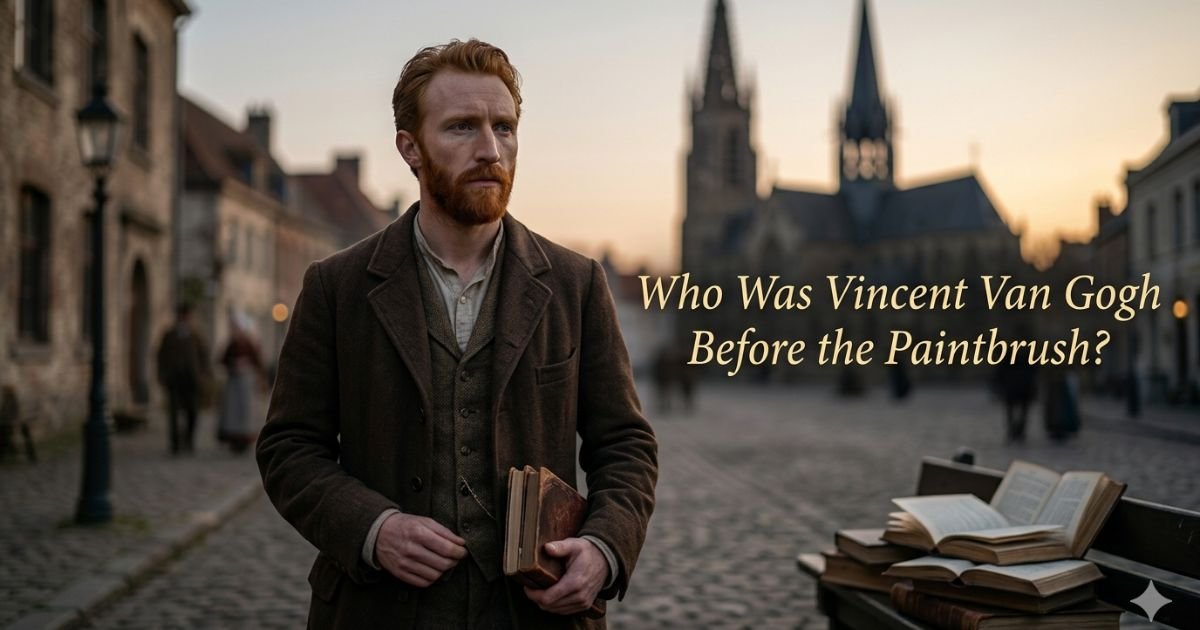
Most of us were introduced to Van Gogh through his paintings. The swirling colors. The thick brushstrokes. The raw emotion on every canvas. But there was a chapter of his life that rarely gets told, a chapter that shaped everything that came after.
Before he became a painter, Van Gogh was a man searching for purpose. He had studied theology. He had tried working as an art dealer. He had wrestled deeply with questions of faith, meaning, and his role in the world. And in 1878, driven by a genuine desire to serve, he made his way to Borinage, a gritty coal mining district in southern Belgium.
He went there as a lay preacher. But what he found there changed him at a level far deeper than religion or art could reach. He found suffering. Real, grinding, daily suffering. And he chose to step right into the middle of it.
Also Read: The True Meaning of Work
Life in the Borinage: A World Van Gogh Could Not Ignore
The Borinage was not a place people visited by choice. It was dark, exhausting, and unforgiving. Miners descended into the earth before sunrise and climbed back out after sunset, their lungs filling slowly with coal dust, their wages barely enough to keep their families from starving.
Van Gogh watched all of this. He did not observe from a distance. He did not write about it from the safety of a comfortable room. He moved into the community, lived on the same streets, and breathed the same heavy air. Day after day, he saw the hollow eyes of men who had stopped hoping. He saw children who went to bed hungry. He saw women patching the same worn clothes season after season.
And something inside him broke open.
Not with pity. Pity keeps its distance. What Van Gogh felt was something closer to solidarity. He allowed the weight of their lives to land on him fully. He let it change him. That shift from observer to participant is the beginning of what would become a silent message of compassion that still echoes today.
The Turning Point: When Words Stopped Being Enough
In the early days of his time in Borinage, Van Gogh tried to reach people through words. He spoke about faith. He offered hope. He encouraged the miners and tried to bring them comfort through conversations about life and meaning.
But he noticed something that troubled him deeply.
Some people listened politely, then walked away unchanged. Others looked at him with quiet skepticism, the kind that comes not from stubbornness but from accumulated disappointment. These were people who had heard kind words before, from preachers, from officials, from anyone passing through. And still their lives had not improved. Still their children were hungry. Still their backs ached, and their wages stayed low.
Van Gogh understood. He was not naive. He recognized that for people whose lives have been shaped entirely by hardship, words alone carry very little weight. When survival is the daily reality, encouragement without action can begin to feel like an insult.
That realization stopped him in his tracks.
He asked himself a simple but devastating question: If the people around me cannot trust words, then what does compassion actually look like?
The answer he arrived at was not spoken. It was lived.
A Silent Message of Compassion: The Moment Everything Changed
One cold evening near the end of the year, Van Gogh was watching a group of miners make their slow way home after a brutal shift. Among them was an old man, shuffling across an open field, wrapping himself tightly in a piece of rough burlap to keep out the bitter cold. It was not a coat. It was not a blanket. It was the kind of covering a person uses when they have nothing else.
Van Gogh did not give a speech. He did not offer advice. He did not promise to look into the matter.
He took off his own coat and gave it to the old man.
Then he took off more of his clothing and gave that too, until he had only a single thin set left for himself.
That moment was not grand or theatrical. There were no witnesses cheering him on. No one wrote about it that evening. It was a quiet act between two people in a cold field, and it cost Van Gogh something real.
That is what made it matter.
From that point forward, Van Gogh began distributing his wages to the miners and their families. He chose to live on the smallest possible rations so that others could have a little more. He stopped seeking comfort for himself and started directing every resource he had toward the people around him.
Giving Up His Bed: Compassion at Its Most Personal
Perhaps the most striking example of Van Gogh’s compassion during this period happened during a family crisis in the mining community. Several children from one household had fallen seriously ill with typhoid fever. They needed rest, warmth, and care, but they had no proper place to lie down.
At the same time, Van Gogh himself was sick. He had developed a fever of his own, and his body was weak. He needed rest just as much as anyone else.
But he gave up his bed so the children could use it.
He slept on the floor. He endured his own illness while making sure the children were as comfortable as possible. He did not make a point of telling people about this. He did not seek sympathy or credit. He simply did what he believed needed to be done.
This is the essence of a silent message of compassion. It is not about sacrifice that announces itself. It is about sacrifice that happens quietly, almost invisibly, because the need in front of you is louder than your own discomfort.
Turning Down Comfort: The Choice That Defined His Character
At some point during his time in Borinage, a wealthy local family offered Van Gogh a private room in their home. It was a genuine offer of comfort and security, a real chance to rest and recover from the hardships he had chosen to embrace.
Most people would have said yes without hesitation.
Van Gogh declined.
He told them that if they truly wanted to help, they should direct their generosity toward those who needed it far more than he did. He pointed them toward the miners and their families, toward the people living in real poverty, not toward a man who had voluntarily chosen simplicity.
This decision reveals something important about the depth of his compassion. It was not a phase he was passing through. It was not a charitable project he would wrap up when it became inconvenient. His compassion had become part of who he was. It had taken root in him so completely that even the offer of comfort could not pull him away from the people he had committed himself to serving.
That kind of integrity is rare. And it does not happen through words. It happens through a thousand small decisions made in private, when no one is watching.
From Skepticism to Respect: How Actions Change Hearts
When Van Gogh first arrived in Borinage, not everyone welcomed him with open arms. Some people were suspicious of this thin, red-haired outsider who showed up wanting to talk about faith and life. They had seen well-meaning visitors before. They had heard fine sentiments from people who eventually returned to their comfortable lives elsewhere.
So they waited. They watched.
And slowly, something changed.
They saw Van Gogh give away his coat. They saw him eat less so others could have more. They saw him kneel beside sick children and give up his own bed. They saw him decline a warm room because he felt others deserved it more than he did.
Nobody told them to change their minds about him. Nobody persuaded them. Their hearts changed on their own because what they witnessed was real. The evidence was right in front of them, quiet and consistent and impossible to dismiss.
Doubt gave way to respect. Skepticism softened into trust. Not because of anything Van Gogh said, but because of everything he did.
This is one of the most profound lessons buried in this story. Trust cannot be argued into existence. It has to be earned, slowly, through actions that prove your intentions over and over again.
What a Silent Message of Compassion Really Means
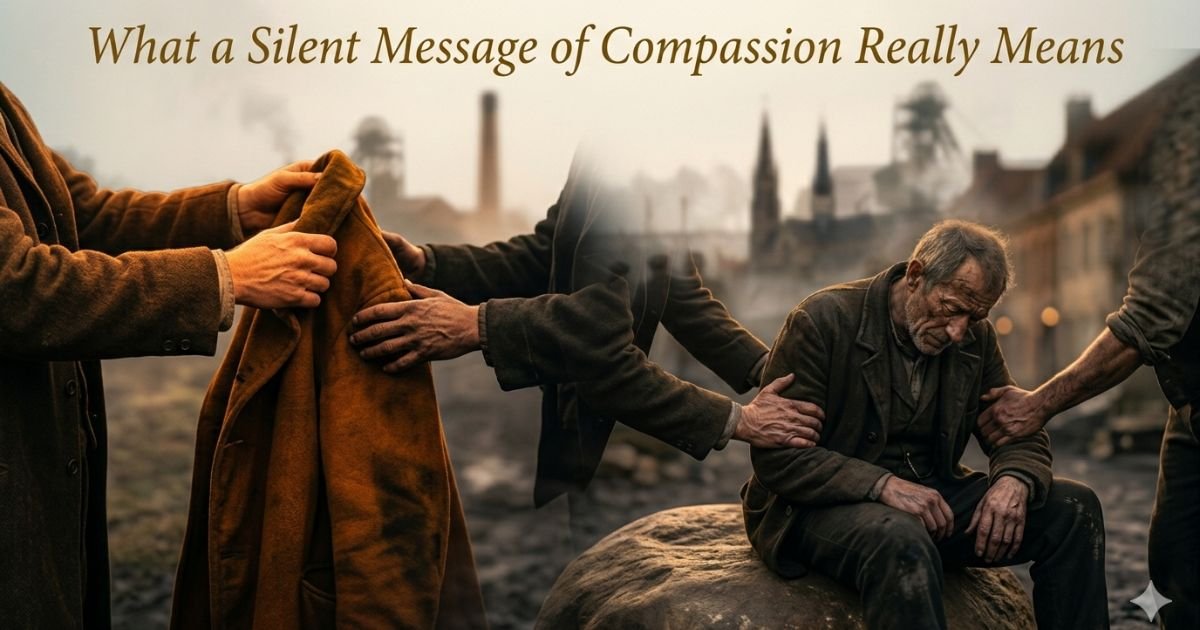
The phrase silent message of compassion might sound poetic, but it points to something very practical and very real.
It is not about staying quiet. It is not about avoiding difficult conversations or pretending that problems do not exist. It is about understanding that genuine compassion, the kind that actually reaches people, often moves through action rather than language.
We live in a world that rewards people who speak well. Polished words, confident delivery, inspiring speeches. These things have value. But they also have limits. They can be misunderstood. They can be forgotten. They can ring hollow when the person speaking them walks away unchanged.
What cannot be argued with is a real act of kindness. What cannot be dismissed is someone giving up something they actually needed in order to help another person. What cannot be faked is consistency over time, showing up again and again, choosing others over yourself in small but steady ways.
That is what Van Gogh demonstrated in Borinage. And that is what the phrase silent message of compassion captures. It is the language of action. It is what we communicate when we stop talking about caring and actually start doing it.
Also Read: Struggles Make You Stronger
The Gap Between Words and Actions: A Truth Van Gogh Understood
One of the most quietly devastating observations Van Gogh made during his time in Borinage was the gap between what people say and what they actually do. He saw it clearly, not as a criticism, but as a truth he had to reckon with in himself first.
He noticed that it is remarkably easy to express sympathy and remarkably hard to act on it in ways that cost you something real. Sympathy says, I feel for you. Compassion says, I will give something of mine so that your situation can be a little better.
Most of us are far more comfortable with the first.
Van Gogh chose the second, again and again, until it became simply the way he lived. And in doing so, he closed the gap for himself. His words and his actions aligned completely. There was no contradiction between what he believed and how he behaved.
That alignment, that integrity between inner conviction and outward action, is what made the miners begin to trust him. They did not need a sermon. They needed evidence. And he gave them evidence every single day.
Why This Story Still Matters in Today’s World
We live in a time of extraordinary noise. Social media platforms reward people who shout the loudest. Cable news rewards outrage. Even kindness sometimes gets performed publicly in ways that suggest the audience matters more than the person being helped.
Against all of that, Van Gogh’s story in Borinage is quietly radical.
He helped people no one else was paying attention to. He gave in ways that no one photographed or celebrated. He chose discomfort for himself without documenting it or turning it into content. He simply showed up, gave what he had, and kept doing it.
There is something deeply countercultural about that kind of compassion today. And there is something deeply needed about it.
Because people still suffer quietly. There are still people around us who have heard kind words so many times that those words have lost their meaning. There are still people who will only begin to trust us when they see, through consistent action, that we actually mean what we say.
Van Gogh’s silent message of compassion is not just a historical footnote. It is a living challenge. What are you actually doing, beyond what you are saying?
How to Live a Silent Message of Compassion in Your Own Life
You do not have to be Vincent Van Gogh. You do not have to move into a coal mining community or give away everything you own. But you can take the spirit of what he demonstrated and bring it into your own daily life, in ways that are personal, consistent, and real.
Here are some honest reflections to consider:
Listen without planning your response. Most people listen while thinking about what they will say next. True compassion starts with slowing down and actually hearing what another person is carrying.
Help before you are asked. Van Gogh did not wait for the miners to request his coat. He saw a need and responded. Look around at the people in your life and notice what they need before they have to find the words to ask.
Give quietly. Resist the urge to share your acts of kindness publicly. What you do when no one is watching says far more about your character than what you do in front of an audience.
Choose consistency over grand gestures. One dramatic act of generosity is memorable. But showing up repeatedly, over weeks and months and years, is what actually builds trust. Van Gogh’s compassion worked because it never stopped.
Let your life be the argument. When you feel the urge to tell people what you believe, what you value, or how much you care, try instead to live it out first. Your actions will communicate all of that more clearly and more convincingly than any explanation ever could.
The Legacy Van Gogh Left Behind in Borinage
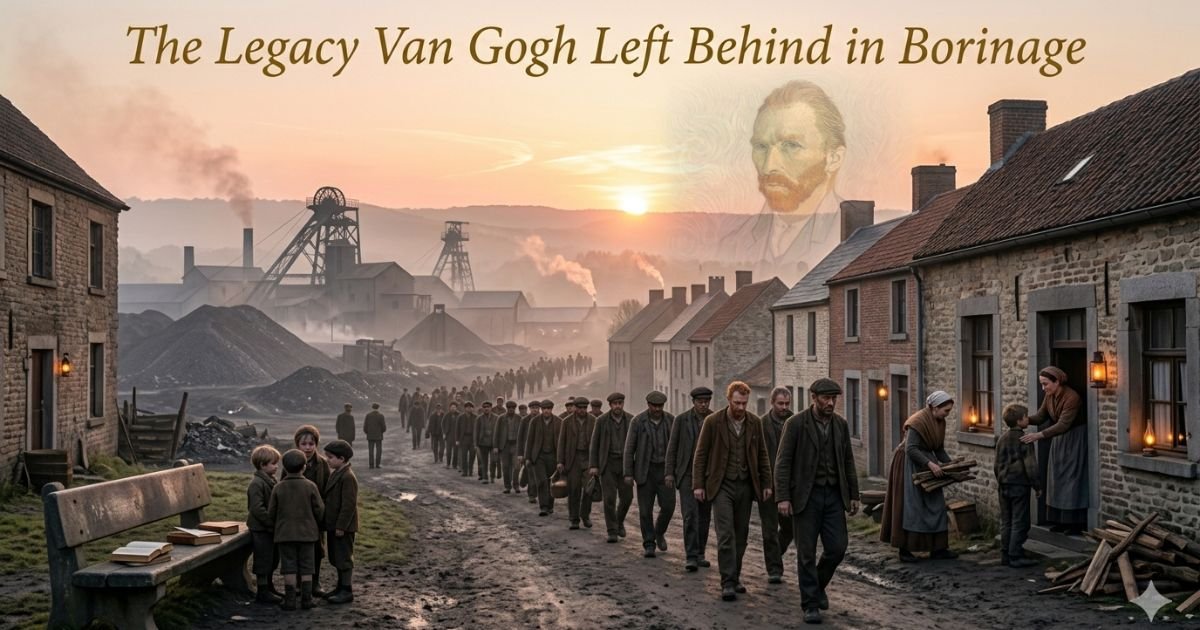
Van Gogh eventually left the Borinage. His time there as a lay preacher officially ended, and not on entirely happy terms. The church authorities actually criticized him for being too extreme in his self-sacrifice, for giving too much, for identifying too closely with the poor.
That detail alone says something profound about the difference between institutional religion and genuine spiritual compassion.
What he left behind in that mining community was not a building or a program or a speech people could recite. He left behind changed hearts. He left behind men and women who had once doubted whether any outsider could truly care about them, and who discovered that one man actually could.
He also left behind a story that traveled further and lasted longer than anything he could have imagined. Long after the paintings became famous, long after the world fell in love with his art, this quieter story from Borinage continued to circulate. It passed from person to person, not because it was dramatic or spectacular, but because it was true. And truth, when it is lived rather than merely spoken, has a way of surviving everything.
Also Read: A Heartwarming Lesson
What Van Gogh Teaches Us About Courage and Compassion Together
We often think of compassion as something soft. Gentle. Safe. And in its best moments, it is all of those things. But what Van Gogh showed us is that real compassion also takes tremendous courage.
It takes courage to give when you have very little yourself.
It takes courage to refuse comfort when it is offered, because you know someone else needs it more.
It takes courage to keep giving when no one is recognizing your efforts, when the results are slow, and when your own body is tired and your own resources are running thin.
Compassion without courage tends to stay at the surface. It offers words of comfort but steps back from anything that requires actual cost. Van Gogh’s compassion went all the way down, past the surface, past the convenient stopping points, into the kind of commitment that changes not just individual moments but entire communities.
That is the courage that compassion truly calls for. And it is available to every single one of us, if we are willing to reach for it.
Frequently Asked Questions
What are some compassionate words?
Compassionate words include: “I understand,” “I’m here for you,” and “You’re not alone.”
They show empathy, care, and emotional support without judgment.
What are the three types of compassion?
The three types are self-compassion, compassion for others, and universal compassion.
They focus on caring for themselves, individuals, and all living beings.
What are the phrases for compassion meditation?
Common phrases are: “May you be safe,” “May you be happy,” and “May you be free from suffering.”
These are used to cultivate loving-kindness and empathy.
What is compassion without wisdom?
It is kindness without understanding consequences or boundaries.
It may help in the short term, but it can sometimes create imbalance or harm.
What is a beautiful quote about compassion?
“Compassion is the language the deaf can hear, and the blind can see.”
It reflects how actions often speak louder than words.
What are 5 encouraging words?
Hope, strength, courage, belief, and resilience.
These words uplift and motivate people during difficult times.
What are the 5 C’s of compassion?
Care, commitment, courage, clarity, and connection.
These represent the core qualities needed to practice true compassion.
Conclusion
The story of Vincent Van Gogh in Borinage is not widely told. It does not show up in most art history books, and it rarely makes it into the short summaries that describe who he was. But it may be the most important chapter of his life.
What he gave those miners was more than clothing or food or a warm bed. He gave them proof that another human being genuinely cared, not in theory, but in practice. Not in words, but in sacrifice. Not once, but day after day, until they believed it.
That is what a silent message of compassion looks like when it is fully lived.
We carry his example with us now. Every time we choose action over words, consistency over grand gestures, and genuine sacrifice over convenient sympathy, we continue what he started in that cold Belgian mining town.
The world is still full of people who have stopped believing in words. The question Van Gogh leaves us with is simple and serious: Will we show them something worth believing in instead?

Welcome to Blessing Bloom. I’m Ahsan Ali, founder of BlessingBloom.com a faith-based website dedicated to sharing prayers, blessings, and heartfelt wishes. Based in Islamabad, Pakistan, I created Blessing Bloom to help people find the right words during life’s most meaningful moments. With a background in Information Technology, I combine a passion for digital content with a genuine love for faith-inspired writing.