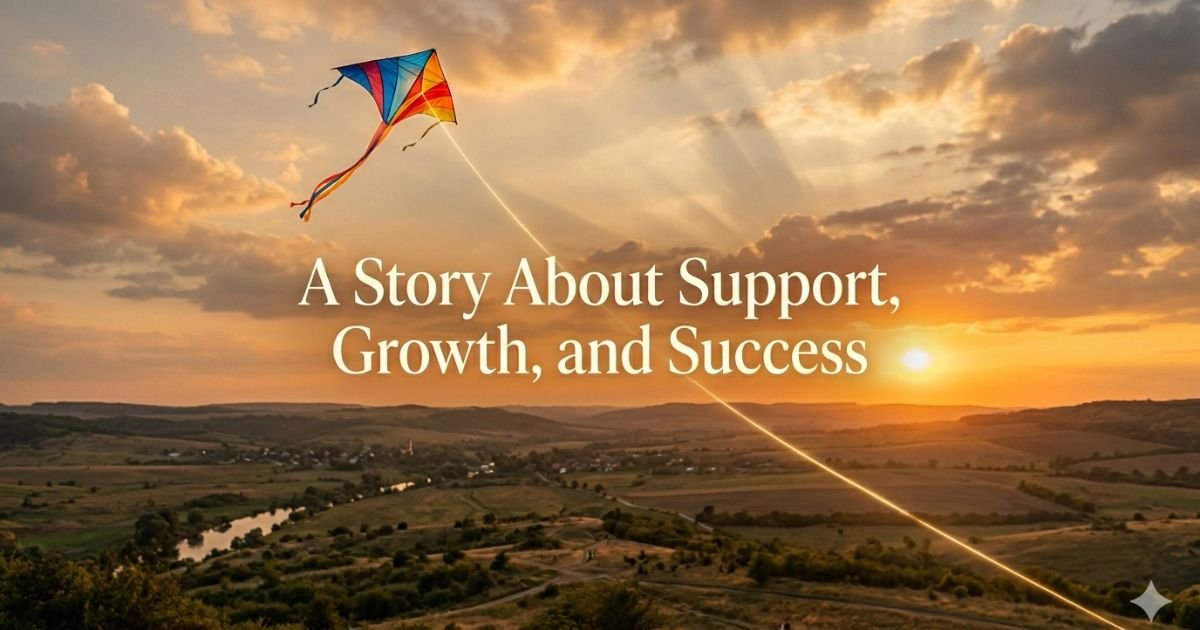

There is a quiet ache many of us carry without naming it. We want to grow, we want to rise, and somewhere along the way, we start believing that the people and habits holding us steady are actually the things slowing us down. A story about support, growth, and success can shift that belief in a single afternoon. The kite and the string are one of those stories. It is simple enough for a child to understand, yet it carries a truth that takes most adults years to learn: what feels like a limit is sometimes the very thing keeping us alive in the air.
The Story of the Kite and the String
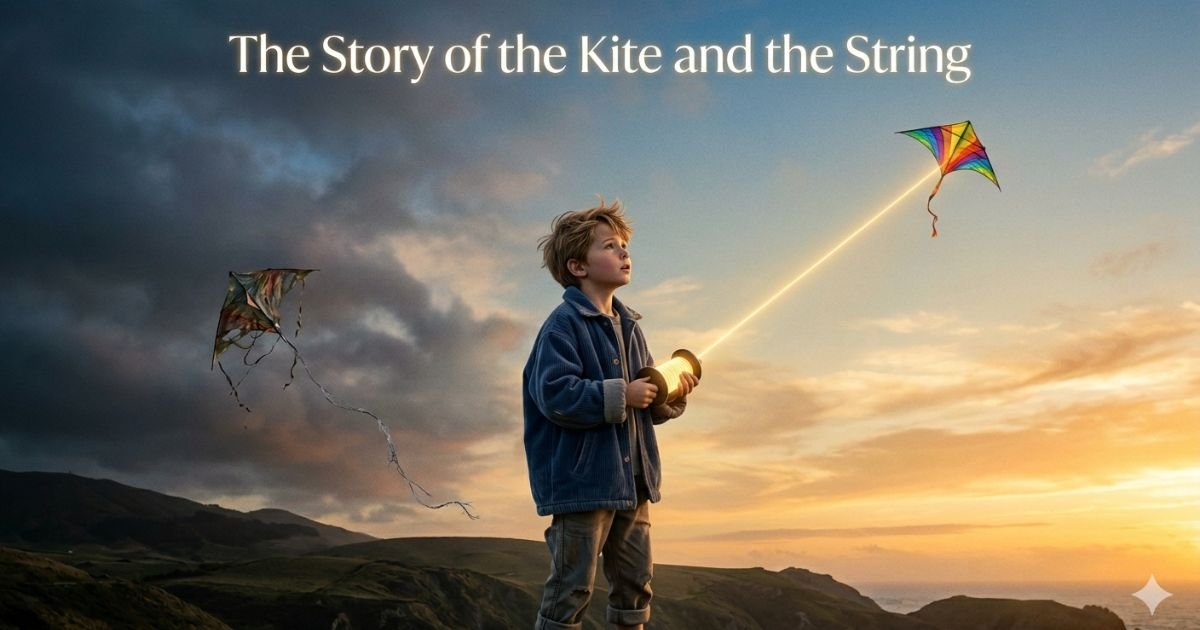
A father took his young son to a kite festival on a bright, windy afternoon. The sky was full of color, and the boy could not wait to fly one of his own. His father bought him a simple paper kite and a spool of string, and within minutes the boy had it dancing high above the rooftops.
As the kite climbed, the boy began to feel like the string was the only thing holding it back. He believed that if the line were gone, the kite would soar even higher. He asked his father to cut it loose.
His father agreed, and the string was cut.
For a few seconds, the kite drifted upward, free and light. Then, slowly, it began to wobble. It lost its lift, spun sideways, and dropped out of the sky, landing on a stranger’s rooftop far from where they stood.
The boy was confused. He thought freedom was supposed to lift the kite higher, not bring it down.
His father knelt beside him and explained something gentle but important. The string was never the enemy. It was what let the kite catch the wind when the wind grew quiet, and it was what kept the kite steady and pointed in the right direction when the wind grew strong. Once the string was gone, the kite had nothing to hold its position. It did not fall because it was weak. It fell because it had lost the very thing that gave its freedom a shape.
Also Read: Struggles Make You Stronger
What This Story About Support, Growth, and Success Reveals
It is easy to read this story once and move on, but sit with it a little longer and it starts to speak directly into modern life. So many of us are flying through seasons of ambition, faith, healing, or change, convinced that the structures around us are what is keeping us small.
This story about support, growth, and success gently corrects that idea. Support is not the opposite of freedom. It is often the framework that makes freedom sustainable.
A few truths rise to the surface here, and they are worth naming clearly:
- Support gives direction to an effort that would otherwise scatter.
- Structure is not the same thing as control.
- What looks like a limitation in the short term can be the reason we last in the long term.
None of this means every boundary in your life is healthy or good. It simply means that before you cut a string, it is worth asking what that string has actually been doing.
Why We Mistake Support for Restriction
There is a reason this confusion is so common. We live in a culture that praises independence almost as a virtue on its own. Phrases like break free and do it yourself sound inspiring, and at times, they are exactly what someone needs to hear. But taken too far, they can quietly convince us that needing anyone or anything is a kind of failure.
The boy in the story did not want to harm his kite. He genuinely believed cutting the string would help it fly higher. That is often how we lose good support in real life, too. We do not walk away from healthy guidance because we are reckless. We walk away because, in the moment, it feels like the obstacle standing between us and more.
There is also an emotional layer underneath this. Support can feel like control when we have not learned to tell the two apart. A parent’s rule, a mentor’s correction, or a season of waiting on God can all feel restrictive in the moment, even when they are shaping us toward something we cannot yet see. Learning to separate genuine control from genuine care is one of the quieter forms of spiritual maturity.
Growth Needs Direction, Not Just Freedom
Freedom on its own is not the same thing as growth. The kite was completely free once the string was gone, yet that freedom did not lead anywhere good. It led to a fall.
Real growth almost always involves some form of guidance, even when that guidance feels inconvenient. A teacher shapes how a student thinks. A coach corrects form before it becomes an injury. A pastor or mentor speaks truth into a season when we are too close to our own situation to see it clearly. None of these people is trying to cage us. They are offering the kind of direction that keeps effort from drifting into nowhere.
This is part of why so many seasons of unguided freedom feel exciting at first and exhausting later. Without a sense of direction, energy gets spent without producing lasting fruit. With direction, even small steps begin to add up to something real.
Discipline as the String That Holds Our Faith Steady
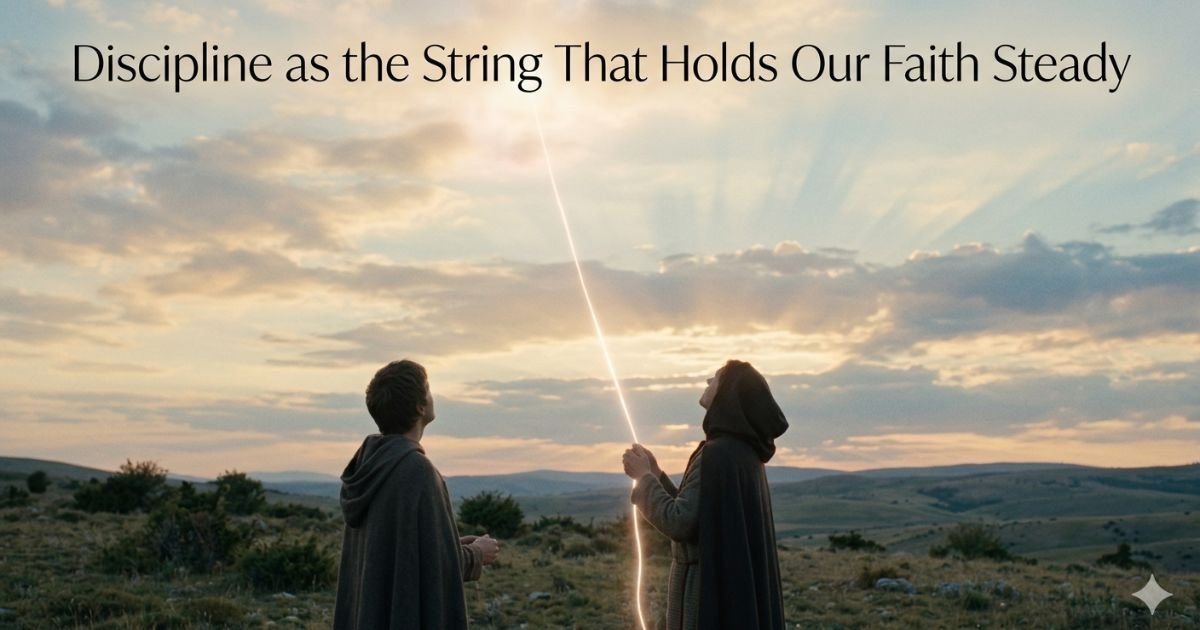
If support is the framework, discipline is often the daily string that keeps it tied in place. This is true in fitness, in relationships, in work, and especially in a life of faith.
Spiritual discipline rarely feels thrilling in the moment. Praying on a hard day, opening Scripture when you do not feel like it, showing up to church when you would rather stay home, these things can feel like small chores rather than acts of strength. Yet they function exactly like the string on the kite. They are not there to hold you down. They are there to keep you steady when the winds of life slow down or shift without warning.
Think about the seasons when faith felt strongest. For most people, those seasons were not random. They were built on small, repeated acts of discipline that quietly kept them connected to God, even when emotions were unpredictable. Discipline is not about restricting joy. It is about protecting the conditions joy needs to grow.
Also Read:The Beauty of Humility
Letting God Be the Hand That Holds Your String
There is a tender parallel hiding inside this story for anyone walking through faith. So often, we treat trust in God the same way the boy treated his kite string. We assume that if we could just have full control, full freedom, and full independence, life would finally lift off the way we want it to.
But Scripture paints a different picture of strength. It describes a life that rises not because it cuts every tie, but because it stays connected to the One who is steady when everything else shifts. Just as the string responds to the hand holding it, our trust responds to the character of who is holding us.
This does not mean life will always feel comfortable while you are being held. The boy’s kite still had to deal with wind, tension, and unpredictable weather. Being supported is not the same as being shielded from every hard moment. It means that even in the hard moments, there is something keeping you from falling completely.
When you feel the pull of God’s guidance in a decision, a conviction, or a season of waiting, it can be worth pausing before assuming that pull is holding you back. Often, it is the very thing keeping your life pointed in the right direction.
Finding the Right Support, and Knowing When to Let Go
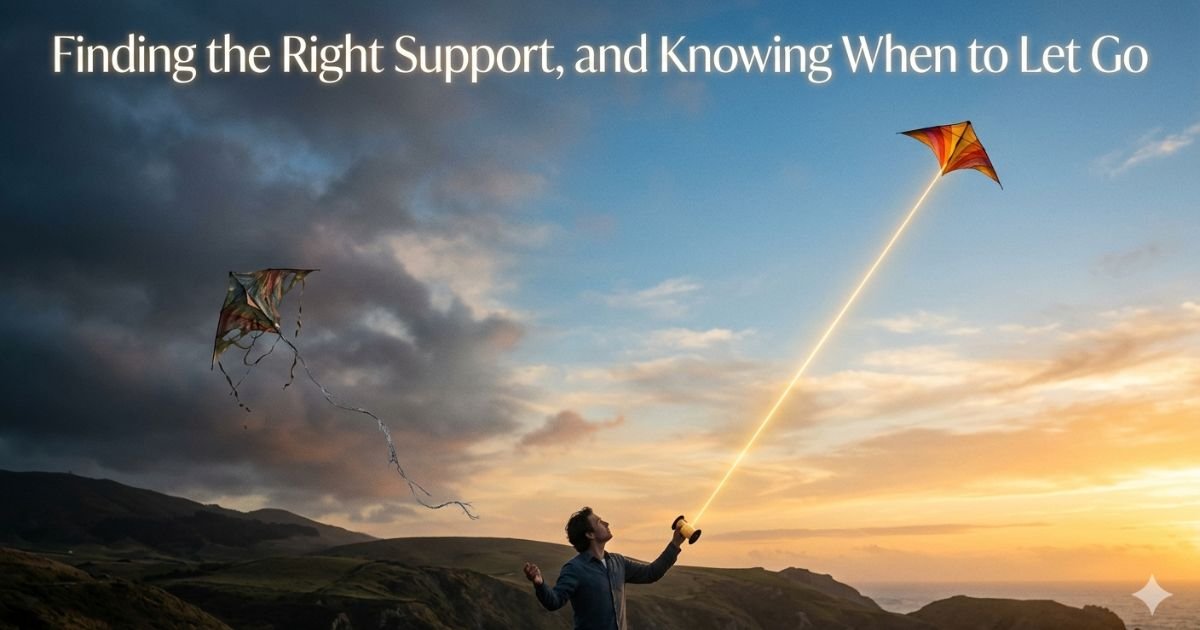
It would be unfair to this story to pretend every form of support is automatically good. Some strings genuinely do hold people back. Toxic relationships, fear-based beliefs, and environments built on control rather than care can do real damage, and walking away from those things is not the same mistake the boy made.
The difference comes down to fruit. Healthy support strengthens your sense of self even while it shapes your direction. It can correct you without shaming you. It can challenge you without controlling you. Unhealthy attachments tend to do the opposite. They shrink you, silence you, or keep you small, so someone else can feel secure.
Letting go of something that is genuinely unhealthy is not the same as cutting the string in this story. It is closer to trading a tangled, damaged line for a steady one, the kind that can actually hold you as you climb. Discernment, prayer, and honest reflection are usually what help reveal which kind of string you are holding.
Also Read:120 Heartfelt Thinking of You Messages for Her
Lessons from the Kite and the String for Everyday Life
This story about support, growth, and success leaves behind a few lessons that are worth carrying into ordinary days, long after the story itself is forgotten.
- Not everything that limits your options is working against you.
- Lasting growth depends on guidance as much as it depends on effort.
- Freedom without direction tends to fade into instability.
- Discipline, though uncomfortable at times, is often what keeps progress steady.
- Some support should be released, but only after honest discernment, never out of impulse.
None of these lessons asks you to give up your dreams or shrink your ambition. They simply invite you to notice which strings in your life are actually helping you rise, and to hold onto those a little tighter.
A Gentle Reminder Before You Cut Any String
There will be moments in your own life when something feels like it is holding you back. A relationship, a routine, a season of waiting on God, a discipline you are tired of practicing. Before you decide, it is the reason you are not flying higher, pause and ask what that string has actually been doing for you all along.
The kite did not need less support to fly. It needed the right support, held by a steady hand, moving with the wind instead of against it. The same is often true for you. Growth, success, and lasting faith rarely come from cutting every tie. They come from learning which connections are quietly keeping you upright, and choosing, again and again, to stay tethered to what truly helps you rise.

Welcome to Blessing Bloom. I’m Ahsan Ali, founder of BlessingBloom.com a faith-based website dedicated to sharing prayers, blessings, and heartfelt wishes. Based in Islamabad, Pakistan, I created Blessing Bloom to help people find the right words during life’s most meaningful moments. With a background in Information Technology, I combine a passion for digital content with a genuine love for faith-inspired writing.