


Fire has always meant something. From the very first pages of Scripture to the final vision of Revelation, it shows up in ways that stop you cold and make you lean in. If you are searching for Bible verses about fire, you are reaching for one of the richest, most layered symbols in all of God’s Word. And whatever season you are walking through right now, these verses will meet you there.
Why Fire Appears So Often in Scripture
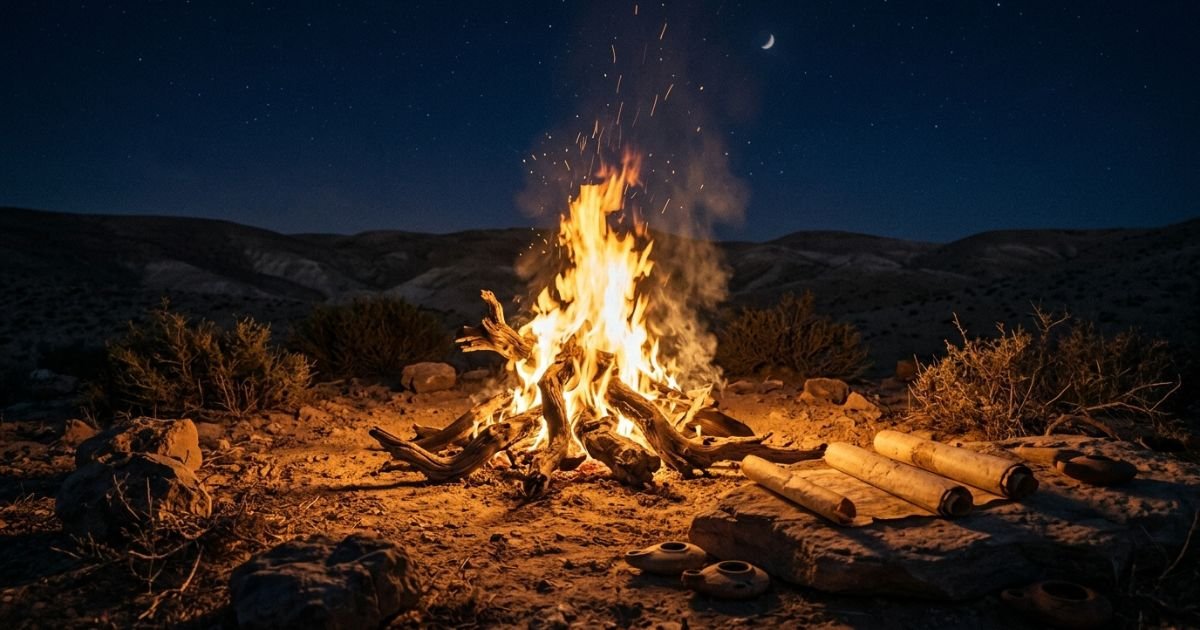
There is a reason fire appears more than 500 times throughout the Bible. In the ancient world, fire was the most powerful force a person could witness up close. It gave warmth and took life. It lit the darkness and left nothing behind. The writers of Scripture drew on that raw, universal human experience and used it to communicate things words alone could never quite hold.
In the Bible, fire consistently points to at least five deep spiritual realities:
- God’s presence – He often reveals Himself through fire
- Divine judgment – fire consumes what stands against His holiness
- Purification – fire refines and removes what does not belong
- Testing – fire reveals what is real and what is not
- The Holy Spirit – fire empowers, transforms, and sets believers ablaze
Keep those five themes in mind as you read through these verses. You will start to see a thread running through all of them. God is not random with fire. He never was.
Also READ: 60+ Bible Verses for Worship Leaders to Guide Their Ministry
Bible Verses About Fire as God’s Presence
There is something in us that is drawn to fire even when we are afraid of it. Moses saw a bush burning in the desert and walked toward it. He could not look away. That instinct is not strange. It is right. God’s presence, even in its most overwhelming form, pulls us closer rather than pushing us back.
The Burning Bush
Exodus 3:2 (NIV) “There the angel of the Lord appeared to him in flames of fire from within a bush. Moses saw that though the bush was on fire it did not burn up.”
This is one of the most extraordinary images in all of Scripture. Fire consumes. That is what it does. But here, the bush burned without being destroyed, because the fire was not natural. It was the presence of a holy God. Moses was not running a religious errand that day. He was tending sheep. God found him in the ordinary and broke through with something impossible to ignore.
There is comfort in this for ordinary people living ordinary lives. God does not require a dramatic stage. He shows up in the middle of your Tuesday, in the middle of your routine, and He burns without destroying. He interrupts without consuming.
Exodus 3:4-5 (NIV) “When the Lord saw that he had gone over to look, God called to him from within the bush, ‘Moses! Moses!’ And Moses said, ‘Here I am.’ ‘Do not come any closer,’ God said. ‘Take off your sandals, for the place where you are standing is holy ground.'”
The fire did not just signal God’s presence. It signaled holiness. The ground around that burning bush became sacred because He was there. That matters. God’s fire always carries the weight of His holiness. It is not decorative. It is real.
The Pillar of Fire
Exodus 13:21 (NIV) “By day the Lord went ahead of them in a pillar of cloud to guide them on their way and by night in a pillar of fire to give them light, so that they could travel by day or night.”
Think about what this meant for two million people wandering in the wilderness. The nights would have been completely dark, completely uncertain. They had no map. They had no GPS. They had fire. God Himself was their light, and He never went out.
Exodus 14:24 (NIV) “During the last watch of the night the Lord looked down from the pillar of fire and cloud at the Egyptian army and threw it into confusion.”
The same fire that guided Israel struck confusion into the hearts of their enemies. God’s presence, displayed as fire, was both protection and guidance at the same time.
God Descends on Mount Sinai
Exodus 19:18 (NIV) “Mount Sinai was covered with smoke, because the Lord descended on it in fire. The smoke billowed up from it like smoke from a furnace, and the whole mountain trembled violently.”
When God came down to meet His people, the mountain shook and the sky filled with smoke from His fire. This was not the image of a distant, disinterested deity. This was a God who moves, who descends, who shows up. And when He did, nothing around Him could stay neutral. Everything responded.
Exodus 24:17 (NIV) “To the Israelites the glory of the Lord looked like a consuming fire on top of the mountain.”
God’s glory appeared as fire. His presence and His fire were indistinguishable to the people watching from below.
Elijah and the Fire from Heaven
1 Kings 18:38 (NIV) “Then the fire of the Lord fell and burned up the sacrifice, the wood, the stones and the soil, and also licked up the water in the trench.”
This is the showdown on Mount Carmel. The prophets of Baal had been calling to their god for hours with nothing but silence in return. Then Elijah prayed one simple, focused prayer to the God of Israel, and fire fell from heaven and consumed not just the sacrifice but the stones beneath it and the water in the trench around it.
That detail about the water matters. Water does not burn. It puts out fire. But God’s fire consumed even that. He is not limited by the very things that would normally limit fire. He is not limited by your circumstances either. The water in your life, the things that seem to put out all hope, are not a problem for Him.
Bible Verses About God as a Consuming Fire
Some of the most searching, most humbling verses about fire in the entire Bible are the ones that describe God Himself as fire. Not God who uses fire. God who is, in the very nature of His holiness, a consuming fire.
Deuteronomy 4:24 (NIV) “For the Lord your God is a consuming fire, a jealous God.”
Hebrews 12:29 (NIV) “For our God is a consuming fire.”
These two verses are separated by centuries and two testaments, yet they say the exact same thing. The writer of Hebrews quotes Deuteronomy almost word for word. The message does not change across time: God is not tame. His holiness is intense to a degree we cannot fully comprehend, and it has the effect of fire on everything that is not holy. This is not a God to take casually.
Psalm 50:3 (NIV) “Our God comes and will not be silent; a fire devours before him, and around him a tempest rages.”
Psalm 97:3 (NIV) “Fire goes before him and consumes his foes on every side.”
These psalms present God’s arrival with fire as a kind of herald, like a king whose presence is announced before he even enters the room. The fire comes first. The judgment is real. But so is the majesty.
Isaiah 66:15-16 (NIV) “See, the Lord is coming with fire, and his chariots are like a whirlwind; he will bring down his anger with fury, and his rebuke with flames of fire. For with fire and with his sword the Lord will execute judgment on all people, and many will be those slain by the Lord.”
This is one of the most striking passages in all of Isaiah. The image is vivid and urgent. God is not inactive. His holiness requires a response to what is wicked, and fire is how that response is described.
Bible Verses About Fire and God’s Judgment
It would be dishonest to spend time with the Bible’s fire verses and skip the ones about judgment. Jesus talked about eternal fire more than almost any other topic in the Gospels. He did not do that to terrify people for no reason. He did it because He loved them and because the stakes were real.
Genesis 19:24 (NIV) “Then the Lord rained down burning sulfur on Sodom and Gomorrah, from the Lord out of the heavens.”
Sodom and Gomorrah are referenced multiple times throughout the New Testament as a warning. The destruction was real, and it was total. Fire here is not symbolic. It was the physical consequence of persistent wickedness and the rejection of every warning God had given.
Numbers 16:35 (NIV) “And fire came out from the Lord and consumed the 250 men who were offering the incense.”
This came after the rebellion of Korah. These were not uninformed people stumbling blindly. They had seen God’s power. They had witnessed His works. And they still chose to stand against His appointed leaders. The fire was judgment, swift and complete.
Malachi 4:1 (NIV) “Surely the day is coming; it will burn like a furnace. All the arrogant and every evildoer will be stubble, and the day that is coming will set them on fire, says the Lord Almighty. Not a root or a branch will be left to them.”
Malachi’s image is stark. Arrogance, self-sufficiency, and wickedness become stubble in the coming fire. There is nothing left. This is meant to be sobering, and it is.
2 Peter 3:7 (NIV) “By the same word the present heavens and earth are reserved for fire, being kept for the day of judgment and destruction of the ungodly.”
2 Peter 3:10 (NIV) “But the day of the Lord will come like a thief. The heavens will disappear with a roar; the elements will be destroyed by fire, and the earth and everything done in it will be laid bare.”
Peter is not trying to frighten his readers into paralysis. He is trying to reorient their perspective toward eternity. Everything physical is temporary. The fire coming will lay everything bare. What survives that fire is what truly lasts.
Matthew 5:22 (NIV) “But I tell you that anyone who is angry with a brother or sister will be subject to judgment… And anyone who says, ‘You fool!’ will be in danger of the fire of hell.”
Jesus connects even the posture of our hearts with judgment. This is not casual. The fire of hell is a real and serious thing in His teaching, and He brings it up in the context of everyday relationships and everyday attitudes.
Matthew 18:8-9 (NIV) “If your hand or your foot causes you to stumble, cut it off and throw it away. It is better for you to enter life maimed or crippled than to have two hands or two feet and be thrown into eternal fire. And if your eye causes you to stumble, gouge it out and throw it away. It is better for you to enter life with one eye than to have two eyes and be thrown into the fire of hell.”
Jesus uses dramatic, even shocking language here on purpose. The point is not a literal instruction about amputation. It is a statement about how seriously we should take anything that pulls us toward eternal destruction. Nothing is worth that cost.
Matthew 25:41 (NIV) “Then he will say to those on his left, ‘Depart from me, you who are cursed, into the eternal fire prepared for the devil and his angels.'”
This verse from the judgment scene in Matthew 25 is among the most sobering in all of the Gospels. The eternal fire was not originally prepared for people. It was prepared for the devil and his angels. That framing matters. God’s desire is not for anyone to end up there.
Revelation 20:10 (NIV) “And the devil, who deceived them, was thrown into the lake of burning sulfur, where the beast and the false prophet had been thrown. They will be tormented day and night for ever and ever.”
Revelation 20:14-15 (NIV) “Then death and Hades were thrown into the lake of fire. The lake of fire is the second death. Anyone whose name was not found written in the book of life was thrown into the lake of fire.”
Revelation 21:8 (NIV) “But the cowardly, the unbelieving, the vile, the murderers, the sexually immoral, those who practice magic arts, the idolaters and all liars, they will be consigned to the fiery lake of burning sulfur. This is the second death.”
Revelation’s fire passages are the most final, the most permanent. The lake of fire is described as the second death, a permanent separation from God. These verses are not in Scripture to create despair. They are in Scripture to create urgency, both in us and in our care for the people around us.
Jude 1:7 (NIV) “In a similar way, Sodom and Gomorrah and the surrounding towns gave themselves up to sexual immorality and perversion. They serve as an example of those who suffer the punishment of eternal fire.”
Jude 1:23 (NIV) “Save others by snatching them from the fire; to others show mercy, mixed with fear, hating even the clothing stained by corrupted flesh.”
Jude ends with the image of fire being the very thing that creates urgency in reaching people. We are not passive observers. We are people who know the fire is real, and that knowledge ought to move us.
Bible Verses About the Refiner’s Fire and Purification
This is where the fire verses get tender. The same God who judges with fire also sits patiently beside the fire, watching over what is being refined. He is not absent from the heat in your life. He is the One attending it.
Malachi 3:2-3 (NIV) “But who can endure the day of his coming? Who can stand when he appears? For he will be like a refiner’s fire or a launderer’s soap. He will sit as a refiner and purifier of silver; he will purify the Levites and refine them like gold and silver. Then the Lord will have men who will bring offerings in righteousness.”
A silver refiner in the ancient world would hold the raw metal over fire and watch it closely. The heat drew the impurities to the surface, where they could be skimmed away. The refiner never left the fire unattended, because leaving for even a moment could destroy the very thing he was trying to perfect. And the signal that the silver was pure? He could see his own reflection in it.
That image of God sitting at the fire, patient and present and watchful, is one of the most beautiful pictures of sanctification in all of Scripture. He is not standing at a distance watching you struggle. He is right there. And He will not stop until He sees His reflection in you.
Zechariah 13:9 (NIV) “This third I will put into the fire; I will refine them like silver and test them like gold. They will call on my name and I will answer them; I will say, ‘They are my people,’ and they will say, ‘The Lord is our God.'”
The outcome of the refining fire is not just purity. It is relationship. After the fire, there is intimacy. They call on His name. He answers them. He claims them as His own. That is the destination God is working toward in every hard season He allows into your life.
Job 23:10 (NIV) “But he knows the way that I take; when he has tested me, I will come forth as gold.”
Job said this from the middle of complete devastation. He had lost his children, his health, his livelihood. He was sitting in ashes, covered in sores, surrounded by friends who thought his suffering was proof of secret sin. And yet in that moment, he spoke with a quiet, unshakeable confidence: I will come forth as gold.
Not ash. Not rubble. Gold. That is the faith of a man who knew God well enough to trust Him in the dark. If you are in the middle of something that feels like destruction, Job’s words are a lamp in the darkness.
Isaiah 43:2 (NIV) “When you pass through the waters, I will be with you; and when you pass through the rivers, they will not sweep over you. When you walk through the fire, you will not be burned; the flames will not set you ablaze.”
There are few verses in the entire Bible that carry the weight of Isaiah 43:2. Notice what it does not say. It does not say if you walk through fire. It says when. God never promises His people a fire-free life. What He promises is something better: His presence in the fire, and the guarantee that the fire will not consume what He is protecting.
Isaiah 48:10 (NIV) “See, I have refined you, though not as silver; I have tested you in the furnace of affliction.”
God Himself acknowledges the furnace of affliction. He does not pretend your hard seasons are not hard. He says I know what I put you in, and I did it with purpose. The furnace of affliction is real. So is the God who placed you in it and watches over you there.
1 Peter 1:6-7 (NIV) “In all this you greatly rejoice, though now for a little while you may have had to suffer grief in all kinds of trials. These have come so that the proven genuineness of your faith, of greater worth than gold, which perishes even though refined by fire, may result in praise, glory and honor when Jesus Christ is revealed.”
Peter is writing to real people who were being persecuted for their faith. His argument is not shallow positivity. He makes the case that the suffering has a purpose and a destination: proven, genuine faith that will result in eternal glory. The fire does not last forever. The gold it produces does.
Daniel 3:17-18 (NIV) “If we are thrown into the blazing furnace, the God we serve is able to deliver us from it, and he will deliver us from Your Majesty’s hand. But even if he does not, we know that we will not serve your gods or worship the image of gold you have set up.”
These words from Shadrach, Meshach, and Abednego are among the most courageous in the entire Bible. They are not speaking from a position of certainty about the outcome. They say even if He does not deliver us. They are prepared to enter the fire without a guarantee of escape. That is not reckless faith. That is faith that is rooted in who God is rather than what He might do.
Daniel 3:25 (NIV) “He said, ‘Look! I see four men walking around in the fire, unbound and unharmed, and the fourth looks like a son of the gods.'”
Three men entered the furnace. Four were seen walking inside it. Whatever you believe about the identity of that fourth figure, the message is unmistakable: God enters the fire with His people. He does not watch from a safe distance. He walks in.
Daniel 3:27 (NIV) “And the satraps, prefects, governors and royal advisers crowded around them. They saw that the fire had not harmed their bodies, nor was a hair of their heads singed; their robes were not scorched, and there was no smell of fire on them.”
Not a hair. Not a thread. Not even the smell of smoke. The fire that should have consumed them instead only burned the ropes that had been used to bind them. Sometimes the fire God allows in your life burns away the very things that were holding you captive.
Bible Verses About Fire and the Holy Spirit
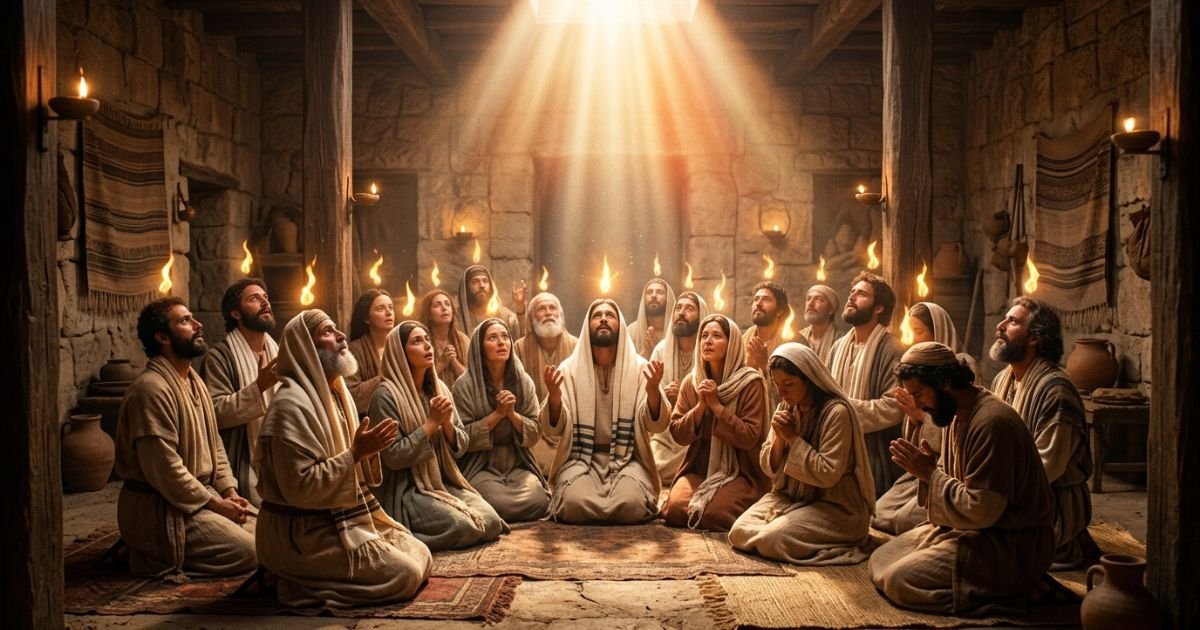
The fire of the Holy Spirit is not a metaphor for mild enthusiasm. The disciples who received the Spirit at Pentecost were transformed people. The same man who denied knowing Jesus three times around a charcoal fire was standing in front of thousands weeks later, preaching boldly that Jesus was Lord. Fire does that.
Acts 2:3-4 (NIV) “They saw what seemed to be tongues of fire that separated and came to rest on each of them. All of them were filled with the Holy Spirit and began to speak in other tongues as the Spirit enabled them.”
Pentecost was the fulfillment of centuries of promise. The fire that had appeared to Moses, that had led Israel through the wilderness, that had filled the temple with glory, now came to rest on individual people. Not just prophets and priests. Not just kings. Ordinary men and women, and the fire rested on each of them.
Matthew 3:11 (NIV) “I baptize you with water for repentance. But after me comes one who is more powerful than I, whose sandals I am not worthy to carry. He will baptize you with the Holy Spirit and fire.”
Luke 3:16 (NIV) “John answered them all, ‘I baptize you with water. But one who is more powerful than I will come, the straps of whose sandals I am not worthy to untie. He will baptize you with the Holy Spirit and fire.'”
John the Baptist’s prophecy pointed forward to a baptism more powerful than anything water could accomplish. To be baptized with the Holy Spirit and fire is to be purified and empowered at the same time. It is not a gentle experience. It is transforming.
1 Thessalonians 5:19 (NIV) “Do not quench the Spirit.”
The Greek word used here for “quench” is the same word used for putting out a fire. The Holy Spirit is a fire within believers, and that fire can be dampened. Through sin, through apathy, through choosing comfort over faithfulness. This verse is both a warning and an invitation: do not put out the fire God has lit inside you.
Romans 12:11 (NIV) “Never be lacking in zeal, but keep your spiritual fervor, serving the Lord.”
The phrase “spiritual fervor” in the original Greek literally means to be boiling in spirit. Not simmering. Not warm. Boiling. God does not call us to lukewarm faith. He calls us to a burning, active, energized devotion.
Luke 12:49 (NIV) “I have come to bring fire on the earth, and how I wish it were already kindled!”
Jesus said this with longing. He came to set the world ablaze, not with destruction, but with the fire of God’s presence, truth, and transforming power. That fire is still burning today in every life that says yes to Him.
Also READ: 100 Bible Verses Proving God Will Restore 7 Times What the Enemy Has Stolen
Bible Verses About Fire and the Testing of Faith
There is a kind of fire in the Bible that is not about God’s judgment and not about His presence. It is about the testing of what is real inside us. Faith that has never been tested is faith that has never been proven. The fire reveals what is genuine.
James 1:2-4 (NIV) “Consider it pure joy, my brothers and sisters, whenever you face trials of many kinds, because you know that the testing of your faith produces perseverance. Let perseverance finish its work so that you may be mature and complete, not lacking anything.”
James is not asking his readers to fake happiness about suffering. He is pointing them to the destination of the trial. Perseverance. Maturity. Completeness. The fire is not the end of the story. What comes out the other side of it is.
1 Corinthians 3:13-15 (NIV) “Their work will be shown for what it is, because the Day will bring it to light. It will be revealed with fire, and the fire will test the quality of each person’s work. If what has been built survives, the builder will receive a reward. If it is burned up, the builder will suffer loss but yet will be saved, even though only as one escaping through the flames.”
Paul describes a coming moment when the work we have done in God’s name will be tested by fire. Not the people themselves, but the work. What was built on Christ will endure. What was built for other reasons, even good-looking religious reasons, will not. This is a passage worth sitting with quietly and asking honest questions.
Zechariah 13:9 (NIV) “This third I will put into the fire; I will refine them like silver and test them like gold. They will call on my name and I will answer them; I will say, ‘They are my people,’ and they will say, ‘The Lord is our God.'”
Testing and relationship belong together in this verse. The fire of testing leads to the intimacy of knowing God and being known by Him. The hard seasons are not detours from the life of faith. They are part of it.
Psalm 66:10-12 (NIV) “For you, God, tested us; you refined us like silver. You brought us into prison and laid burdens on our backs. You let people ride over our heads; we went through fire and water, but you brought us to a place of abundance.”
This is the testimony of a person who has come out the other side. They went through fire and water. Both. And God brought them to a place of abundance. That word “abundance” is doing a lot of heavy lifting. The destination of the tested life is not just survival. It is abundance.
Bible Verses About Fire, Worship, and God’s Acceptance
Fire in the Old Testament was also the language of worship. When God accepted a sacrifice, fire often fell. It was His way of saying: I see this. I receive this. I am here.
Leviticus 9:24 (NIV) “Fire came out from the presence of the Lord and consumed the burnt offering and the fat portions on the altar. And when all the people saw it, they shouted for joy and fell facedown.”
The people’s response says everything. When God’s fire fell, they did not run. They fell on their faces in worship and shouted for joy. God’s holiness, expressed as fire, moved them to both reverence and celebration at the same time.
2 Chronicles 7:1-3 (NIV) “When Solomon finished praying, fire came down from heaven and consumed the burnt offering and the sacrifices, and the glory of the Lord filled the temple. The priests could not enter the temple of the Lord because the glory of the Lord filled it. When all the Israelites saw the fire coming down and the glory of the Lord above the temple, they knelt on the pavement with their faces to the ground, and they worshiped and gave thanks to the Lord, saying, ‘He is good; his love endures forever.'”
The dedication of Solomon’s temple is one of the great fire moments in all of Scripture. After all the preparation, all the craftsmanship, all the gathering of materials, God showed up with fire and filled the place. The priests could not even stand in His presence. And the people’s response was pure worship: He is good. His love endures forever. Fire led them to that conclusion.
Judges 13:20 (NIV) “As the flame blazed up from the altar toward heaven, the angel of the Lord ascended in the flame. Seeing this, Manoah and his wife fell with their faces to the ground.”
The appearance of the angel of the Lord in fire before Samson’s parents mirrors the pattern throughout Scripture. God’s presence, announced through fire, calls forth worship.
Bible Verses About Fire and God’s Word
Fire in the Bible is not only a symbol of God’s acts in history. It is also a description of His Word. When the prophets received God’s message and tried to hold it back, it was like fire in their bones.
Jeremiah 20:9 (NIV) “But if I say, ‘I will not mention his word or speak anymore in his name,’ his word is in my heart like a fire, a fire shut up in my bones. I am weary of holding it in; indeed, I cannot.”
Jeremiah was exhausted by the resistance he faced. He tried to quit. He sat down mentally and emotionally and decided he was done speaking. But God’s word inside him would not go quiet. It was fire in his bones, and he could not hold it in. That is the nature of genuine encounter with the living God. It does not allow for comfortable silence.
Psalm 39:3 (NIV) “My heart grew hot within me; while I meditated, the fire burned; then I spoke with my tongue.”
Meditation on God’s truth produces fire. The psalmist sat with his thoughts about God’s ways, and something inside him grew hot. Then he spoke. There is a connection between dwelling deeply on God’s Word and the kind of burning, authentic faith that cannot stay quiet.
Jeremiah 23:29 (NIV) “Is not my word like fire, declares the Lord, and like a hammer that breaks a rock in pieces?”
God describes His own Word as fire and as a hammer. Both break things down. Both get through what nothing else can. Fire burns through; a hammer breaks through. The Word of God is not passive. It works on whatever it touches.
Additional Bible Verses About Fire: Complete Reference
Here is a broader collection of fire verses organized for deeper study and meditation. Each one carries its own weight and its own invitation.
Numbers 11:1 (NIV) “Now the people complained about their hardships in the hearing of the Lord, and when he heard them his anger was aroused. Then fire from the Lord burned among them and consumed some of the outskirts of the camp.”
Deuteronomy 5:24 (NIV) “And you said, ‘The Lord our God has shown us his glory and his majesty, and we have heard his voice from the fire. Today we have seen that a person can live even if God speaks with them.'”
Deuteronomy 18:10 (NIV) “Let no one be found among you who sacrifices their son or daughter in the fire, who practices divination or sorcery, interprets omens, engages in witchcraft.”
2 Samuel 22:9 (NIV) “Smoke rose from his nostrils; consuming fire came from his mouth, burning coals blazed out of it.”
2 Kings 1:10 (NIV) “Elijah answered the captain, ‘If I am a man of God, may fire come down from heaven and consume you and your fifty men!’ Then fire fell from heaven and consumed the captain and his men.”
2 Kings 2:11 (NIV) “As they were walking along and talking together, suddenly a chariot of fire and horses of fire appeared and separated the two of them, and Elijah went up to heaven in a whirlwind.”
Psalm 18:12-13 (NIV) “Out of the brightness of his presence clouds advanced, with hailstones and bolts of lightning. The Lord thundered from heaven; the voice of the Most High resounded.”
Psalm 29:7 (NIV) “The voice of the Lord strikes with flashes of lightning.”
Psalm 89:46 (NIV) “How long, Lord? Will you hide yourself forever? How long will your wrath burn like fire?”
Isaiah 6:6-7 (NIV) “Then one of the seraphim flew to me with a live coal in his hand, which he had taken with tongs from the altar. With it he touched my mouth and said, ‘See, this has touched your lips; your guilt is taken away and your sin atoned for.'”
A burning coal from the altar, pressed to Isaiah’s lips. The fire did not destroy him. It cleansed him. That is the paradox of God’s purifying fire. What should consume instead forgives.
Isaiah 33:14 (NIV) “The sinners in Zion are terrified; trembling grips the godless: ‘Who of us can dwell with the consuming fire? Who of us can dwell with everlasting burning?'”
Isaiah 66:24 (NIV) “And they will go out and look on the dead bodies of those who rebelled against me; the worms that eat them will not die, the fire that burns them will not be quenched, and they will be loathsome to all mankind.”
Ezekiel 1:4 (NIV) “I looked, and I saw a windstorm coming out of the north, an immense cloud with flashing lightning and surrounded by brilliant light. The center of the fire looked like glowing metal.”
Ezekiel 1:27 (NIV) “I saw that from what appeared to be his waist up he looked like glowing metal, as if full of fire, and that from there down he looked like fire; and brilliant light surrounded him.”
Daniel 7:9-10 (NIV) “As I looked, thrones were set in place, and the Ancient of Days took his seat. His clothing was as white as snow; the hair of his head was white like wool. His throne was flaming with fire, and its wheels were all ablaze. A river of fire was flowing, coming out from before him.”
God’s throne is described as flaming with fire, and a river of fire flows from before Him. This is not metaphor layered on metaphor for poetic effect. It is the vision of a prophet standing before an overwhelming reality that language could barely contain.
Joel 2:3 (NIV) “Before them fire devours, behind them a flame blazes. Before them the land is like the garden of Eden, behind them, a desert waste, nothing escapes them.”
Amos 1:4 (NIV) “I will send fire on the house of Hazael that will consume the fortresses of Ben-Hadad.”
Nahum 1:6 (NIV) “Who can withstand his indignation? Who can endure his fierce anger? His wrath is poured out like fire; the rocks are shattered before him.”
Lamentations 2:4 (NIV) “Like an enemy he has strung his bow; his right hand is ready. Like a foe he has slain all who were pleasing to the eye; he has poured out his wrath like fire on the tent of Daughter Zion.”
Mark 9:43 (NIV) “If your hand causes you to stumble, cut it off. It is better for you to enter life maimed than with two hands to go into hell, where the fire never goes out.”
Luke 9:54 (NIV) “When the disciples James and John saw this, they asked, ‘Lord, do you want us to call fire down from heaven to destroy them?'”
Jesus rebuked them for this. It is a reminder that fire is God’s to command, not ours. The impulse to call down judgment on others is usually more about our own anger than His justice.
John 15:6 (NIV) “If you do not remain in me, you are like a branch that is thrown away and withers; such branches are picked up, thrown into the fire and burned.”
2 Thessalonians 1:7-8 (NIV) “And give relief to you who are troubled, and to us as well. This will happen when the Lord Jesus is revealed from heaven in blazing fire with his powerful angels. He will punish those who do not know God and do not obey the gospel of our Lord Jesus.”
Hebrews 1:7 (NIV) “In speaking of the angels he says, ‘He makes his angels spirits, and his servants flames of fire.'”
Hebrews 12:18 (NIV) “You have not come to a mountain that can be touched and that is burning with fire; to darkness, gloom and storm.”
James 3:5-6 (NIV) “Consider what a great forest is set on fire by a small spark. The tongue also is a fire, a world of evil among the parts of the body. It corrupts the whole body, sets the whole course of one’s life on fire, and is itself set on fire by hell.”
James uses fire as a picture not just of God’s power but of destructive human power. The tongue, uncontrolled, is fire. It spreads. It consumes. It destroys things that took years to build. Words matter in the same way that fire matters.
1 Peter 4:12 (NIV) “Dear friends, do not be surprised at the fiery ordeal that has come on you to test you, as though something strange were happening to you.”
Peter’s word for “fiery ordeal” here is the same word used for a furnace used to test metal. He is calling the suffering of believers a metallurgical process. It is not strange. It is not a sign that God has abandoned you. It is the expected experience of people God is refining.
Revelation 1:14-15 (NIV) “The hair on his head was white like wool, as white as snow, and his eyes were like blazing fire. His feet were like bronze glowing in a furnace, and his voice was like the sound of rushing waters.”
The risen, glorified Jesus is described with eyes like blazing fire. This is the vision John received on Patmos, and it is not the gentle, approachable image many prefer. This is Jesus in His full glory, overwhelming and majestic, with fire in His eyes and bronze feet glowing in a furnace.
Revelation 2:18 (NIV) “These are the words of the Son of God, whose eyes are like blazing fire and whose feet are like burnished bronze.”
Revelation 19:12 (NIV) “His eyes are like blazing fire, and on his head are many crowns.”
Revelation 19:20 (NIV) “But the beast was captured, and with him the false prophet who had performed the signs on his behalf. With these signs he had deluded those who had received the mark of the beast and worshiped its image. The two of them were thrown alive into the fiery lake of burning sulfur.”
Revelation 22:5 (NIV) “There will be no more night. They will not need the light of a lamp or the light of the sun, for the Lord God will give them light. And they will reign for ever and ever.”
This last verse is not described as fire, but it completes the story. The pillar of fire that led Israel through the wilderness, the fire that filled the temple, the tongues of fire at Pentecost, all of it was leading somewhere. A place where God Himself is the light, and there is no darkness at all.
Also READ: Inspiring Opening Verses to Begin Your Sunday Service
What the Fire of God Means for Your Life Right Now
After spending time with all these verses, one thing becomes impossible to ignore. Fire is not something to avoid in the life of faith. It is something to understand, and to trust God in.
God uses fire in at least three ways in the life of a believer.
Fire reveals what is real. Under heat, the true nature of things becomes visible. Your faith, your character, your values, they are all tested in fire. What comes through on the other side of a hard season is not performance. It is the real thing. And real faith is worth more than anything the fire burns away.
Fire purifies what is valuable. You are not refined by comfort. The painful seasons of your life are not accidents or punishments. They are appointments with a God who cares more about what you are becoming than about your immediate comfort. He sits at the fire the way a refiner sits at the silver, patient and present and purposeful, skimming away what does not belong.
Fire empowers what is surrendered. The fire of the Holy Spirit does not just cleanse. It energizes. It transforms ordinary, fearful, ordinary people into bold, effective, Spirit-filled witnesses. The disciples at Pentecost were not enhanced versions of their former selves. They were new. The fire made them new.
If you are walking through a season that feels like a furnace right now, do not despise the fire. Ask God what He is doing in it. And trust that the One who created fire also controls it, and that His eye is on you with a care and a precision that will not let you be destroyed.
Frequently Asked Questions
What does fire symbolize biblically?
In the Bible, fire often symbolizes God’s presence, judgment, purification, testing, and the power of the Holy Spirit. From the burning bush to Pentecost, fire is used to reveal God’s holiness and transforming work in people’s lives.
What does God say about the fire?
Scripture uses fire to describe God’s presence, power, and refining work. God appears in fire, guides His people through fire, and uses it as a symbol of purification, judgment, and spiritual transformation.
Does God forbid cremation?
The Bible does not explicitly forbid cremation. While burial was the most common practice in biblical times, Scripture focuses more on faith in God’s resurrection power than on the method of handling a person’s remains.
What was Matthew 4:17 teaching?
Matthew 4:17 records Jesus’ call to repentance: “Repent, for the kingdom of heaven has come near.” It emphasizes turning away from sin and preparing one’s heart for God’s rule and salvation.
What does Matthew 4:17 teach us?
This verse teaches that genuine faith begins with repentance and a changed heart. Jesus calls people to respond to God’s kingdom by turning from sin and following Him.
Why was Matthew 18:11 removed from NIV?
Matthew 18:11 is not included in many modern translations like the NIV because the earliest and most reliable Greek manuscripts do not contain the verse. Most scholars believe it was added later from a similar passage found in Luke 19:10.
Conclusion
God’s fire runs through Scripture from the first chapters of Genesis to the last vision of Revelation. It is one of His most consistent and most powerful languages. He speaks through it. He leads through it. He judges through it. He purifies through it. He empowers through it.
And in every single fire passage, whether it is a burning bush on the back side of the desert, or tongues of flame resting on a room full of frightened disciples, or a furnace that should have killed three young men but did not, the same truth keeps showing up: God does not abandon His people in the fire.
Whatever fire you are in today, remember the fourth figure walking in the furnace. You are not alone in it. The God who watches over the refining silver, who led a nation with a pillar of flame, who descended on Sinai with fire and smoke, that God is with you. And when you come out of this, you will come forth as gold.
“When you walk through the fire, you will not be burned; the flames will not set you ablaze. For I am the Lord your God, the Holy One of Israel, your Savior.” (Isaiah 43:2b-3a)

Welcome to Blessing Bloom. I’m Ahsan Ali, founder of BlessingBloom.com a faith-based website dedicated to sharing prayers, blessings, and heartfelt wishes. Based in Islamabad, Pakistan, I created Blessing Bloom to help people find the right words during life’s most meaningful moments. With a background in Information Technology, I combine a passion for digital content with a genuine love for faith-inspired writing.