


Most of us grew up hearing that 13 is unlucky. Hotels skip the 13th floor. People avoid scheduling anything important on Friday the 13th. The number carries this strange cultural weight that follows it everywhere. But here is something worth sitting with: the Bible tells a completely different story. The number 13’s meaning in the Bible is layered, surprising, and spiritually rich in ways that most people never discover. Once you see it, you will not look at this number the same way again.
The Cultural Fear of 13 Has Nothing to Do with Scripture

It is worth starting here, because so many people bring their cultural baggage about 13 into their Bible reading. The fear of the number 13 is called triskaidekaphobia, and it has roots in old folklore, Norse mythology, and medieval superstition, not in Scripture. Western culture absorbed this anxiety somewhere along the way, and it stuck.
But the Bible was never written to confirm our superstitions. It was written to reveal God’s character, His purposes, and the story of redemption. When Scripture uses the number 13, it is doing something meaningful, but that meaning has nothing to do with bad luck, cursed days, or ominous coincidence.
Understanding this distinction matters. It frees you to read the Bible on its own terms rather than through the lens of culture. And when you read it that way, something genuinely fascinating opens up.
What Does the Number 13 Mean in the Bible?
In Hebrew culture, numbers were never just numbers. They carried weight and meaning beyond their mathematical function. The number 12, for example, represents divine order and completeness 12 tribes of Israel, the 12 apostles. So when 13 appears, it often signals something stepping outside that order. Something shifted, something tested, something transitioning.
The number 13 meaning in the Bible is most consistently connected to three themes: rebellion against God’s order, transition and testing, and perhaps most surprisingly, divine mercy extended even through human failure. These three threads weave through almost every significant appearance of 13 across the Old and New Testaments.
It is not a cursed number. It is a deeply human number. One that shows up exactly where God is meeting people in their messiness, their disobedience, and their desperate need for grace.
Genesis 14:4 The First Appearance of 13 and What It Reveals
The very first time the number thirteen shows up in the Bible, the context is rebellion. Genesis 14:4 records that for twelve years, a group of kings served Chedorlaomer, and in the thirteenth year, they rebelled.
That is the whole sentence. Brief, almost easy to miss. But biblical scholars have noted this as a kind of foundational stamp on the number, the first impression, you might say. Year twelve was faithful service. Year thirteen was the breaking point, the turning away, the refusal to remain under authority.
This is significant not because it makes 13 evil, but because it establishes a pattern. Throughout Scripture, 13 tends to show up when humans are pushing against the boundaries God has set. It marks the moment when things go sideways, when pride flares up, or when fear replaces faith. Recognizing this pattern helps you read the rest of the Bible with fresh eyes.
Abraham, Ishmael, and the Weight of Human Effort
One of the most tender and theologically rich appearances of the number 13 involves Abraham and his son Ishmael.
God had promised Abraham a son. Years passed. Sarah remained barren. And Abraham, out of love and desperation, listened to his wife’s suggestion to have a child through her servant Hagar. Ishmael was born a real child, deeply loved, but not the child of the promise.
Genesis 17 records that Ishmael was thirteen years old when Abraham circumcised him, on the same day God appeared to Abraham to reaffirm the covenant and announce that Sarah would indeed bear a son. Thirteen years old. Thirteen years of Abraham trying to make God’s promise work through his own strength. And on the day of the 13th year, God showed up and said: The covenant goes through Isaac. Not through what you built. Through what I will do.
This is one of the most moving appearances of 13 in all of Scripture. It does not condemn Ishmael God blessed him too (Genesis 17:20). But it draws an unmistakable line between human effort and divine promise. The number 13 here represents the fullness of what human striving can produce on its own, and God’s gentle but firm redirection toward something only He could accomplish.
If you have ever spent years trying to force something into existence that only God can bring, this story will hit close to home.
The Book of Esther When the 13th Day Became a Day of Deliverance

Haman was a man who hated God’s people. As an official in the court of King Ahasuerus, he used his influence to craft a genocidal decree: on the thirteenth day of the twelfth month, every Jewish man, woman, and child in the Persian Empire would be killed. He chose the date by casting lots, a kind of ancient lottery, and landed on the 13th.
Esther 3:13 records this decree with chilling specificity. The thirteenth day was meant to be the end of God’s covenant people.
But God had other plans.
What Haman designed as a day of destruction became the day of Jewish deliverance. The Jews were granted the right to defend themselves, and on that same thirteenth day, the tide turned completely. Esther 9 describes the victory. The Feast of Purim was established to commemorate it.
This is perhaps the most dramatic example of what God does with the number 13 meaning in the Bible. Evil appointed it. God redeemed it. The very day chosen by the enemy for annihilation became a day remembered for centuries as a miracle. If you have ever felt like something in your life was set against you, like the odds were calculated to destroy you, the story of Esther on the thirteenth day is for you.
The Thirteen Descendants of Canaan and the Weight of Generational Patterns
Genesis 10 lists exactly thirteen descendants and tribal groups that came from Canaan, the son of Ham. This is significant because of what the Canaanite nations became cultures marked by deep moral corruption, child sacrifice, and idolatry that the Bible describes as reaching a kind of full measure over time (Leviticus 18:24-28).
After Ham dishonored his father Noah (Genesis 9:22-25), Noah pronounced a curse over Canaan. That lineage of thirteen would go on to occupy the land God intended for Israel, practicing rituals so dark that God told Israel to drive them out completely when the time came.
The listing of thirteen tribes from Canaan reinforces the biblical pattern: 13 marks something that has deviated from God’s design and grown into its own broken direction. It is not just one bad decision, it is a lineage of them, compounded through generations. Scripture uses this to show that rebellion left unaddressed does not stay small. It multiplies.
But this is also a story of God’s patience. He gave those nations generations to turn around before judgment came. His slowness to act was not a weakness. It was mercy being extended as long as possible.
Numbers 13 Israel’s Defining Moment of Unbelief
This is one of the most heartbreaking chapters in the entire Bible, and the number is right there in the chapter reference. Numbers 13 records when Moses sent twelve spies into Canaan to scout the Promised Land. They were gone for forty days. They came back with grapes the size of clusters you could barely carry, proof of abundance.
Ten of the twelve gave a terrifying report. The cities were fortified. The people were giants. We were like grasshoppers in our own eyes. The congregation wept. They wanted to go back to Egypt.
The rebellion that followed, recorded in Numbers 14, was catastrophic. An entire generation forfeited its inheritance because fear spoke louder than God’s promise.
The connection to 13 here is precise: this is the chapter where Israel’s greatest act of collective faithlessness is documented. And the number echoes what it has always echoed the human tendency to pull back from God’s purposes right at the threshold of receiving them.
God’s response is searingly honest. He forgave them because Moses interceded, but He also let their choice stand. They would wander. They would not enter. One year in the wilderness for every day the spies were in the land, forty years total (Numbers 14:34). The consequences were real. But so was God’s faithfulness to the next generation.
The Thirteen Marches Around Jericho Victory Hidden in Obedience
Here is one of the most unusual battlefield strategies in history. God told Joshua that to take the city of Jericho, Israel should march around it. Once a day for six days. Seven times on the seventh day. Then shout.
Six plus seven equals thirteen total circuits around the city.
After the thirteenth march, the priests blew the trumpets, the people shouted, and the walls of Jericho fell flat. Joshua 6:20 describes it simply and powerfully. No catapults. No siege weapons. Thirteen walks of obedience, and then the stronghold of Canaanite resistance collapsed.
The significance runs deep. Jericho was not just a city, it was the gateway to the Promised Land, the first obstacle, the symbol of everything pagan that stood between Israel and their inheritance. And God chose to take it down through thirteen acts of trust, not thirteen acts of military brilliance.
If you have been circling something in prayer for what feels like a long time, a situation that hasn’t moved, a wall that looks permanent, the thirteen circuits of Jericho carry a specific encouragement. The number of repetitions was the point. The discipline of continued obedience preceded the breakthrough.
Solomon’s Thirteen Years When Priorities Drift Quietly
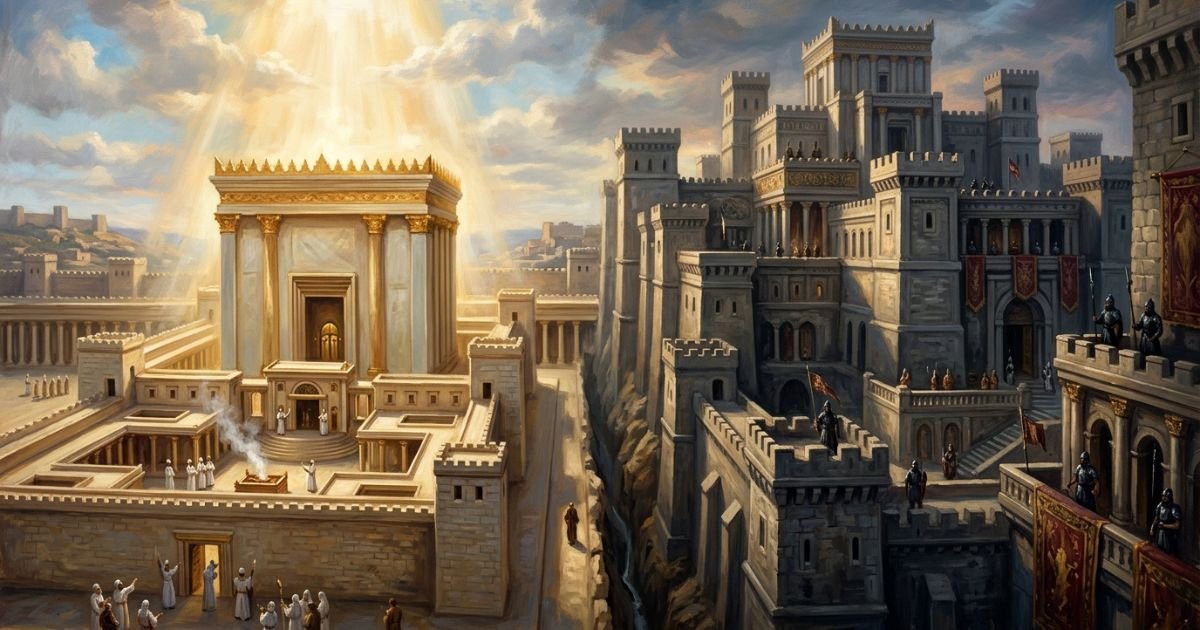
Solomon spent seven years building the Temple of the Lord. Seven is the number the Bible uses for completeness and divine perfection. Then he spent thirteen years building his own palace complex. Nearly double the time. Significantly more investment in his personal glory than in God’s house.
1 Kings 7:1 records this plainly, without commentary. But the contrast is its own commentary.
This is one of the subtler appearances of 13 in Scripture, and in some ways one of the most convicting. Solomon did not suddenly fall into idolatry overnight. It happened gradually. More time here. More investment there. More wives, more alliances, more tolerance for foreign gods to keep the peace at home. By the time 1 Kings 11 arrives, his heart has drifted so far that God announces the kingdom will be torn from his son.
The thirteen years in his own palace mark the beginning of that drift. Not a dramatic rebellion, a quiet one. A slow reordering of priorities. That is the kind of falling away the number 13 captures here: not a loud moment of defiance, but a long season of choosing self over God, so gradually you barely notice until you are very far from where you started.
Jeremiah’s Ministry Began in the 13th Year A Prophet Sent into Rebellion
Jeremiah’s calling is one of the most moving in all of Scripture. God told him before he was born that he was set apart, that he had been known before he was formed in the womb (Jeremiah 1:5). And God sent him to a nation that had no intention of listening.
Jeremiah 1:2 records that the word of the Lord came to him in the thirteenth year of King Josiah’s reign. Josiah was a good king, one of the best. He was actively pursuing reform. And yet Jeremiah’s prophetic ministry, launched in year thirteen of even a righteous king’s reign, was aimed at a people whose hearts were too hardened for outward reform to reach.
Jeremiah 25:3 is particularly piercing. After twenty-three years of faithful preaching since that thirteenth year, Jeremiah says: “I have spoken to you, rising early and speaking, but you have not listened.” Twenty-three years of words that landed on closed ears.
The 13th year here marks not just Jeremiah’s beginning, but Judah’s condition as a nation in rebellion so deep that even reforms could not reach it, and a prophet so faithful he kept speaking anyway. Jeremiah wept. He despaired. He questioned. He kept going. His story is one of the most human in Scripture: someone called to serve a purpose even when the results are invisible, because faithfulness is not the same as success.
God’s Thirteen Attributes of Mercy The Most Surprising Turn of All
This is where the number 13 meaning in the Bible becomes something extraordinary.
After Israel built the golden calf, perhaps the most brazen act of rebellion in their entire history, Moses interceded for the people. God could have ended the covenant right there. Instead, Moses climbed back up the mountain, and God spoke.
Exodus 34:6-7 records what God declared in that moment. And from this passage, Jewish tradition has long identified thirteen distinct expressions of God’s mercy, thirteen divine attributes of compassion that form the theological heart of Israel’s understanding of who God is.
These thirteen attributes include: the Lord is merciful and gracious, slow to anger, abounding in love and faithfulness, maintaining love to thousands, forgiving wickedness, rebellion, and sin. They have been recited in Jewish liturgy for thousands of years, particularly on Yom Kippur, the Day of Atonement.
This may be the most stunning reversal in the entire discussion of number 13 meaning in the Bible. The number that appears so often in contexts of human rebellion is also the number of God’s mercy attributes, spoken directly in response to human rebellion. The same number. Same context. Opposite direction.
The people sinned. God spoke thirteen mercies. That is the gospel in miniature.
The Last Supper Thirteen at the Table Where Heaven Touched Earth
When Jesus gathered with His twelve disciples for the Passover meal that would become the Last Supper, there were thirteen people in the room. Jesus and twelve men. One of them, Judas Iscariot, was already planning the betrayal that would lead to the cross.
This is the most well-known New Testament appearance of 13, and it carries all the weight of what the number has meant throughout Scripture. There is rebellion at the table, Judas. There is a transition from the old covenant to the new. There is suffering ahead, the cross was hours away. And there is redemption, because everything that happened that night and in the days following was the hinge point of history.
Jesus knew Judas would betray Him. He washed his feet anyway (John 13:1-5). He offered him bread. He let him sit at the table. The presence of the thirteenth person, the betrayer, did not contaminate the meal because the one presiding over it was holiness itself. His love was not undone by proximity to sin. It absorbed it.
The Last Supper with thirteen present became the foundation for communion, the meal Christians have shared across two thousand years of history. What could have been remembered as the night of betrayal is instead remembered as the night of the broken body and poured-out blood, the night Jesus said, “Do this in remembrance of Me.” Thirteen people. One evening. The most important meal ever eaten.
The Apostle Paul, The Thirteenth Apostle Who Went the Farthest
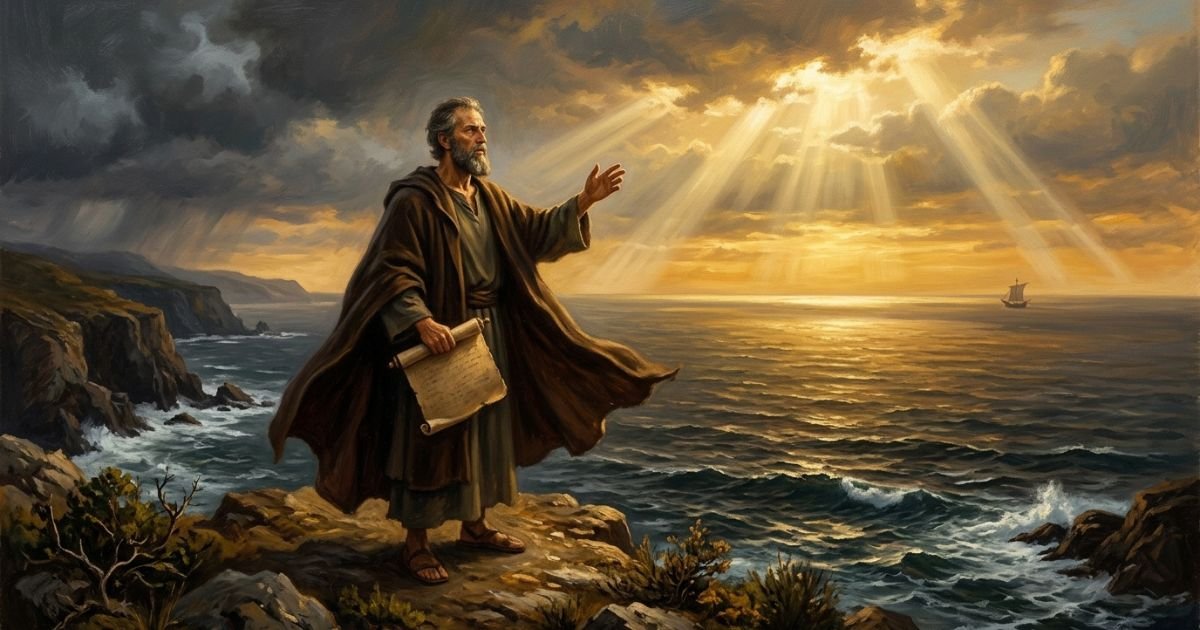
This one requires a little counting, but it is worth it. After Jesus’ resurrection and ascension, the eleven remaining apostles chose Matthias to replace Judas, restoring the number to twelve (Acts 1:26). Then, Paul was knocked off his horse on the road to Damascus, blinded, humbled, and called by the risen Christ to be an apostle to the Gentiles.
Paul was, by any honest count, the thirteenth apostle. He even acknowledges his unusual place, describing himself as “one untimely born” (1 Corinthians 15:8), someone who received the apostolic calling outside the normal sequence.
And yet Paul wrote more of the New Testament than any other author. His missionary journeys carried the gospel across the Mediterranean world. His letters shaped Christian theology for two thousand years. The thirteenth apostle, the one who came late, who came from the wrong direction, who had actively persecuted the church, turned out to be one of the most fruitful voices in the history of Christianity.
Acts 13:2 records the Holy Spirit specifically setting Paul apart for missionary work. The chapter itself carries the number. And from that calling outward, the gospel reached places no one had imagined.
If you have ever felt like you came to faith too late, like your past is too dark, like you missed the early group, Paul’s story is a direct answer. God’s calling is not limited by the order you arrived in.
Revelation 13 Understanding the Warning Without the Superstition
Revelation 13 describes two beasts, one from the sea and one from the earth, and introduces the number 666 as the mark of the beast. This chapter has generated enormous anxiety for centuries, and much of that anxiety has attached itself to the chapter number itself.
But here is something important to understand: the chapter and verse divisions in the Bible were not part of the original text. They were added by human editors in the medieval period the chapter system was developed around the 13th century AD, and verse numbers came even later. The early church had no chapter 13 of Revelation because they did not have chapters at all. They just had the letter.
So, fearing the number 13 because of Revelation 13 is actually a kind of confusion you are fearing a number assigned by a medieval editor, not a number placed there by divine intention. What matters is the content of that passage: a serious warning about false worship, spiritual deception, and the cost of compromising with powers that oppose God. That warning is real. The chapter number is not the point.
Reading Revelation 13 well means letting it challenge your faithfulness and sharpen your discernment, not feeding a superstition about unlucky numbers.
Other Significant Appearances of 13 in the Bible
The number 13 surfaces across Scripture in ways that continue to reinforce its themes. A few worth noting:
The Valley of Hinnom: The word “Hinnom” appears thirteen times in the King James Version of the Bible. This valley outside Jerusalem became infamous as the place where Israel worshipped Molech and sacrificed children, one of the darkest chapters of their national sin. Its association with 13 fits the pattern precisely. It later became the image Jesus used for Gehenna, a picture of the consequences of persistent rebellion against God.
The dragon in Revelation: The Greek word “drakon,” meaning dragon, used as a symbol for Satan, appears thirteen times in the book of Revelation. Every appearance is in the context of spiritual warfare and opposition to God’s kingdom.
Mark 7 and the thirteen sins: When the Pharisees challenged Jesus about ritual handwashing, He turned the conversation to what actually defiles a person. In Mark 7:20-23, Jesus lists thirteen things that come from the human heart and defile a person evil thoughts, sexual immorality, theft, murder, adultery, greed, malice, deceit, lewdness, envy, slander, arrogance, and folly. Thirteen specific expressions of what human hearts produce when they turn inward rather than toward God.
Nimrod’s lineage: Some biblical genealogical studies identify Nimrod, the founder of Babel and the first empire-builder to set himself against God, as the thirteenth generation from Ham. The connection between 13 and the spirit of human empire-building that challenges God’s authority runs all the way back there.
Solomon’s thirteen famines: Scholars have identified at least thirteen references to famine across the biblical narrative periods of profound testing and dependence on God. Each one is a story of human vulnerability and divine provision.
Is 13 a Good Number or a Bad Number in the Bible?
Here is the honest answer: neither. The Number 13 Meaning In The Bible is a deeply meaningful number, but assigning it a simple “good” or “bad” label misses the point.
It shows up consistently where humans are choosing their own way over God’s. It marks moments of testing, transition, and the consequences of faithlessness. In that sense, it is honest about human nature, and the Bible is always honest about human nature.
But it also shows up in God’s thirteen attributes of mercy. In the thirteen circuits that brought down Jericho. In Paul, the thirteenth apostle, who spread the gospel farther than anyone expected. In the Last Supper, the betrayer’s presence did not prevent the institution of the most sacred meal in Christian history.
The number 13 is a number that keeps company with human failure and keeps company with divine grace. It lives exactly where those two things meet. Which, if you think about it, is exactly where the entire Bible lives.
What the Number 13 Means for Your Faith Today
You may have come to this topic out of curiosity, or because someone in your life treats 13 as something to fear, or because you stumbled across a reference you wanted to understand. Whatever brought you here, there are a few things worth carrying away.
First, the Bible does not support the superstition. Cultural fear of 13 has no scriptural foundation. Letting that go frees you to read God’s Word without a filter that was never supposed to be there.
Second, the biblical pattern around 13 is honest and convicting in a healthy way. When you see it marking moments of rebellion, you are meant to recognize something true about human nature, including your own. Not to feel condemned, but to stay alert. Pride, fear, and self-reliance are always nudging us away from God’s purposes. The number 13 in Scripture keeps pointing at that reality with unusual consistency.
Third, and most importantly, wherever 13 marks human failure in the Bible, God is never absent. He is merciful. He is patient. He extends grace farther than Haman expected, farther than Judah deserved, farther than Paul’s persecuting past should have allowed. The God who listed thirteen attributes of His own mercy after one of Israel’s worst moments is not a God who runs out of compassion when you reach your lowest point.
Frequently Asked Questions
What does God say about the number 13?
God never labels 13 as cursed or unlucky. Scripture connects it to human rebellion, testing, and transition, but also to His own thirteen attributes of mercy spoken after Israel’s greatest failure.
Why is 13 so important in the Bible?
It appears at major turning points, Abraham and Ishmael, the fall of Jericho, Jeremiah’s calling, and the Last Supper, showing God working through difficult and defining moments in biblical history.
What does 13 represent spiritually?
In the Bible, 13 most often represents human rebellion against God’s order, but also transition, testing, and divine mercy extended right where people fall short.
Why is 13 called Devil’s number?
This comes from cultural superstition, not Scripture. The Bible never calls 13 the devil’s number. That label grew from folklore and has no solid biblical foundation.
Is 13 a demonic number?
No. The Bible does not assign any number as demonic. While 13 appears in dark contexts like Haman’s decree, it also appears in stories of deliverance, mercy, and breakthrough.
Conclusion
Numbers in the Bible are not magic. They do not carry power in themselves. God is not constrained by symbolic patterns, and He is not controlled by numerical codes. What biblical numerology does is give us patterns to notice recurring themes that help us see what Scripture is emphasizing.
The number 13’s meaning in the Bible consistently lies in the territory of human limitation and divine faithfulness meeting each other. It marks rebellion, yes. But it also marks the moment God speaks thirteen mercies into the silence after the worst rebellions. It marks the thirteenth march before the wall falls. It marks the thirteenth apostle who carries the gospel to the ends of the earth.
If your life has felt like a chapter 13 lately, like you are in the middle of something hard, something testing, something you did not choose, you are in exactly the kind of territory where the Bible shows God showing up. Not after the difficulty passes, but in the middle of it. Not when you have cleaned yourself up, but right at the point of failure, with thirteen reasons to call you back to Himself.